Let’s be real: after a long day of teaching, the last thing I want to do is stare at a 20-step recipe that requires a trip to three different grocery stores! Did you know that over 60% of home cooks feel overwhelmed by complex weeknight recipes? I’ve been there, trust me. I used to think “fancy” meant “better,” until I realized that 5-Ingredient Roasted Chicken Thighs are actually the undisputed heavyweight champion of the kitchen! Today, I’m sharing my secrets for getting that perfect, glass-like crispy skin while keeping the inside so tender it practically melts.
It’s funny because I used to spend way too much money on takeout just because I was scared of making a mess in the kitchen. But once I figured out this method, it became my go-to “emergency” dinner for those nights when the grading pile is a mile high. You probably already have most of these ingredients in your pantry right now, which is the best part. No fancy gadgets or weird spices are needed here—just some good heat and a little bit of patience. I promise, once you smell this roasting in your oven, you’ll forget all about those complicated recipes that take forever to clean up. It’s about making life a little easier without giving up on a home-cooked meal that actually tastes great.
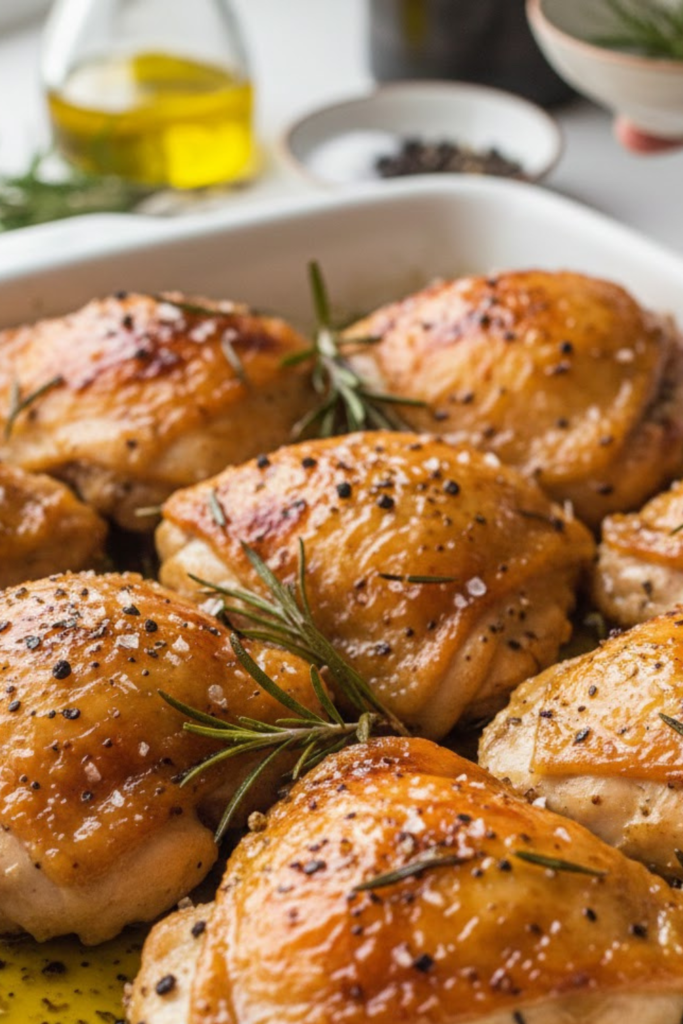
Why Bone-In, Skin-On Thighs Rule the Roast
I’ll be honest with you: I used to buy boneless, skinless chicken breasts because I thought they were “healthier” or easier to cook. Man, was I wrong! After years of serving dry, rubbery dinners to my family, I finally switched to bone-in, skin-on thighs, and I’ve never looked back.
There’s a real science to why these work so much better, especially when you only have five ingredients to work with. First, the bone acts like a heat conductor. It helps the chicken cook from the inside out, which keeps the meat from drying out before the outside is done. If you’ve ever had chicken that was burnt on the outside but raw in the middle, the bone is your solution.
Then, there’s the skin. In my kitchen, we call the skin “nature’s aluminum foil.” As the oven heats up, the fat under the skin melts and drips down into the meat. It’s basically basting itself while you’re sitting on the couch relaxing! Plus, you just can’t get that satisfying “crunch” without the skin. When you’re keeping things simple, that texture is what makes the meal feel special. It’s also a very cheap cut of meat. I can usually feed my whole family for under ten dollars with a big pack of thighs, which is a huge win for any budget.
Another thing I love is how much harder it is to overcook a thigh compared to a breast. Since thighs have more dark meat, they stay juicy even if you get distracted by a phone call and leave them in the oven for an extra five minutes. It gives you a bit of a “safety net” in the kitchen. Also, because the meat is more flavorful on its own, you don’t need a pantry full of spices to make it taste good—just the basics will do. It’s also way easier to meal prep with these. I often roast a double batch on Sundays because the meat stays moist even after being reheated in the microwave for lunch the next day. Once you taste how much more “chickeny” the flavor is when it’s cooked on the bone, you really won’t want to go back to those bland, skinny fillets. It’s just honest, good food that fills everyone up without breaking the bank.
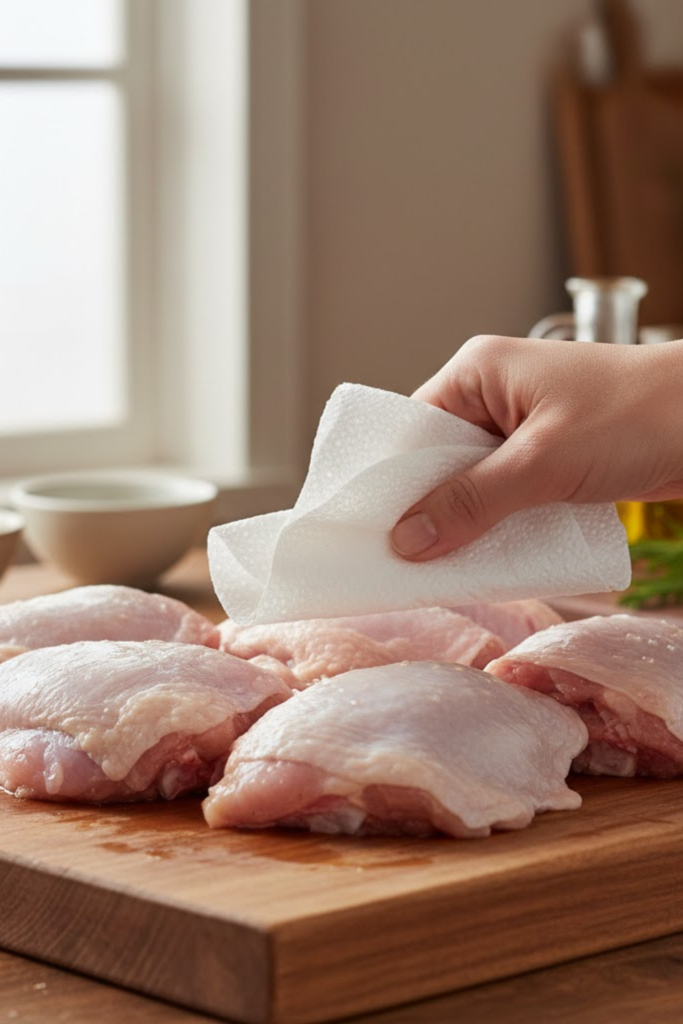
The Golden Rule: Prep for Maximum Crunch
I’ve made every mistake in the book when it comes to chicken. One time, I just pulled the meat straight from the package and tossed it in the pan. Big mistake! It came out soggy and gray. If you want that crunch that everyone fights over at the dinner table, you have to follow the “dry rule.”
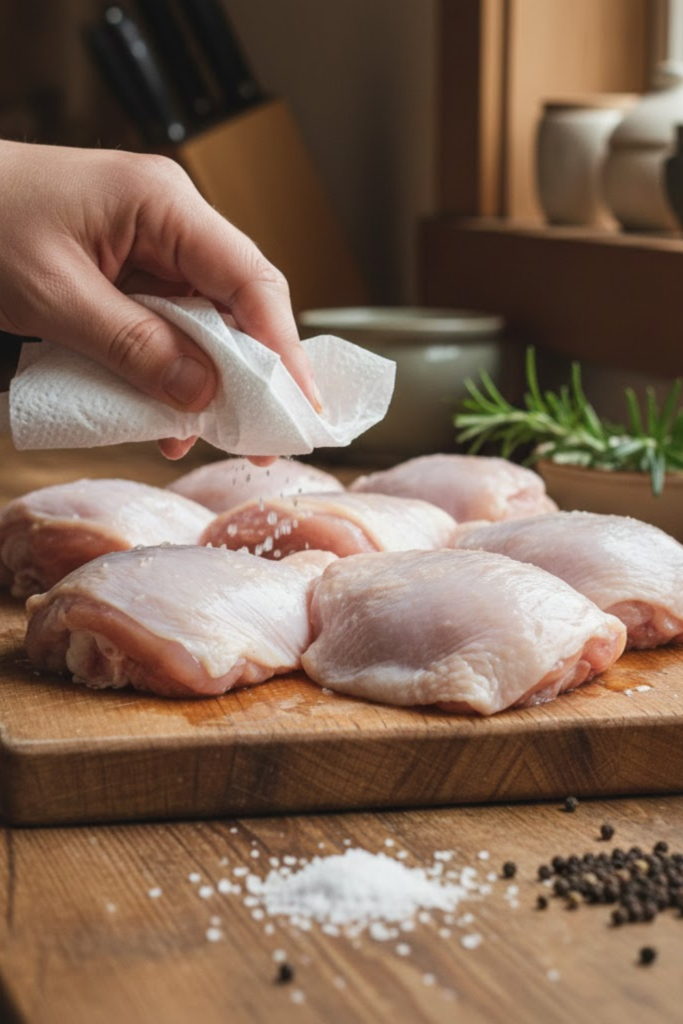
First, grab some paper towels and pat those thighs down until they are bone-dry. Any moisture left on the skin will turn into steam in the oven, and steam is the enemy of crispy. I also like to let the chicken sit on the counter for about 20 minutes before I start. Putting ice-cold meat into a hot oven makes the muscles tighten up, which leads to a tougher bite.
The real pro move I’ve learned over the years is the seasoning strategy. Don’t just throw salt on top! Gently lift the skin with your finger and slide a little bit of salt and pepper directly onto the meat. This seasons the chicken from the inside. Then, rub a tiny bit of oil on the outside of the skin to help it brown. It’s a simple step, but it makes a world of difference in how it tastes.
You also want to be careful not to crowd the pan. If the thighs are touching each other, they’ll just trap steam between them and you’ll end up with soft, rubbery sides instead of all-around crunch. Give them some breathing room! I usually leave at least an inch of space between each piece. Also, try to resist the urge to peek and open the oven door too often. Every time you open that door, the temperature drops and slows down the browning process. If you really want to go the extra mile, you can even leave the chicken uncovered in the fridge for an hour before cooking to let the skin air-dry even more. This little trick is what the fancy restaurants do to get that glass-like texture. It might seem like a lot of steps for a “simple” meal, but once you hear that first loud crunch when you bite in, you’ll know it was worth every second of prep.
Oven Settings and Timing for 2026 Kitchens
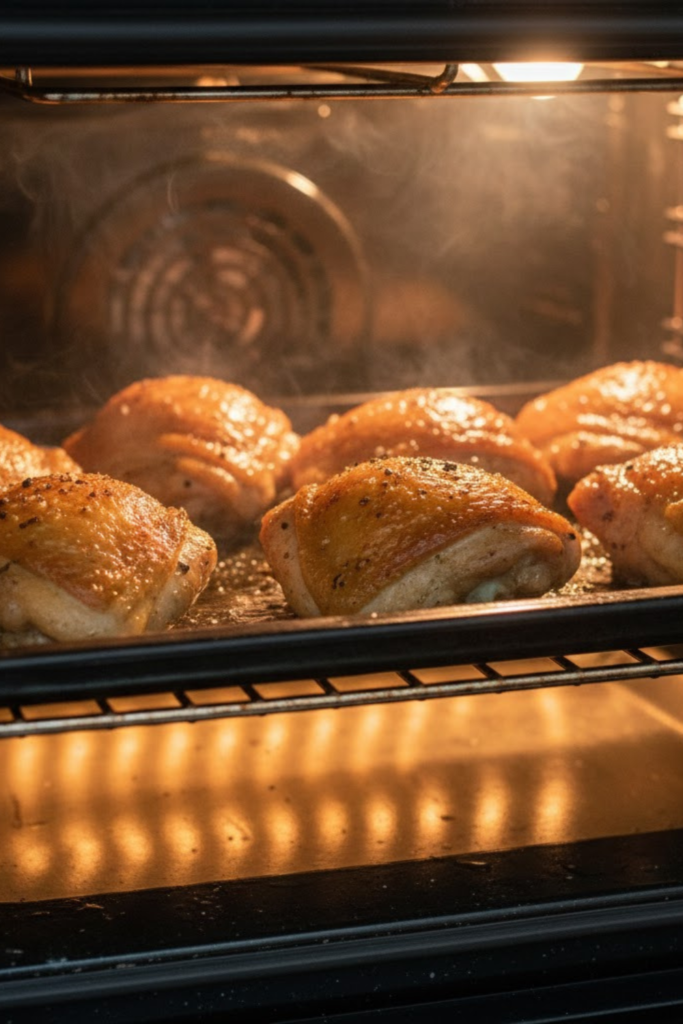
One of the biggest lessons I learned as a teacher is that timing is everything, and it’s the same with your oven. If the heat is too low, you’re basically just boiling the chicken in its own juices. To get that restaurant-quality finish, you need to crank it up to 425°F (218°C). This high heat is the “sweet spot” because it browns the skin quickly without drying out the meat.
I always tell people to use a rimmed baking sheet. If you have a wire rack that fits inside, even better! Elevating the chicken allows the hot air to circulate under the thighs, so the bottoms don’t get soggy. If you don’t have a rack, don’t sweat it—just grease the pan slightly so they don’t stick.
Usually, they need about 35 to 45 minutes. But don’t just guess! Since every oven is a little different, I always use a meat thermometer. You’re looking for an internal temperature of 165°F (74°C). I actually like to take mine to 170°F because thighs have more connective tissue than breasts, and that extra bit of heat makes them even more tender. Let them rest for five minutes after they come out so the juices stay inside where they belong.
If you are using a convection oven, you might want to drop the temperature by about 25 degrees, because those fans can really move the heat around fast. I’ve noticed that in newer 2026 oven models, the “air fry” setting is basically just a high-powered convection mode, which works great for this recipe too! Just keep an eye on it so the skin doesn’t get too dark before the meat is cooked through. Also, if your thighs are extra large, they might need a full 50 minutes to get that perfect fall-off-the-bone feel. Don’t be afraid of a little smoke in the kitchen either; that’s just the fat rendering out and making things delicious. I usually turn on my overhead fan right when the chicken goes in just to be safe. It’s a small price to pay for a dinner that tastes like it came from a fancy bistro!
You don’t need a culinary degree or a kitchen full of expensive gadgets to make a meal that tastes like a million bucks! These 5-Ingredient Roasted Chicken Thighs are the perfect example of how simple cooking can still be the best part of your day. It’s funny how we spend so much time looking for “the next big thing” when the classic combination of heat, salt, and good meat is all you really need to be a hero in your own kitchen.
I hope this helps you get a stress-free dinner on the table tonight. Once you see those golden-brown results and hear that crunch, you’ll never go back to those flavorless chicken breasts again! It’s such a relief to have a recipe in your back pocket that works every single time without causing a headache. I’ve found that these leftovers—if there are any—make the best chicken salad or topping for a quick bowl of rice the next afternoon. Plus, cleaning up a single sheet pan is way better than scrubbing a mountain of pots and pans. Life is busy enough as it is, so take the win where you can get it and enjoy a meal that actually satisfies. If you found these tips helpful, please save this post and share it on Pinterest so other busy cooks can join our crispy skin club!