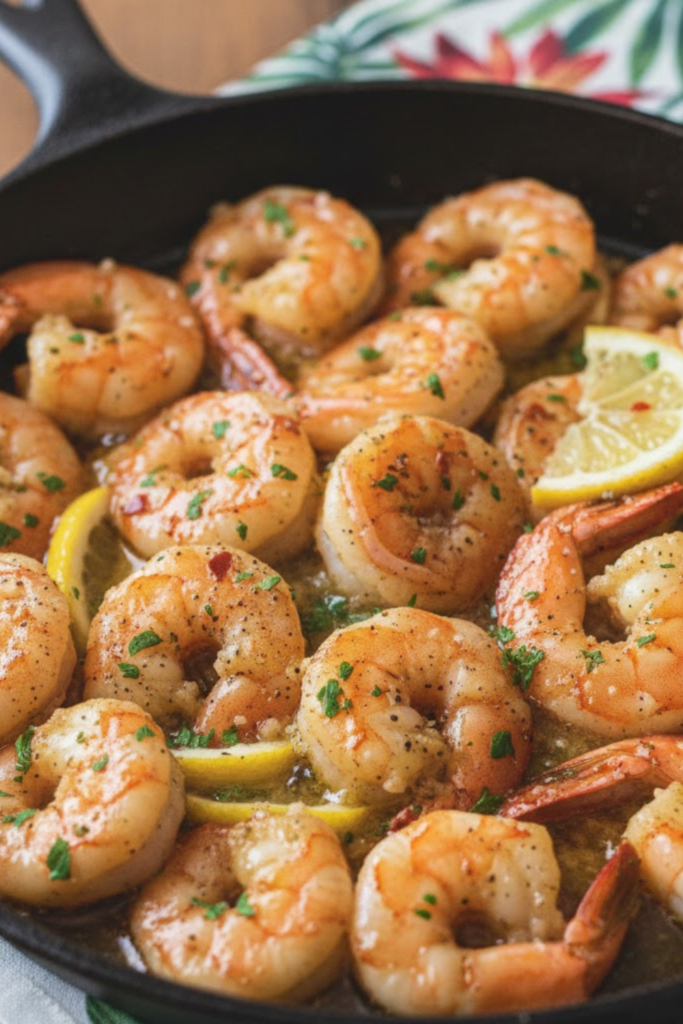
You don’t have to cook fancy or complicated masterpieces—just good food from fresh ingredients,” the legendary Julia Child once said. I really feel that in my soul every time I pull out my heavy pan for this Skillet Shrimp with Garlic and Lemon.
Did you know that shrimp is the most popular seafood in the U.S., accounting for nearly 30% of all seafood consumption? It’s fast. It’s light. Most importantly, it’s freaking delicious! This recipe is my go-to when I’ve had a long day teaching and just want something that tastes like a five-star restaurant without the five-star effort. Let’s get into how to make this citrusy masterpiece.
Choosing the Best Shrimp for Your Skillet
Choosing the right shrimp is the most important part of this whole dish. If you get the wrong kind, it doesn’t matter how much garlic you use! I’ve been teaching for a long time, and I always tell my students that preparation is key. It’s the same in the kitchen.
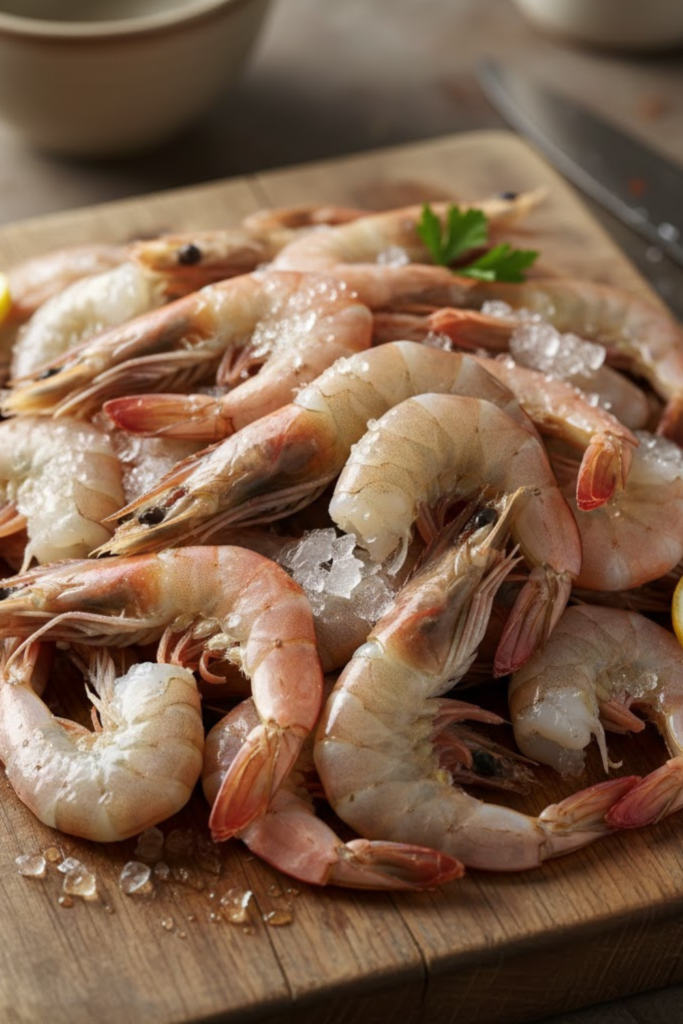
Most people think they need to buy “fresh” shrimp from the glass case at the store. Honestly? That is usually a mistake. Most of that shrimp was frozen on a boat and then thawed out at the store. You don’t know how long it’s been sitting there. I always buy the big bags of frozen shrimp instead. Look for the ones that say “IQF” which stands for Individually Quick Frozen. This way, the shrimp aren’t stuck together in one giant block of ice. It makes it easy to just grab a handful if you’re only cooking for one.
For a skillet recipe like this, size really matters. I like to get jumbo shrimp. Look for the bag that says 16/20. That means there are about 16 to 20 shrimp in every pound. If you buy the tiny ones, they cook way too fast. They turn into little rubber balls before the garlic even smells good.
I also prefer the ones that are already peeled and deveined, but I keep the tails on. The tails add a bit more flavor to the butter sauce and they look pretty on the plate. Just make sure you thaw them out in a bowl of cold water for about 15 or 20 minutes before you start. Dry them off really well with a paper towel. If they are still wet when they hit the pan, they won’t get that nice brown color. They’ll just steam in their own juice, and we want a good sear!
Mastering the Garlic and Butter Base
Garlic is pretty much my favorite thing to cook with, but it can be a real pain if you aren’t careful. I remember one time I was in a huge rush and I just threw the garlic into a cold pan with some oil. It didn’t sizzle, it just sat there getting soggy. Then, by the time the pan actually got hot, the garlic turned into these bitter little brown bits that ruined the whole meal. My kitchen smelled like burnt tires!
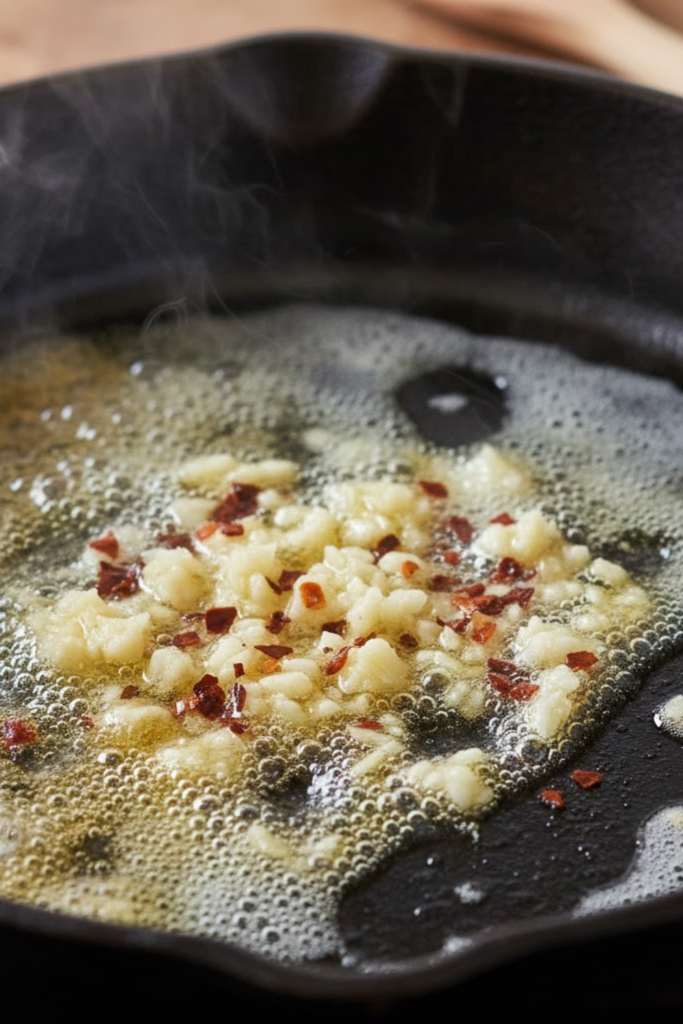
To get the best base for your Skillet Shrimp with Garlic and Lemon, you need to use both butter and olive oil. I like using a mix because butter has that amazing taste we all love, but it burns really fast on its own. The oil helps keep things stable so you don’t end up with a smoky mess. Put your pan on medium heat and wait for the butter to start foaming. That’s your signal that the pan is ready.
Once you see those bubbles, drop in your minced garlic. You don’t need a ton of time here. Usually, 30 to 45 seconds is plenty. You want it to smell really good and look just a little bit golden. If it starts looking like dark toast, you probably need to start over because that bitterness won’t go away. It is a good idea to pull the pan off the heat for a second if things are moving too fast. I usually add a pinch of salt and some red pepper flakes right now too. This lets the flavors move into the fat, which coats every single shrimp later on. This base is what makes the dish taste like you spent hours on it!
Getting the Lemon Balance Just Right
Getting the lemon right is what takes this dish from “just okay” to “wow, did you really make this?” I used to be really lazy and use that little plastic lemon bottle in the fridge. I thought it was basically the same thing. Boy, was I wrong! My sauce ended up tasting like a cleaning product. Now, I tell everyone to stick to the real thing. It makes a huge difference.
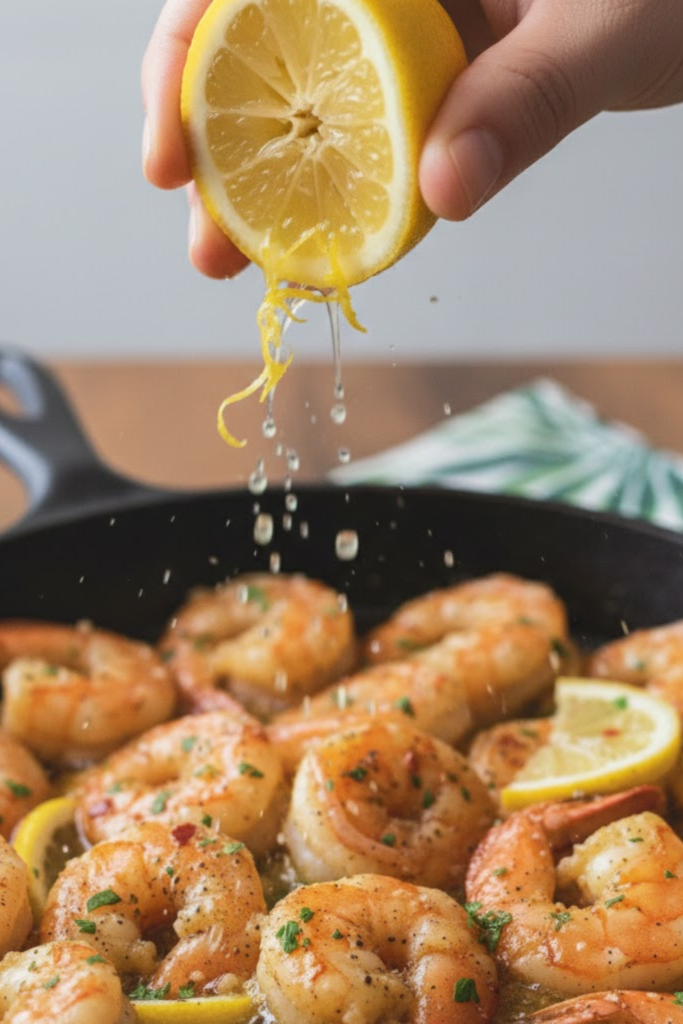
The secret I learned is to use the zest before you even think about cutting the lemon open. The yellow part of the skin has all these fancy oils that smell incredible. If you only use the juice, you’re missing half the fun. I use a small grater to get the yellow stuff off, but make sure you stop before you hit the white part. That white part is called the pith, and it’s super bitter. Trust me, I’ve made that mistake so you don’t have to.
When you finally squeeze that juice into the hot pan, something cool happens. It’s called deglazing. The liquid pulls up all those little brown bits stuck to the bottom of the pan from the garlic and the shrimp. That’s where all the concentrated flavor is! It creates a zesty, buttery sauce that you’ll want to soak up with a piece of crusty bread. Just keep an eye out for those pesky seeds. There is nothing worse than biting down on a lemon seed when you’re trying to enjoy a nice dinner. I usually squeeze the lemon over my hand or a small strainer to catch them.
How to Avoid Overcooking Your Shrimp
If there is one thing that breaks my heart in the kitchen, it’s seeing beautiful shrimp turn into little rubber bouncy balls. I’ve seen my students do it a thousand times, and I’ve done it myself when I’m distracted by my grading or a loud TV. Shrimp cook fast—like, blink-and-you’ll-miss-it fast. Most people leave them in the pan way too long because they’re afraid of them being raw. But with shrimp, less is usually more.
The best trick I ever learned is the “C” shape rule. Think of it like a grade. When the shrimp is shaped like a “U,” it’s undercooked. When it curls up into a nice, perfect “C” shape and turns pink, it is done! Get it out of there immediately. If it curls so much that the head and tail are touching and it looks like an “O,” you’ve overcooked it. At that point, it’s going to be tough and chewy, and no amount of butter sauce can save it.
Another mistake is crowding the pan. I know, you want to get dinner finished so you can sit down, but if you put too many shrimp in at once, the pan temperature drops. Instead of getting that nice brown sear, the shrimp just sit there and steam in their own juices. It’s better to cook them in two smaller batches. Also, remember that the shrimp will keep cooking for a minute or two after you turn off the stove. I usually pull mine off the heat when they look about 95% done. The leftover heat in the pan will finish them off perfectly while you’re getting the plates ready.
I always tell my students that shrimp is like a green light at a traffic stop—if you wait too long, you miss your chance. You really have to stay right there at the stove. Don’t go check your phone or start folding laundry! Another thing to look for is the color change; you want them to go from that weird gray, see-through look to a solid, bright pearly pink. If they start looking matte or chalky white, they are probably already too far gone.
If you’re worried about them sitting in the hot pan and getting tough while you set the table, just move them to a cold plate right away. This stops the cooking process in its tracks. I’ve had plenty of nights where I thought they were perfect, but by the time I sat down to eat, they had turned into erasers because I left them in the hot cast iron. It takes a little practice to get the timing down, but once you nail that juicy, snap-in-your-mouth texture, you’ll never go back to those frozen pre-cooked rings again.
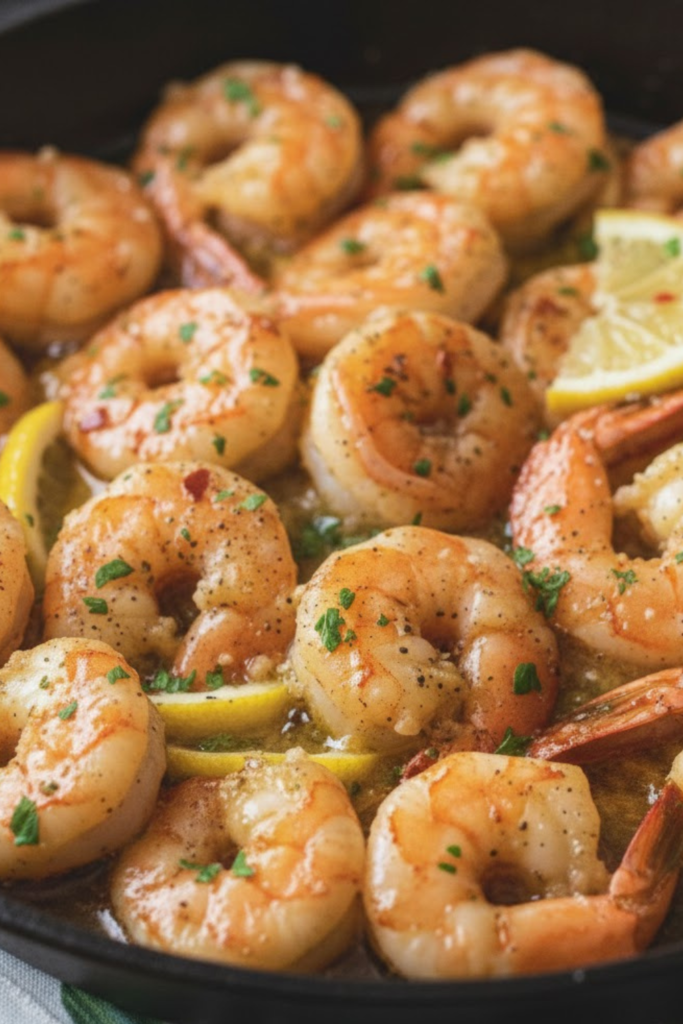
Making this Skillet Shrimp with Garlic and Lemon has saved my sanity more times than I can count. It’s proof that simple ingredients like butter, citrus, and garlic can create magic in minutes. I hope this becomes a staple in your 2026 meal rotation just like it is in mine! It’s the kind of meal that makes you feel like a pro even on a Tuesday night.
You can serve it over some thin pasta or just eat it right out of the pan with a big piece of crusty bread to soak up all that extra butter. It’s honestly such a relief to have a dinner that everyone in the house actually likes without me having to spend an hour at the stove. Cooking doesn’t have to be a headache, and this dish reminds me that simple is usually better.
If you loved this recipe, please save it to your “Quick Dinners” board on Pinterest!