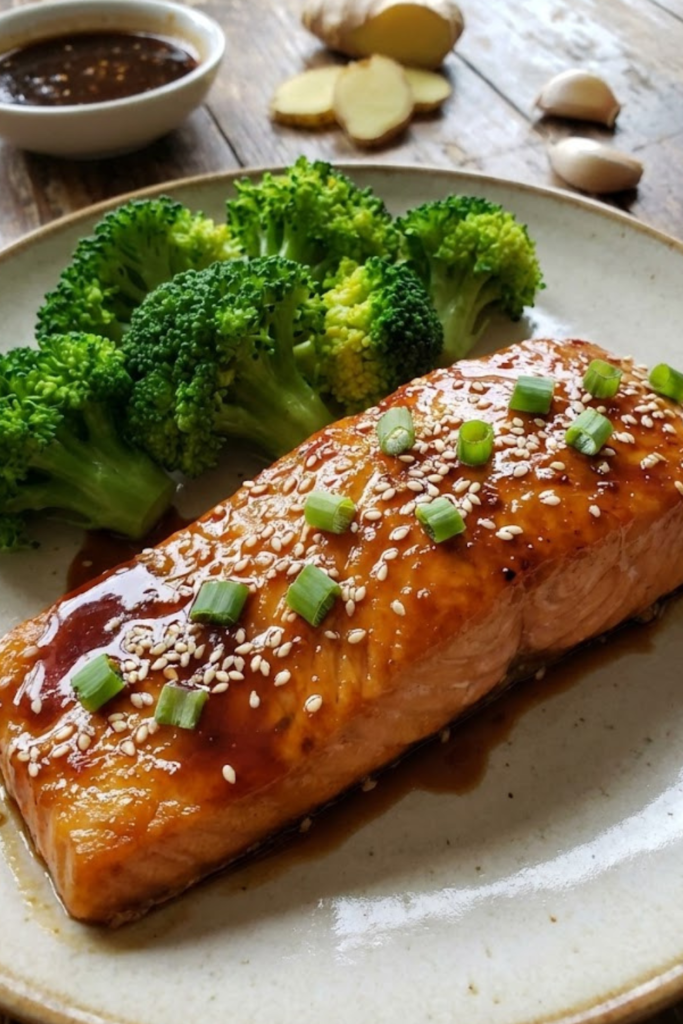
I used to be terrified of cooking fish. Seriously! There was this one time I invited friends over and served them salmon so dry it could have doubled as a drink coaster. I was mortified. But then I discovered the magic of a proper glaze. Teriyaki Salmon with Steamed Broccoli Florets isn’t just a mouthful to say; it is the ultimate weeknight savior that changed my kitchen game forever.
Why do we love it? It hits that perfect balance of sticky, sweet, and savory that you usually only get from takeout places. Plus, it’s loaded with heart-healthy omega-3 fatty acids and fiber. In this guide, I’m going to walk you through everything—from picking the right fillet to getting that broccoli crisp-tender, not mushy. Grab your apron, because we are about to make the best dinner of your life!
Choosing the Best Salmon for Your Teriyaki Bowl
I used to stand at the seafood counter staring at the fish like they were alien artifacts. I remember this one Tuesday, I was so determined to make a healthy dinner. I bought a piece of salmon that looked “fine,” but when I got it home, it smelled like an old pier. Yuck. I tried to cook it anyway (terrible idea, I know), and the whole house smelled for days. I ordered pizza that night.
That was a huge fail, but it taught me a lesson. You can’t make amazing Teriyaki Salmon with Steamed Broccoli Florets if your main ingredient is sad. Now, I’m pretty picky, and my dinners are way better for it.
Wild-Caught vs. Farmed: The Fat Factor
Here is the thing about teriyaki sauce—it loves fat. A fatty piece of fish will caramelize better and stay moist while the glaze gets sticky.
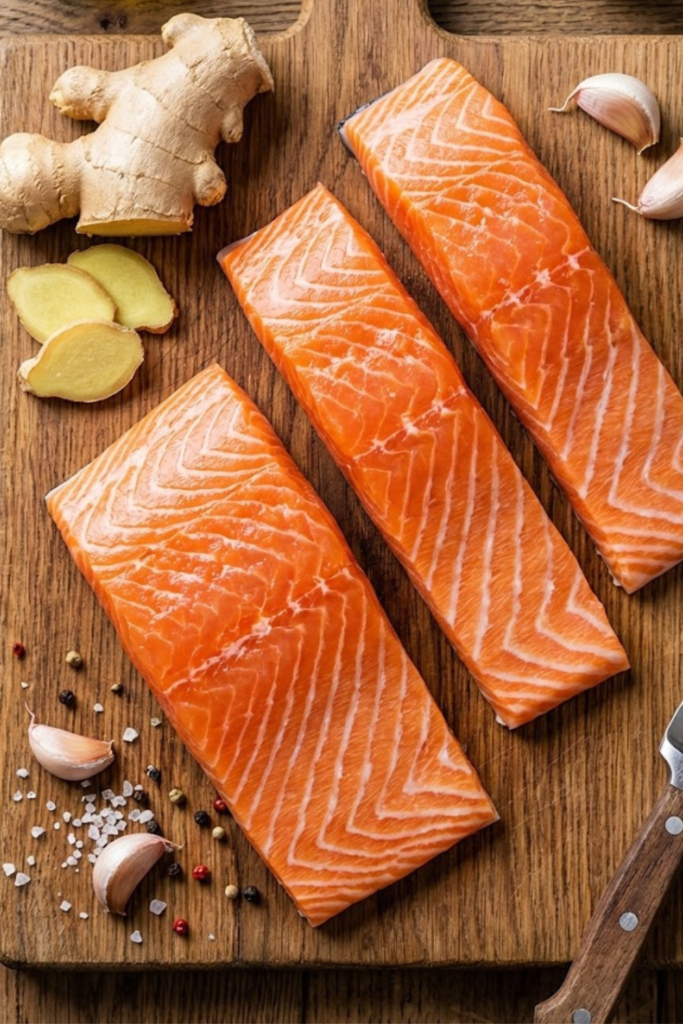
I usually grab farmed Atlantic salmon for this recipe. I know, I know, wild-caught is “better” for you usually. But farmed salmon has a higher fat content that makes it incredibly forgiving in the pan. When I use wild sockeye, it’s leaner and cooks so fast that I sometimes dry it out by mistake. If you want that melt-in-your-mouth texture for your Teriyaki Salmon with Steamed Broccoli Florets, go for the farmed Atlantic fillets or King salmon if you’re feeling fancy.
The Sniff Test and Visuals
Don’t be shy at the grocery store. I literally ask to smell the fish now. My local fishmonger probably thinks I’m weird, but I don’t care. Fresh salmon should smell like the ocean, not like “fish.” If it has a strong, ammonia-like odor, put it back immediately.
Also, look at the meat itself. It should be firm and bounce back if you poke it. You want a vibrant color, whether it is bright pink or deep orange. If the flesh looks like it’s gaping or separating already, it’s old. Gaping meat means your fillet will fall apart in the pan, and we want nice, solid chunks for our bowl.
Skin-On or Skin-Off?
This is where I messed up for years. I used to buy skinless because I thought it was easier. Nope.
Keep the skin on! Even if you don’t eat it. The skin acts like a little safety shield between the meat and the hot pan. It keeps the fish from drying out while you get that nice sear. Plus, if you crisp it up right, it adds a nice crunch to the soft Teriyaki Salmon with Steamed Broccoli Florets. You can always peel it off right before you eat it if you hate the texture. But seriously, try cooking it skin-side down first. It changes everything.
Crafting the Perfect Homemade Teriyaki Sauce
I remember the first time I tried to make teriyaki sauce without a recipe. I just dumped soy sauce and sugar in a pan. It was a salty disaster that tasted nothing like the restaurants. I went back to buying those expensive bottles for years until I realized how easy—and cheap—it is to make the real stuff.
Store-bought sauces are often loaded with corn syrup and preservatives. Making it at home takes like five minutes, and the difference in Teriyaki Salmon with Steamed Broccoli Florets is huge.
The Trinity of Flavor
You really only need three main liquids to start. In Japan, they use equal parts soy sauce, mirin, and sake.
- Soy Sauce: This is your salt and savory base. If you are watching your salt intake, low-sodium versions work fine. If you can’t do gluten, Tamari is a great swap.
- Mirin: This is a sweet rice wine. It gives that nice shine to the sauce. If you cant find it, you can mix a little sugar with white wine or rice vinegar, but mirin is best.
- Sake: This adds depth. If you don’t keep alcohol in the house, you can swap this for water or chicken broth, though the flavor changes a bit.
I usually mix about 1/4 cup of each. Then I add brown sugar to taste because I like mine a bit sweeter to balance the salty soy.
Fresh Aromatics Matter
Please, put down the garlic powder. For this sauce, you want the fresh stuff.
I made the mistake of using dried ginger powder once. It was gritty and just didn’t taste fresh. Now, I use a microplane to grate fresh ginger and garlic directly into the pan. It creates this intense flavor that infuses the liquid instantly. Plus, since it is grated so fine, you don’t get big chunks of garlic in your teeth.
Thickening Hacks: The Cornstarch Slurry
Here is the part where most people mess up. They want thick sauce, so they dump cornstarch straight into the hot pan. Don’t do that! You will end up with lumpy white balls of dough in your sauce.
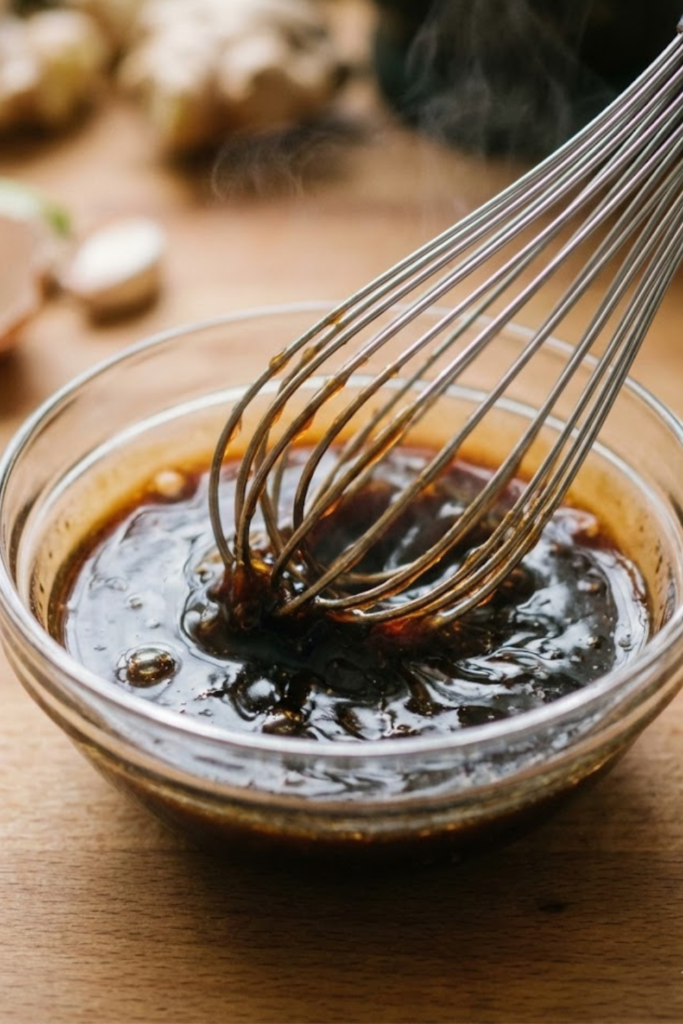
You have to make a “slurry.” It sounds fancy, but it just means mixing 1 teaspoon of cornstarch with 2 teaspoons of cold water in a separate little cup. Mix it until it looks like milk.
Once your sauce is bubbling on the stove, pour this white mixture in while whisking. Give it about 30 seconds, and watch the magic happen. It will turn from watery to a glossy, thick glaze that coats the back of a spoon perfectly. That’s when you know it’s ready for the salmon.
Techniques for Perfectly Steamed Broccoli Florets
I have a confession: for a long time, I was the queen of mushy broccoli. I would put it in the pot, walk away to fold laundry, and come back to this sad, gray-green mess that smelled like old gym socks. My kids wouldn’t touch it, and honestly, I didn’t blame them.
Getting that bright green, crisp-tender broccoli isn’t magic. It’s just timing. And since we are pairing this with our sticky Teriyaki Salmon, we want the veggie to have a little bit of a crunch to balance out the soft fish.
Cutting for Consistency
The biggest mistake I see people make is chopping the broccoli into wild sizes. You can’t have a giant tree next to a tiny crumb and expect them to cook the same.
I like to cut the florets so they are all about the size of a golf ball. If you have a really thick stem, peel the tough outer layer off and chop the inside part. It’s actually really sweet and tasty! Just make sure everything is roughly the same size so you don’t end up with some raw pieces and some mushy ones.
Steaming Methods: Basket vs. Microwave
You have two main choices here.
The Stove-Top Method: This is my favorite way. I use a cheap metal steamer basket that expands to fit my pot.
- Put about an inch of water in the pot.
- Make sure the water doesn’t touch the bottom of the basket.
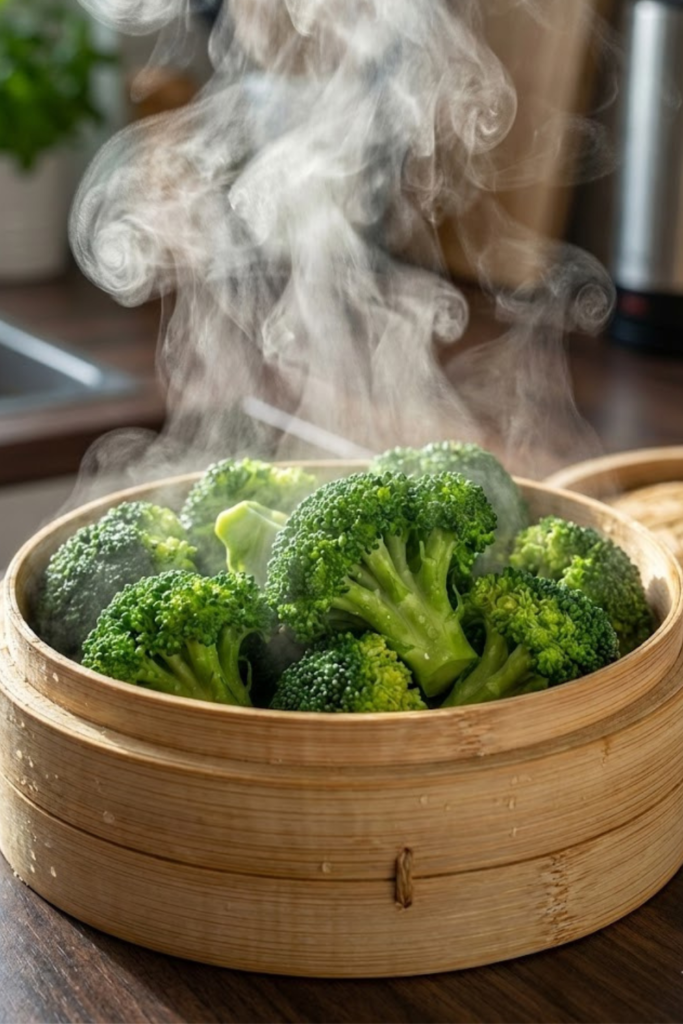
- Bring the water to a boil, toss in the broccoli, and put the lid on tight.
The Microwave Hack: If I am running late (which is often), I use the microwave. Put your broccoli in a glass bowl with just two tablespoons of water. Cover it with a plate or microwave-safe lid. It steams really fast this way, usually in about 3 minutes. It’s not quite as perfect as the stove, but it gets the job done on a busy Tuesday.
Stopping the Cook
This is the secret step. Broccoli cooks fast. Like, really fast.
You only need to steam it for 3 to 5 minutes. As soon as a fork can poke the stem easily, get it off the heat! If you leave it in the hot pot, it keeps cooking.
If you aren’t eating right this second, dump the broccoli into a bowl of ice water for a minute. Chefs call this “shocking” the veggie. It stops the cooking instantly and locks in that beautiful bright green color so it looks amazing next to your dark teriyaki glaze.
Cooking the Salmon: Pan-Sear vs. Oven-Baked
I used to think cooking fish was scary. Like, I was afraid I would ruin expensive groceries. But once I figured out these two methods, I realized it is actually faster than cooking chicken. You really just need to pay attention for a few minutes.
You can cook your Teriyaki Salmon two main ways. It just depends on if you want crispy edges or easy cleanup.
The Pan-Sear Method
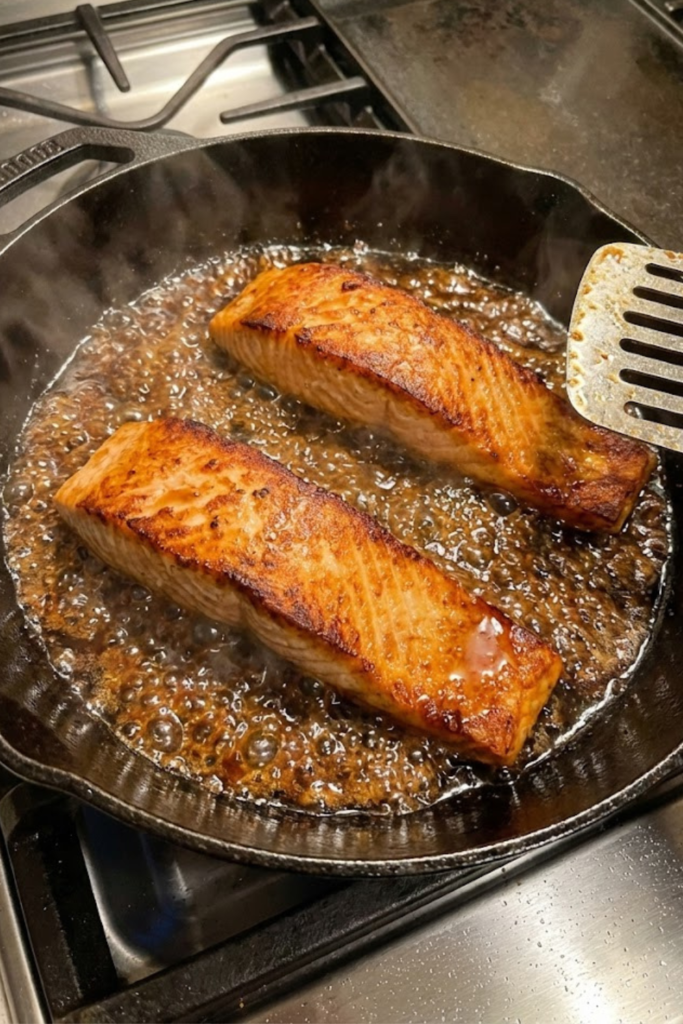
If you want that restaurant-style crust, you have to use a pan. I use my heavy cast iron skillet because it holds heat really well.
- Get it Hot: Put a little oil in the pan and let it get hot over medium-high heat. You want it to shimmer.
- Skin Side Down: Place your salmon fillets in the pan, skin-side down. Now, here is the hard part: Don’t touch it. Seriously. Leave it alone for about 4 minutes. If you try to move it too soon, the skin will stick and tear.
- Flip and Glaze: Once the skin releases easily, flip the fish. This is when I pour my homemade teriyaki sauce right into the pan. It will bubble up like crazy! Spoon that hot, sticky sauce over the fish while it finishes cooking for another 2 or 3 minutes.
The Oven Method
On days when I just can’t deal with oil splattering on my stove, I use the oven. It is way less messy.
Turn your broiler on high. Line a baking sheet with foil (this makes cleaning up super easy later). Place the salmon on the foil and brush a little bit of the sauce on top.
Put it in the oven for about 8 to 10 minutes. The broiler heat comes from the top, so it caramelizes the sugar in the teriyaki sauce perfectly. It gets sticky and brown without burning the fish. Keep an eye on it though, because broilers can go from “perfect” to “burnt” pretty fast.
Internal Temperature
How do you know it’s done? Please don’t guess.
I used to just cut into the middle to check, but that lets all the juice run out. Get a cheap meat thermometer. You are looking for an internal temperature of 145°F (63°C).
At this temperature, the fish is safe to eat but still moist. If you don’t have a thermometer, press gently on the top of the fillet with a fork. It should flake apart easily along the white lines. If it feels squishy or rubbery, it needs another minute. But remember, fish keeps cooking a little bit after you take it off the heat, so take it out right when it hits the mark.
Plating and Serving Suggestions
I used to think making food look pretty was a total waste of time. I’d just scoop everything into a big pile on a plate and serve it. But I realized something funny—my kids actually eat better when the food looks good. It’s a simple teacher trick, but it works on adults too!
You don’t need fancy skills to make this Teriyaki Salmon look like it came from a restaurant. You just need a few little extras.
Base Options
You absolutely need something to soak up that extra sticky sauce. I usually go with jasmine rice because it smells so good while it cooks. It’s nice and fluffy.
If I am trying to be a bit healthier, I will swap it for brown rice or quinoa. Just a heads-up: make sure you rinse your rice in cold water before you cook it! It gets rid of the extra dust and starch so your rice doesn’t turn into a giant gloopy block.
Garnishes that Pop
This is the fun part. A quick sprinkle of toasted sesame seeds makes the dish look finished. You can buy them already toasted in the spice aisle.
I also chop up green onions (scallions) really thin. Use the green parts. That bright green color pops against the orange salmon and the dark sauce, and they add a nice fresh crunch that cuts through the sugar in the glaze.
Adding Heat
My house is split on this one. I like things mild, but some people at my table love spicy food. Since I don’t want to make two different dinners, I just put a bottle of sriracha or a jar of red pepper flakes on the table. That way, everyone can fix their own bowl exactly how they like it without complaining.
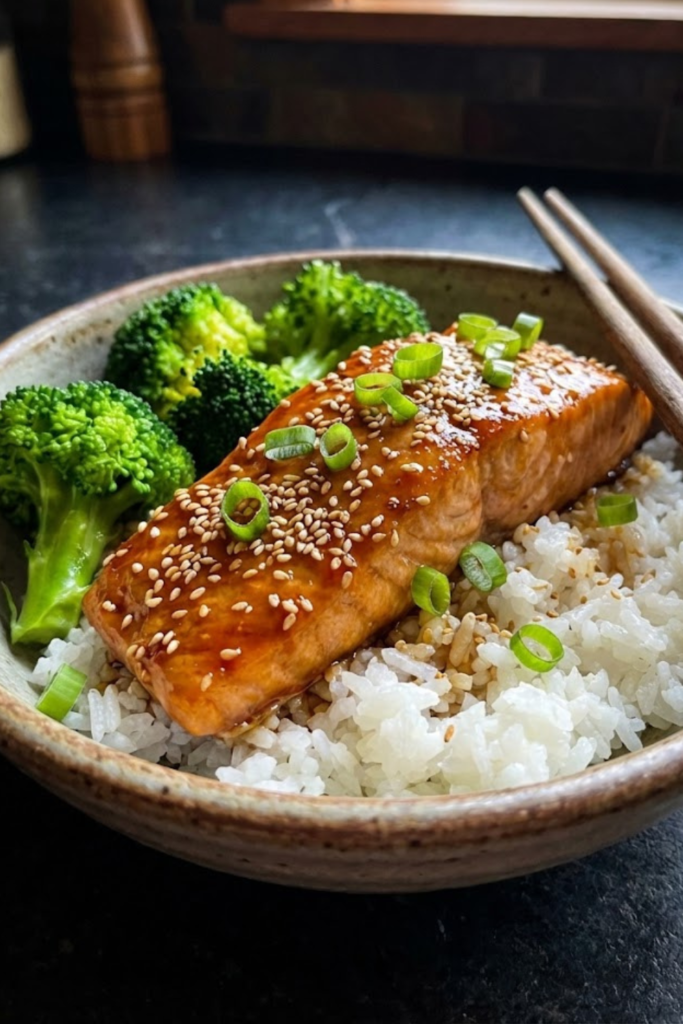
See? I told you making Teriyaki Salmon with Steamed Broccoli Florets wasn’t that hard. It really just comes down to buying fresh ingredients and paying attention to the clock so you don’t dry out the fish.
By making your own sauce, you skip all those weird preservatives in the bottled stuff, and it tastes way better anyway. Give this a try tonight. It’s fast, it’s healthy, and it saves you from ordering takeout again. Your wallet (and your stomach) will thank you.
Don’t forget to pin this recipe to your “Healthy Weeknight Dinners” board on Pinterest!