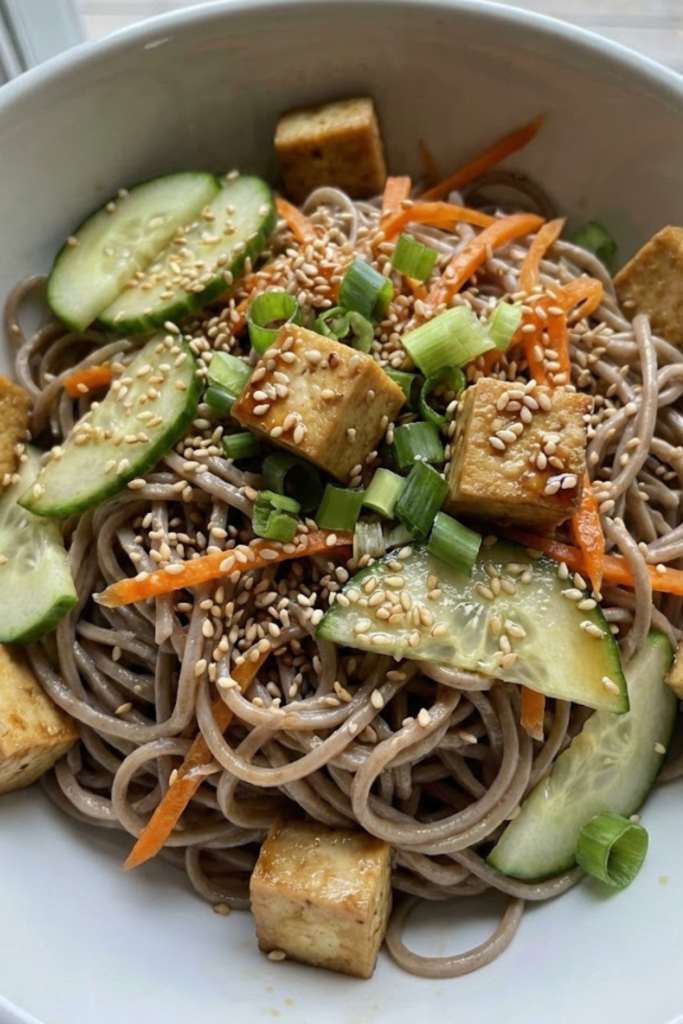
Ever feel like it’s just too hot to even think about turning on the oven? I’ve been there! Standing over a hot stove when it is scorching outside is nobody’s idea of a good time. That is exactly why I fell in love with this Cold Soba Noodle Salad with Tofu. It is a total lifesaver. Seriously! One minute you are dreading dinner, and the next you are diving into a bowl of nutty buckwheat noodles and crisp, cool veggies.
“Good food is the foundation of genuine happiness,” as the saying goes, and this dish is pure happiness in a bowl. We are talking about a savory soy dressing that hits all the right notes, firm tofu for that satisfying protein punch, and a crunch that just doesn’t quit. Whether you are meal-prepping for a busy week or need a quick lunch, this recipe has your back. Let’s get cooking!
Why You Will Love This Nutty Buckwheat Noodle Salad
Let me be honest with you for a second. I didn’t always “get” cold noodles. The first time I tried to serve a Cold Soba Noodle Salad with Tofu to my family, I was terrified they would look at me like I had two heads. We were used to steaming hot spaghetti with meat sauce, you know? But it was one of those scorching mid-July days where the air conditioning just couldn’t keep up, and the thought of turning on the oven made me want to cry.
So, I took a gamble. And let me tell you, it paid off big time.
The 20-Minute Miracle
I am a busy person, and I know you are too. Between work, trying to keep the house from falling apart, and maybe squeezing in a little downtime, cooking elaborate meals just isn’t happening on a Tuesday. That is where this recipe saves my life.
You can literally have this entire meal on the table in under twenty minutes. No joke. The buckwheat noodles cook in about 3 to 4 minutes—way faster than dried Italian pasta—and while they boil, you are just chopping veggies. It is fast, it is furious, and it is exactly what you need when you are “hangry” and tired.
A Flavor That Actually Hits
Here is the thing about regular pasta salad: it can be kind of bland if you aren’t careful. It’s mostly just chewy dough. Buckwheat noodles are a whole different vibe. They have this earthy, nutty flavor that stands up on its own.
When you toss them with the savory dressing, they don’t just get wet; they absorb that flavor. I used to think all noodles were created equal, but I was wrong. These bring a depth to the bowl that plain white flour just can’t compete with. Plus, that slightly firm texture? It is so satisfying to chew.
Accidental Health Kick
I admit, I don’t always pay attention to nutrition labels. But I learned that buckwheat is actually a nutritional powerhouse. It is high in fiber and has a decent amount of protein, especially compared to standard wheat noodles.
So, when you eat this Cold Soba Noodle Salad with Tofu, you aren’t just filling up on empty carbs that will make you crash an hour later. You actually feel fueled. I remember eating a huge bowl of this for lunch and actually having the energy to finish my yard work in the afternoon without needing a nap. That is a win in my book.
The Ultimate “Clean Out the Fridge” Dish
We have all been there. You open the crisper drawer and see a bell pepper that is starting to look a little sad, or a cucumber that needs to be used today. This salad is the perfect solution for food waste guilt.
I have thrown in everything from radishes to blanched broccoli, and it always works. The nutty noodles and the dressing are the anchors; the veggies are just the decoration. You don’t have to follow the veggie list perfectly. If you hate red cabbage, skip it! Use spinach instead. It is super forgiving, which is my favorite quality in a recipe.
Mistakes Were Made (So You Don’t Have To)
A quick heads-up from experience: do not skip the rinsing step. The first time I made this, I just drained the noodles and threw them in the bowl. Big mistake. They turned into a gummy, sticky clump that was impossible to stir.
You have to rinse them under cold water vigorously. Imagine you are scrubbing them. It gets the excess starch off and stops the cooking so they stay bouncy. Trust me on this one; nobody wants a noodle brick for dinner.
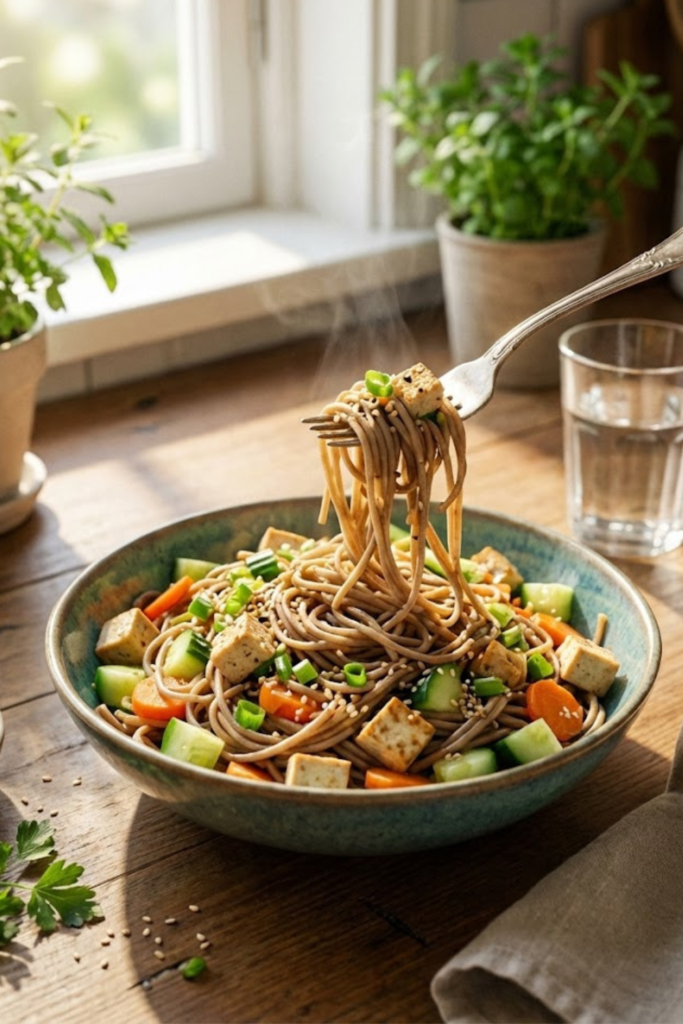
Essential Ingredients for the Perfect Cold Soba Salad
When I first started making this salad, I just grabbed whatever looked good on the shelf. Big mistake. I ended up with mushy tofu and noodles that tasted like wet cardboard. Over the years, I’ve figured out exactly what makes this dish work. You don’t need expensive stuff, but you do need the right stuff to make it taste like a restaurant meal.
The Tofu Situation
Listen to me carefully: get the Extra Firm Tofu. Do not buy the silken kind, and don’t even look at the “soft” one. I once bought silken tofu by accident because I was rushing, and when I tried to toss it with the noodles, it turned into a white paste. It was gross. Extra firm holds its shape so you can actually bite into solid cubes.
Also, you got to press it. I don’t own a fancy tofu press gadget. I just wrap the block in a clean dish towel and put a heavy cast-iron skillet (or a stack of books) on top of it for 15 minutes while I chop veggies. It squeezes the water out so the tofu acts like a sponge for that yummy dressing later.
The Crunch Factor (Veggies)
The best part of this salad is the difference between the soft noodles and the crunchy vegetables. If everything is soft, it’s boring to eat.
- Cucumbers: I like the English ones (the long skinny ones usually wrapped in plastic) because the skin isn’t bitter and you don’t have to peel them. I cut them into little matchsticks.
- Carrots: You can buy them pre-shredded to save time—I do this when I’m tired on a Friday—but cutting them fresh usually tastes sweeter.
- Red Cabbage: This adds a nice purple color and a serious crunch. Just slice it thin. If you leave the chunks too big, it’s hard to get a polite bite.
The Noodles
Obviously, you need soba noodles. These are Japanese noodles made from buckwheat flour. Here is a teacher tip for you: look at the ingredients on the back of the package. Some brands are mostly regular white flour with just a tiny bit of buckwheat. They are cheaper, but they don’t taste as nutty or earthy. Try to find one where buckwheat is the first or second ingredient listed. It really changes the flavor.
Pantry Stuff
You probably have most of the other things hiding in your cupboard. You need sesame seeds (toasted ones have more flavor), and if you want to be authentic, some nori strips (dried seaweed). Oh, and don’t forget the green onions. They add a little sharp bite that cuts through the sauce so it isn’t too heavy.

How to Cook Soba Noodles for the Best Texture
Okay, this is the part where things usually go wrong for people. Cooking soba isn’t exactly like cooking spaghetti. If you treat them the same, you end up with a gummy mess that sticks together in a big ball. I learned this the hard way when I tried to make a quick dinner for myself a few years back. It was not edible.
Watch the Clock
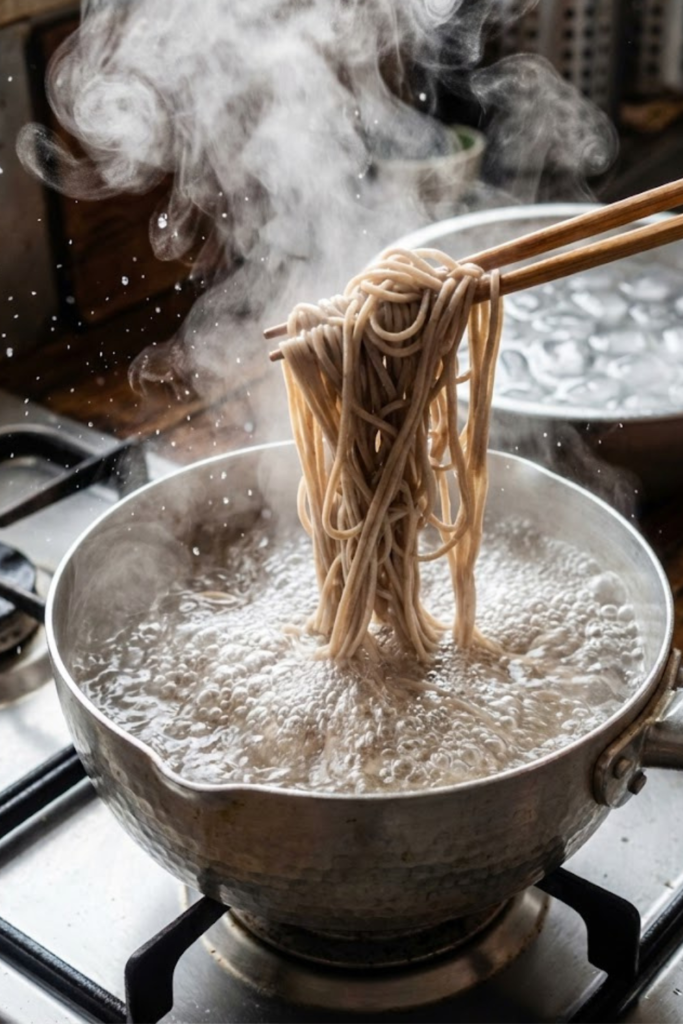
First off, get a big pot of water boiling. You want lots of water so the noodles have room to move around. Once it is bubbling hard, drop the noodles in.
Here is the trick: do not walk away. Seriously. These guys cook fast. Most packages say 3 or 4 minutes, but I start checking them at 3 minutes. I pull a single noodle out and bite it. It should be tender but not mushy. If it feels soft all the way through, get them off the stove immediately. Even thirty seconds too long can ruin them.
The Ice Bath is Mandatory
This step is the most important one. Before I even put the noodles in the hot water, I get a big bowl, fill it with cold water, and dump a tray of ice cubes in it. I set it right next to the sink.
As soon as I drain the hot water from the noodles, I dump the hot noodles straight into that ice water. It sounds like a lot of extra work, but it stops the cooking instantly. If you just let them sit in the colander hot, they keep cooking from their own steam and get soggy. Plus, the cold water washes off the extra starch. I get my hands in there and gently swish them around in the cold water. It makes them slippery and smooth instead of sticky.
Dry Them Off
After they are cool (which takes like a minute), drain them again. I like to shake the colander really good to get all the water out. If the noodles are too wet, your yummy dressing will just slide right off, and the salad will taste watery. Nobody wants a watery salad.
I sometimes even let them sit in the strainer for another minute or two while I finish chopping my green onions, just to make sure they aren’t dripping. Trust me, taking the time to dry them makes the final dish taste way better.
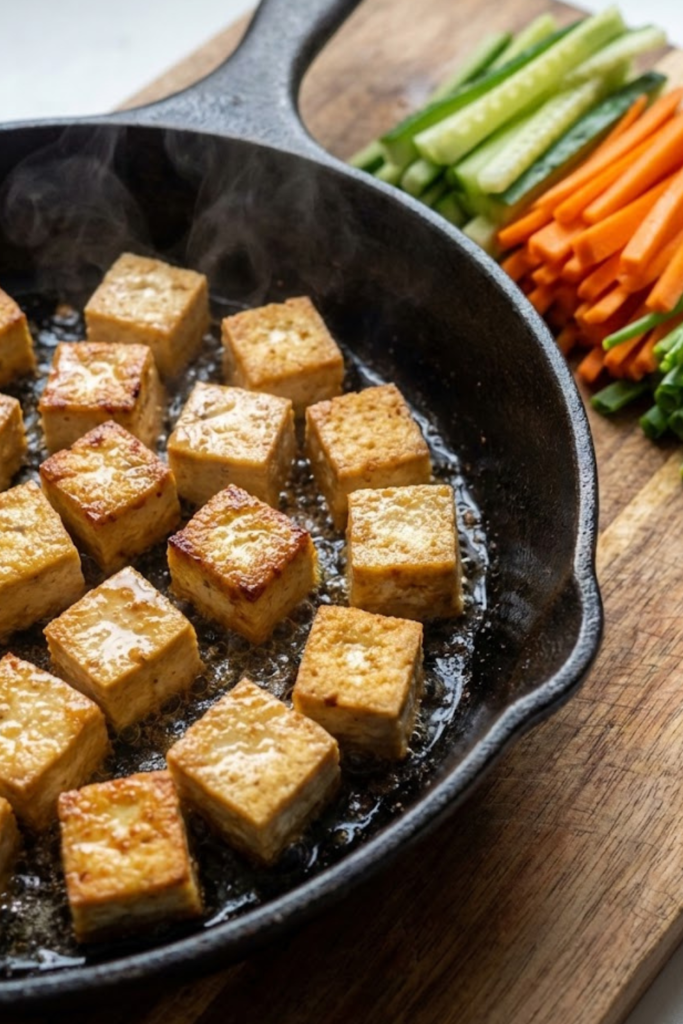
Preparing the Crispy Tofu and Veggies
Alright, now we get to the cooking part. Well, the only other cooking part besides boiling water. This is where you can really mess up or make it amazing. I used to think tofu was boring and squishy until I learned how to treat it right.
Making the Tofu Taste Good
If you pressed your tofu like I told you to in the ingredients section, you are ready to go. Cut that block into bite-sized cubes. I usually go for about one-inch squares.
Get a frying pan and put it on medium-high heat. Add a splash of sesame oil. Once the oil is shimmering, drop the tofu in.
Here is the hard part: don’t touch it.
I know, you want to stir it. But if you move it too soon, it sticks to the pan and tears apart. Let it sit there for about 3 or 4 minutes until the bottom gets a golden-brown crust. Then, flip the cubes over. You want them crispy on at least two sides. It gives the salad a nice texture contrast against the soft noodles. Season it with a pinch of salt while it cooks.
If you are super lazy (and I have those days too), you can put the tofu in raw. It’s fine. But taking ten minutes to fry it makes it taste way more like a meal and less like a diet food.
Chopping the Veggies
While the tofu is sizzling, work on your vegetables. How you cut them actually matters here.
You don’t want big, chunky blocks of cucumber or carrot. It makes the salad hard to eat because the heavy chunks fall to the bottom of the bowl, and you are left with just noodles on your fork.
I try to cut everything into “matchsticks.” Basically, you want thin strips that are about the same shape as the noodles. It doesn’t have to be perfect—I am definitely not a professional chef—but keeping them thin helps everything mix together better. When you take a bite, you want to get a little bit of noodle, a little bit of crunch, and a piece of tofu all at once.
If using red cabbage, slice it as thin as paper if you can. Raw cabbage can be tough to chew, so thin shreds make it much more pleasant.
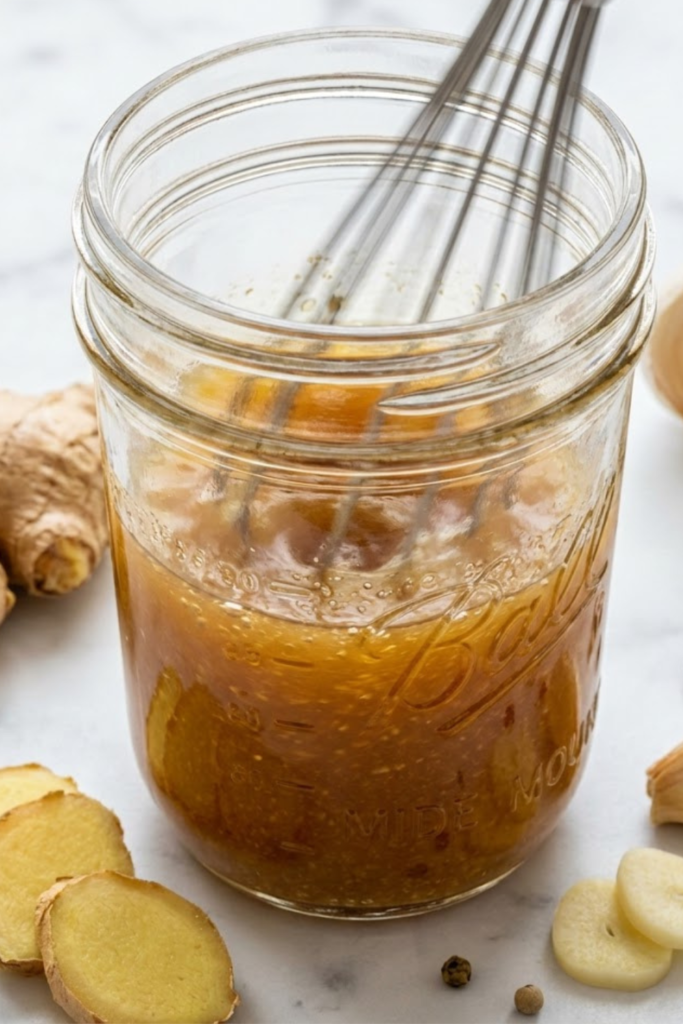
Whisking Up the Savory Sesame Ginger Dressing
You can chop all the veggies you want, but the dressing is what makes this salad sing. Seriously, do not buy the bottled stuff. It takes two minutes to make this, and it tastes a million times better.
The Sweet and Salty Balance
You need a bowl and a whisk. That’s it.
Start with your base: soy sauce. If you are gluten-free, use tamari. It tastes the same to me. Then add rice vinegar. This gives it that tangy kick that makes your mouth water.
I like to add a little bit of maple syrup too. I know, it sounds weird in a savory dish, but the sweetness helps balance out the salty soy sauce perfectly. If you don’t have maple syrup, honey works, but the maple flavor gives it a nice depth.
Fresh is Best (Sorry, It Is)
Okay, I hate peeling garlic as much as the next person. Sticky fingers, paper everywhere… it’s a pain. But for this dressing, you really need fresh garlic and ginger. The powder stuff or the jarred stuff just doesn’t have the same punch.
Get a microplane or a small grater. Grate a thumb-sized piece of fresh ginger and a clove of garlic right into the bowl. It smells amazing immediately. This fresh zest helps cut through the oil so the dressing doesn’t feel greasy.
Whisk It Like You Mean It
Finally, add your toasted sesame oil. This stuff is strong, so you don’t need a ton.
Now, grab your whisk and beat it. You want to whisk it fast until the oil and vinegar mix together completely. It should look slightly creamy and thick, not separated like oil and water. If it separates later, just give it another quick stir before you pour it.
Taste it! This is the teacher in me talking: always check your work. If it’s too sour, add a drop more syrup. Too salty? A splash of water fixes it. You want it to taste strong because it’s going to cover all those plain noodles.
Assembly and Serving Suggestions for Lunch or Dinner
We are at the finish line! You have your cold, dry noodles, your crispy tofu, your chopped veggies, and that jar of dressing. Now we just have to put it all together without making a mess.
Tossing It All Together
Get the biggest mixing bowl you own. I mean it. If you try to mix this in a small bowl, you are going to send noodles flying onto the counter. Dump the noodles, the tofu, and all the veggies in there.
Give the dressing one last shake or whisk. Pour about three-quarters of it over the salad. Don’t dump it all in yet! You can always add more, but you can’t take it out if it gets too soupy.
Use tongs or two big forks to toss it. Lift from the bottom and fold it over. Be gentle. Soba noodles break easier than regular pasta, so don’t go crazy stirring it like you are mixing cake batter. Just toss it until everything looks shiny and coated. Taste a noodle. If it needs more punch, pour the rest of the dressing in.
Making It Look Fancy (Garnishing)
If you put the bowl on the table just like that, it looks fine. But if you want it to look like a restaurant meal, you need toppings.
I always sprinkle more toasted sesame seeds on top. It adds a nice little crunch. Then, pile on the sliced green onions. If you like cilantro (I know some people think it tastes like soap, so skip it if that is you), chop some up and throw it on there. It adds a fresh pop of green color that makes the dish look really appetizing.
You can also crush up some roasted peanuts or add a few slices of avocado right before you eat. Avocado is creamy and goes so well with the salty dressing, but don’t mix it in the big bowl or it will turn brown and mushy.
Storing for Later
This is one of the few salads that actually holds up well in the fridge. In fact, I think it tastes even better after sitting for an hour because the noodles soak up the sauce.
If you are meal prepping for school or work lunches, divide it into containers right away. It will stay good for about 3 days. I usually just eat it cold straight from the fridge, but you can let it sit on the counter for ten minutes to take the chill off if you want.
Just a heads-up: the noodles might stick together a little bit after sitting in the fridge. That is normal. Just give them a quick stir with your fork and they will loosen right back up.
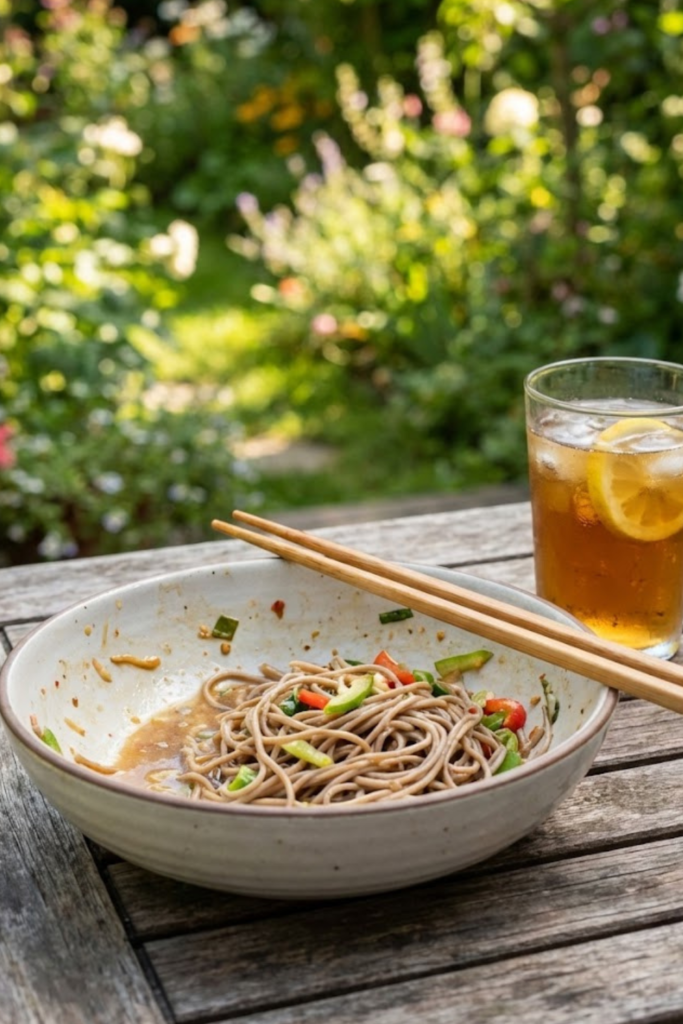
So, there you have it! A big bowl of yummy noodles that won’t make you feel heavy and tired. This Cold Soba Noodle Salad with Tofu is honestly one of my favorites for summer. It really changed how I look at salads. You should definitely give it a try! You might find yourself making it all the time like I do. It is fresh, it fills you up, and it is just plain good.
If you liked this recipe, please do me a huge favor. Pin this recipe to your “Healthy Lunch Ideas” board on Pinterest. It helps other people find it, and it saves it for you so you can find it quickly the next time you are hungry and don’t want to cook!