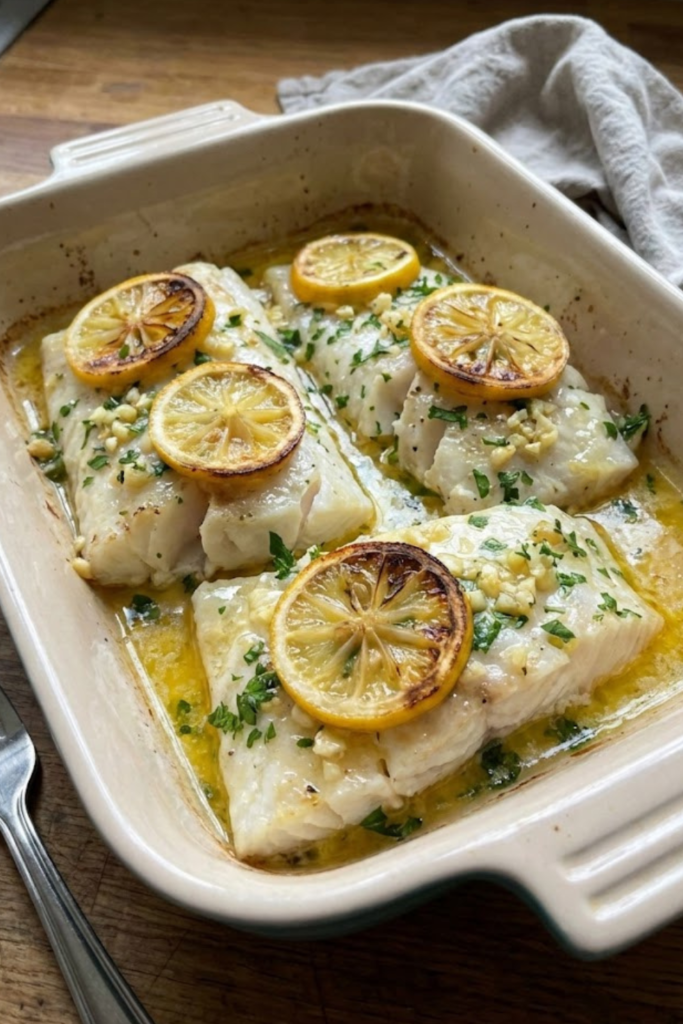
I honestly think the reason so many of us struggle with fish is that we treat it like chicken or beef, but cod is much more delicate and needs a gentler touch. I used to think I just wasn’t a “fish person,” but it turns out I just hadn’t found a recipe that didn’t turn my dinner into a chewy mess. These Garlic Lemon Baked Cod Fillets changed everything for me because the butter keeps the moisture locked in while the lemon cuts through the richness perfectly.
Plus, if you’re like me and always running late with soccer practice or work meetings, you’ll love that this prep takes maybe five minutes tops. You basically just throw everything in a dish and let the oven do the heavy lifting while you pour yourself a glass of water or help with homework. It’s one of those rare meals that feels fancy enough for guests but is easy enough for a Tuesday night when you’re exhausted. Once you see those big, white flakes pull apart on your fork, you’ll never go back to those frozen fish sticks again!
Selecting Your Fish Like a Pro
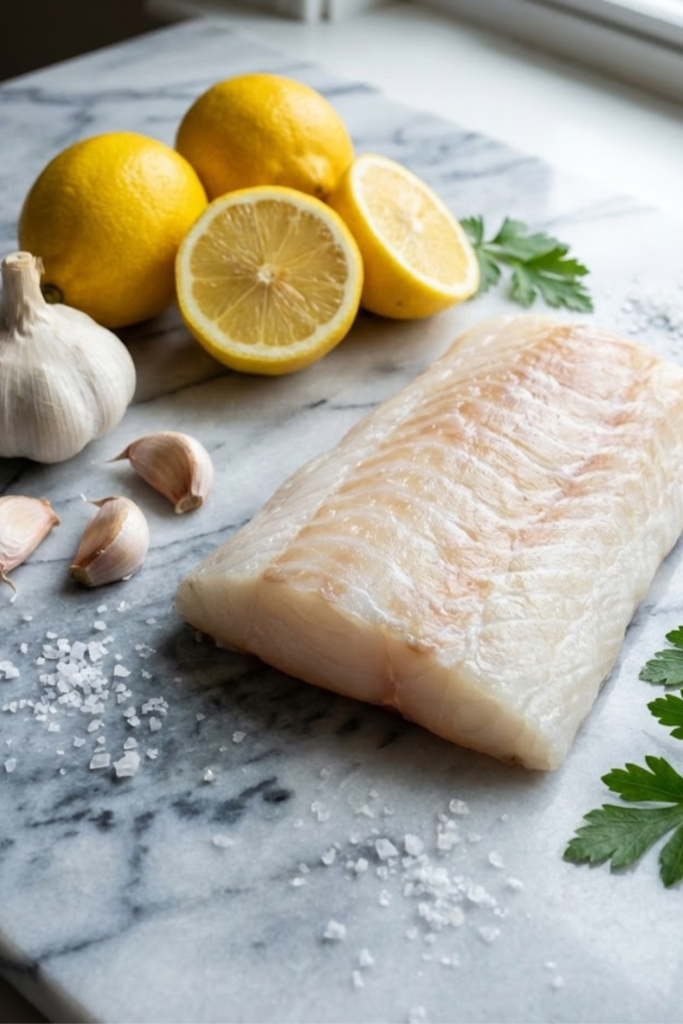
I also try to look at the color of the bloodline if the fillet still has it. You want that little strip of muscle to be a bright red or brownish-pink. If it looks dull or grey, that fish has been sitting out way too long. It’s a tiny detail, but for Garlic Lemon Baked Cod Fillets, you really want the cleanest flavor possible so the lemon can shine.
If you are buying a whole side of fish to cut yourself, check the skin side too. The skin should be shiny and metallic-looking, almost like a new coin. If it looks slimy or has a milky film on it, stay away. I used to think the skin didn’t matter since I usually bake mine skinless, but the skin tells the real story of how long that fish has been out of the water.
One more thing about the frozen bags of cod—check for “frost bite” or ice crystals inside the bag. If you see a lot of snow-like ice inside the plastic, it means the fish has thawed and refrozen at some point. That totally ruins the texture and makes your Garlic Lemon Baked Cod Fillets turn out tough and stringy. You want the fillets to look solid and clear through the bag.
I also prefer buying “dry-packed” scallops or fish when I can find them. Some places soak their fish in a phosphate solution to make them hold more water (so they weigh more and cost more!), but that extra chemical water leaks out in the oven and steams your fish instead of baking it. If your fish looks weirdly white and opaque before it’s even cooked, it’s probably been treated.
Lastly, I always check the “best by” date, but I usually try to buy fish that was packed on the same day. Even if the label says it’s good for three more days, fish loses its quality fast. I like to buy my Garlic Lemon Baked Cod Fillets the very same afternoon I plan on cooking them. It’s a bit of an extra trip to the store, but the difference in how the fish flakes apart is something you can really taste.
Don’t forget to bring a cooler bag if you have a long drive home! Keeping the fish ice-cold from the store to your fridge is the best way to keep it fresh. I’ve seen people leave fish in a hot car while they run other errands, and honestly, that’s just asking for a mediocre dinner. Taking care of the fish from the moment you pick it out is the real secret to a restaurant-quality meal.
The Secret Garlic Lemon Butter Sauce
One trick I started doing recently is using salted butter instead of unsalted. I know some people like to control the salt themselves, but I find that salted butter has a lower water content sometimes and it really helps the sauce stay thick. If you only have unsalted, just make sure you add a good pinch of kosher salt to the mix while the butter is still warm so it dissolves properly. There is nothing worse than biting into a grain of salt that didn’t melt.
I also like to throw in a tiny splash of olive oil with the butter. It sounds a bit weird to mix them, but the oil helps keep the butter from browning too fast in the oven. It makes the Garlic Lemon Baked Cod Fillets look much more professional when they come out. Plus, it adds a nice little richness that you just don’t get with butter alone.
If you have some fresh parsley or dill in the fridge, chop it up and stir it in at the very end. I used to put the herbs in before baking, but they usually just turn black and lose their flavor. Now, I keep half of them for the sauce and sprinkle the other half on right before serving. It makes the dish pop with color and tastes way fresher.
Sometimes I even add a teaspoon of honey if the lemons are extra tart. You won’t actually taste the sweetness, but it balances out the acidity and helps the sauce caramelize on top of the fish. It creates this beautiful glaze that sticks to the Garlic Lemon Baked Cod Fillets instead of just running off onto the baking sheet. Just a little drizzle is all you need to take the flavor to a whole new level.
Lastly, don’t be afraid to be generous with the sauce. I used to just drizzle a tiny bit, but now I make sure every inch of the fish is covered. The cod is like a sponge, and it will soak up all that garlic and lemon while it bakes. If there is extra sauce left in the bowl, I save it to pour over some steamed broccoli or rice on the side. It’s way too good to let any of it go to waste!

Professional Baking Tips for Flaky White Fish
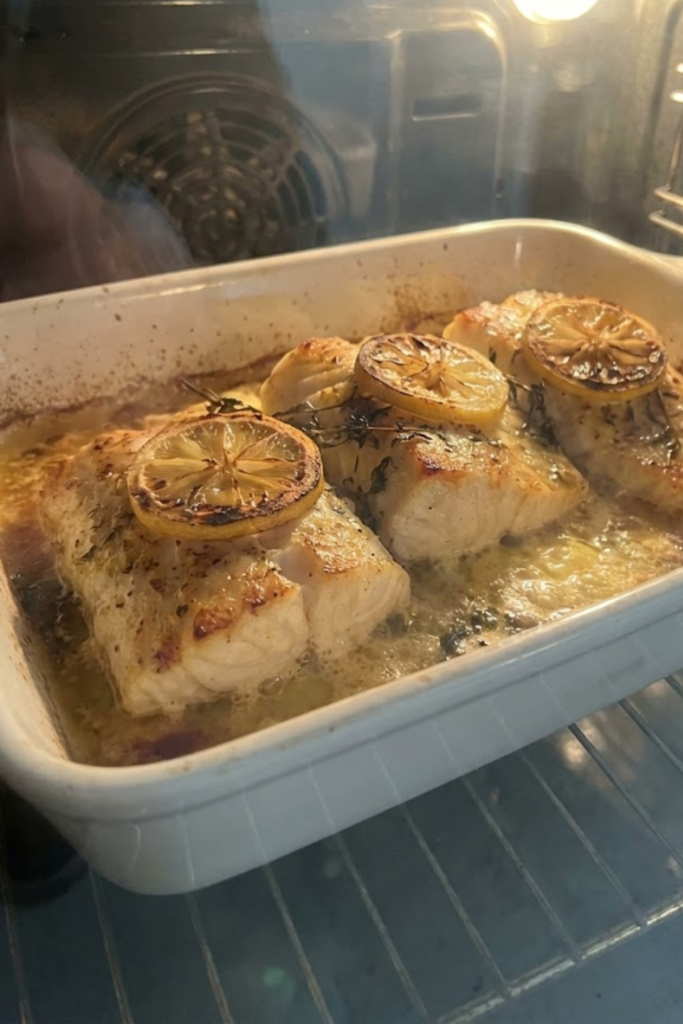
One trick I tell all my friends is to pay attention to the rack position in your oven. I used to just slide the pan right in the middle, but I’ve found that moving the rack to the top third of the oven really helps those Garlic Lemon Baked Cod Fillets get that beautiful roasted look without drying out the bottom. The heat reflects off the top of the oven and helps that garlic butter sauce bubble up and caramelize perfectly. It’s a small change, but it makes the fish look way more like something you’d get at a nice seafood shack.
You should also think about the type of baking dish you use. I used to use those deep glass pyrex dishes, but they actually trap too much steam around the sides of the fish. Nowadays, I prefer a flat rimmed baking sheet or a shallow ceramic dish. This lets the moisture escape so the fish stays firm and flaky instead of getting “poached” in its own liquid. If you see a lot of water pooling around the fish halfway through, you can carefully tip a bit of it out or use a paper towel to soak it up—just be careful not to burn your fingers!
I also started seasoned my fish from a bit of a distance. Instead of hovering right over the fillets, I hold my salt and pepper shaker about a foot above the pan. It sounds silly, but it helps the seasoning spread out evenly so you don’t end up with one super salty bite and another one that’s totally bland. Getting an even coat of salt is what really helps the natural flavors of the cod stand up to that punchy lemon and garlic.
Finally, if you’re cooking for a crowd and have different sized pieces, try to put the thicker loins toward the back of the oven where it’s usually a bit hotter. Put the thinner tail pieces near the front so they don’t overcook while you’re waiting for the thick parts to finish. Taking that extra ten seconds to arrange your Garlic Lemon Baked Cod Fillets by size will save you from having half the tray come out perfect and the other half come out like rubber. It’s all about working with your oven, not against it!
I really hope this helps you feel a bit more confident the next time you’re standing at the seafood counter. Cooking Garlic Lemon Baked Cod Fillets doesn’t have to be a stressful event. Honestly, once you realize that most of the work is just letting the oven do its thing while you prep a quick salad or some rice, it’ll probably become one of your favorite “I don’t feel like cooking” meals.
Just remember: start with fresh fish, don’t skimp on the lemon zest, and keep that thermometer handy so you don’t overbake it. If you follow those three simple rules, you’re going to have a dinner that tastes like it came out of a professional kitchen, but without the massive bill at the end.
If you found these tips helpful, please save this recipe to your “Healthy Dinners” or “Easy Seafood” board on Pinterest! It really helps me out, and I’d love for more people to see how easy it is to make great fish at home. Happy cooking!