Did you know that over-cooking is the #1 reason people “hate” pork? It’s true! For years, I turned every chop into a hockey puck until I mastered this Baked Pork Chops with Garlic and Rosemary recipe. I remember my first time trying to cook for my mother-in-law, and the meat was so tough we practically needed a saw to get through it. It was so embarrassing, and I just sat there wishing I had ordered pizza instead!
But seriously, pork is actually pretty cheap and easy to make once you stop being scared of it and learn a few simple tricks. Most of us just grew up with parents who cooked everything until it was white and dry, but those days are finally over. You don’t need a lot of fancy tools to make this work, just some good meat and a little bit of patience while the oven does the heavy lifting.
In this guide, we are going to dive deep into the science of the sear, the magic of fresh herbs, and how to get that perfect internal temperature so your dinner is actually edible. Let’s get cooking!
Choosing the Right Cut for Baked Pork Chops
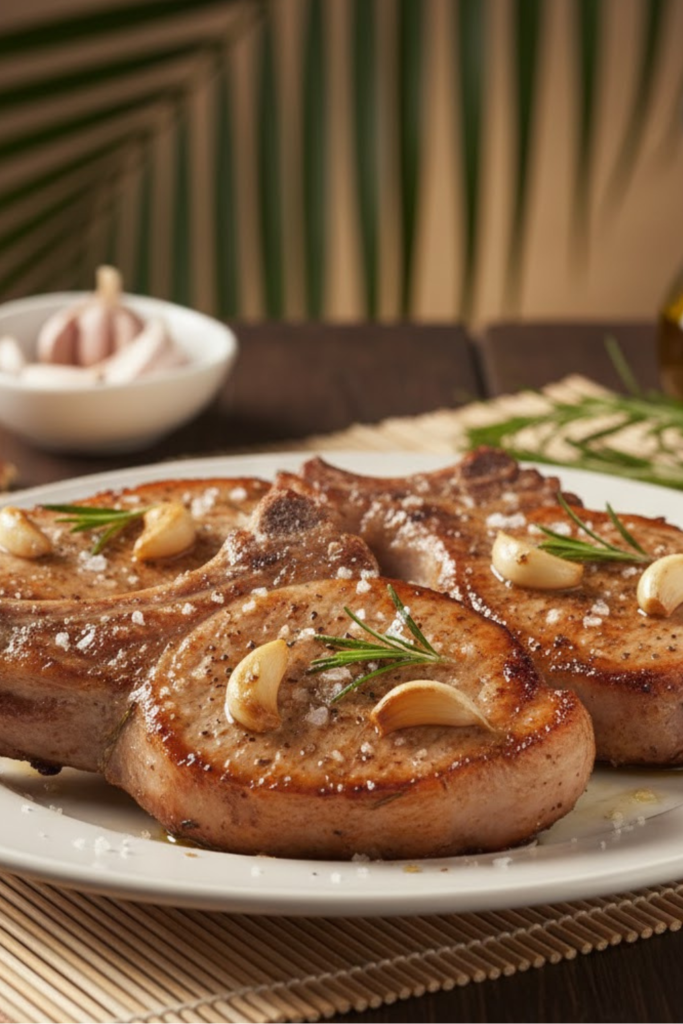
First, always go for bone-in chops. I know, those boneless ones look a lot easier to deal with and they’re neat in the package. But listen to me—that bone is like a little flavor stick. It helps the meat cook more evenly and keeps it from drying out while it’s sitting in that hot oven. My husband always says the meat right next to the bone is the best part, and he isn’t wrong. It stays way juicier than the boneless kind.
Next, you gotta check the thickness. This is where most people mess up. If you buy those super thin chops that look like a piece of paper, they’re gonna be overcooked before you can even smell the rosemary. You want to look for chops that are at least 1-inch thick. This thickness gives the pork enough time to get a good brown crust on the outside without turning into a hockey puck on the inside. I usually tell my friends to ask the butcher to cut them special if the ones on the shelf look too thin.
And please, don’t be scared of a little fat! You want to see some white marbling inside the meat and a nice strip of fat along the edge. That fat melts down as it bakes and makes the whole thing taste amazing. If the meat is too lean, it’s just gonna be tough. Look for a nice pink color—if it looks grey or pale, just leave it there and walk away. Trust me, getting a thick, bone-in cut with some good fat is half the battle won.
The Secret Garlic and Rosemary Infused Rub
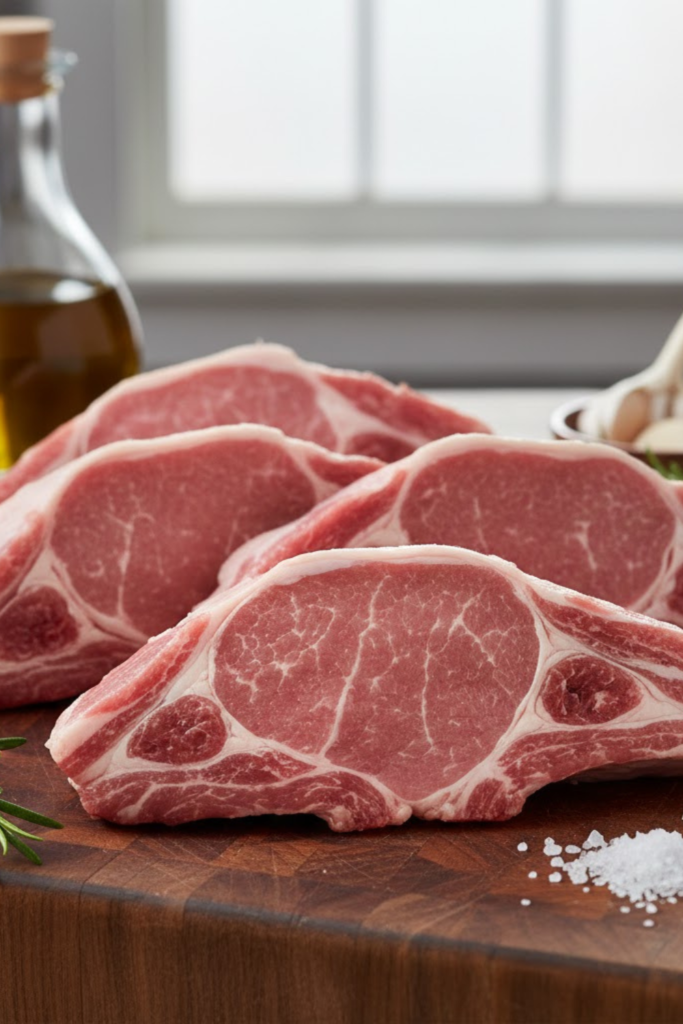
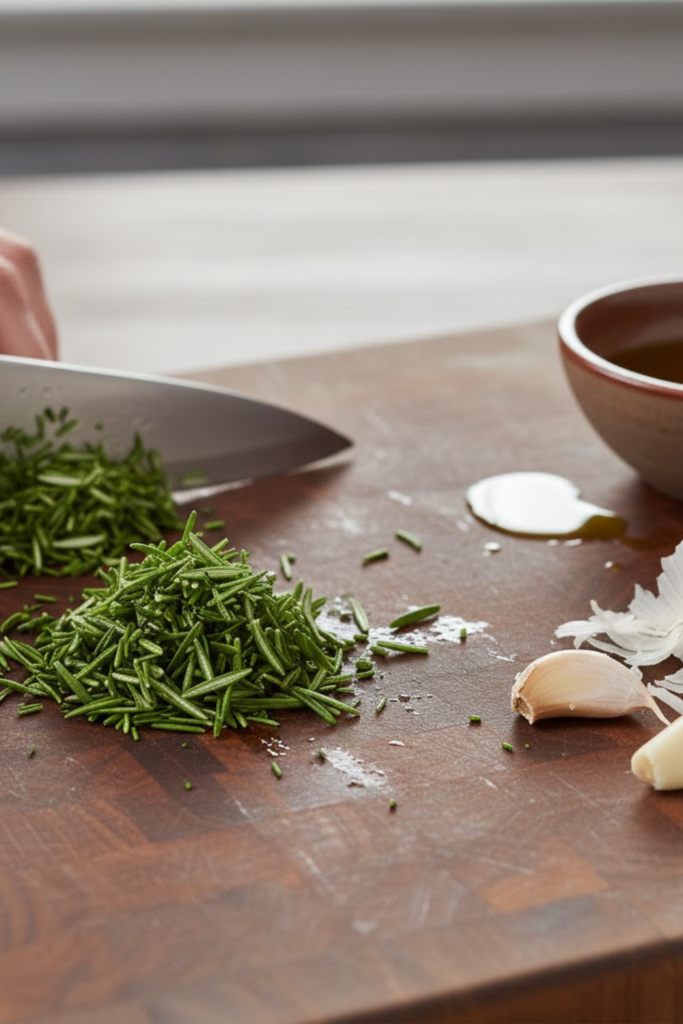
First thing’s first: you have to use fresh herbs. I know those little glass jars of dried rosemary in your spice cabinet are easy to grab, but they usually taste like old hay. Go buy a small bunch of fresh rosemary from the store. You just strip the needles off the woody stem and chop them up small. It makes a massive difference in the final taste. Same goes for the garlic. Use real cloves, not the stuff from a jar that is already minced. The flavor in fresh garlic is just way punchier and brighter.
To get all that goodness to stay on the pork, you need a binder. I usually just use a good glug of olive oil or even avocado oil if that’s what I have. I mix the chopped rosemary, minced garlic, salt, and pepper in a little bowl with the oil first to make a paste. Then I rub it all over the chops. You want to make sure every little spot is covered. If you don’t use enough oil, the garlic might burn in the pan later, and nobody likes bitter, burnt garlic. It’s a simple trick that keeps everything moist.
About the salt—don’t be shy! Pork can handle a good bit of seasoning. I like to salt the meat about 15 or 20 minutes before I start cooking. This gives the salt time to soak in a bit so the inside of the meat is just as tasty as the outside. My husband used to tell me I was over-salting, but then he tasted the difference and stopped complaining. Just give it a few minutes to sit on the counter. It’s a small step, but it really helps make every bite taste better.
I’ve found that mixing the herbs with the oil before putting it on the meat is much better than just sprinkling things on top. It creates a sort of flavored oil that coats the whole chop and helps that rosemary flavor really get into the meat while it bakes. Plus, it smells like a fancy restaurant while it’s sitting there waiting to go in the pan!
Searing Before You Bake: The Flavor Game-Changer
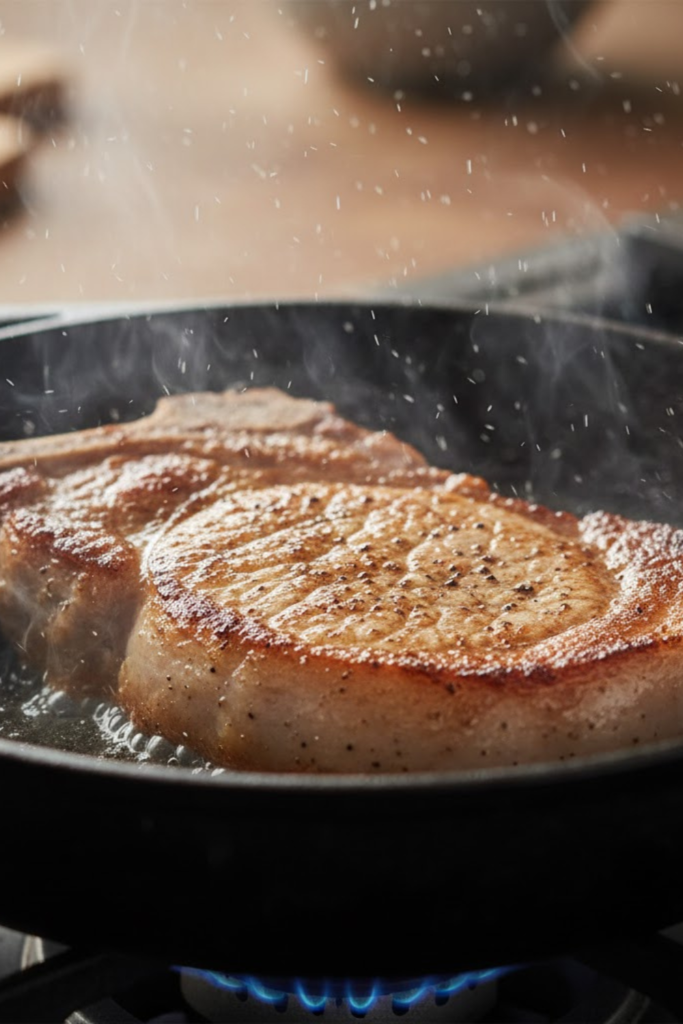
There is some science behind this, but I’ll keep it simple—it’s called the Maillard reaction. Basically, when you hit that meat with high heat in a pan, the sugars and proteins do a little dance and create that beautiful brown crust. That crust isn’t just for looks; it’s where all the deep, savory flavor lives. If you skip this, you’re missing out on the best part of the meal. I always tell my friends: brown is flavor, grey is… well, just boring.
I highly recommend using a cast iron skillet if you have one. It holds heat better than anything else in the kitchen. You want the pan to be nice and hot before the pork even touches it. If the meat doesn’t sizzle the second it hits the pan, it’s not hot enough! I usually let my pan heat up for a few minutes until I see a tiny bit of smoke. Then, I drop the chops in and let them sit. Don’t go poking and moving them around! Let that crust form for about two or three minutes on each side.
One big mistake I see people make is trying to cook too many chops at once. If you crowd the pan, the temperature drops and the meat starts to steam instead of sear. You’ll end up with grey meat again, and we don’t want that. If you’re cooking for a big family, just do them in batches. It takes a little more time, but it’s worth it. Once they have that golden-brown color, they’re ready to finish off in the oven. Doing this helps make sure the meat stays tender while the outside stays crispy and delicious.
Reaching the Perfect Internal Temperature
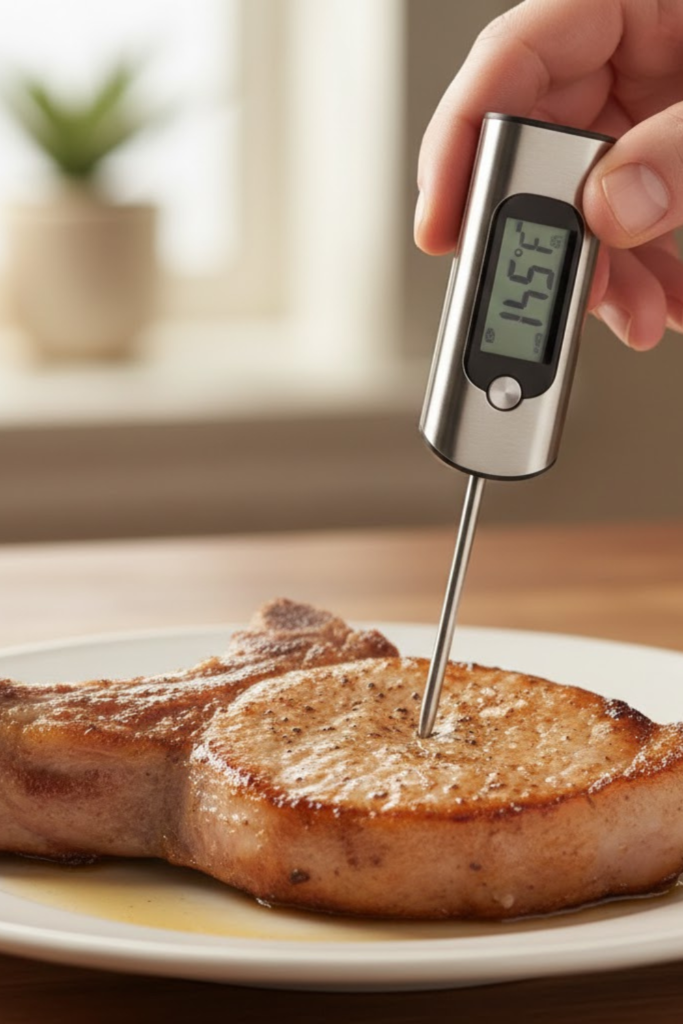
The biggest mistake you can make with Baked Pork Chops with Garlic and Rosemary is trusting your “gut” or just looking at the color. You want that internal temperature to hit exactly 145°F. I used to think it had to be 160°F, but that just turns the meat into a dry sponge. If you pull it at 140°F, the “carry-over cooking” will usually bring it up to that perfect 145 mark while it sits on the counter. It’s like magic, seriously!
I know you’re hungry—believe me, I get it. The smell of that garlic and rosemary is probably driving you crazy right now. But if you cut into that meat the second it comes out of the oven, all those delicious juices are going to run all over the plate. Your pork will end up dry, and you’ll be sad. Give it five minutes. Just five! I usually use that time to pour a glass of water or tell the kids to wash their hands.
One thing I learned the hard way is where you stick the probe. Don’t hit the bone! If the tip of your thermometer touches the bone, the reading will be way off because bones heat up differently than the meat. Aim for the thickest part of the muscle. I felt like such a dummy when I figured that out, but hey, we’re all learning here. It makes a huge difference in getting that juicy finish we want.
Also, make sure your thermometer is calibrated. I once had one that was off by ten degrees and I almost ruined a perfectly good Sunday dinner. Just a quick check in some ice water can save you a lot of headache. Once you see that 140 or 145 on the screen, you can relax because you know dinner is going to be perfect.
So, that’s really all there is to it. Making these Baked Pork Chops with Garlic and Rosemary isn’t nearly as scary as I thought it would be when I first started out. Honestly, if you just remember those three main things—picking a thick bone-in chop, making that fresh herb paste, and trusting your thermometer—you are going to be just fine. It makes such a huge difference when you stop guessing and finally start knowing exactly when the food is done.
My family actually asks for this every single week now, and my husband doesn’t even reach for the steak sauce anymore. That’s a huge win in my book! I really hope these tips help you feel more confident in the kitchen. If you found this guide helpful or if your pork came out super juicy, please save this recipe to your favorite Pinterest board! It helps me out a lot and it lets other people find a way to make a dinner they actually enjoy eating. Happy cooking, and I’ll see you in the next recipe!