“Simple ingredients are the soul of a great meal,” as my grandmother used to say while she hovered over a sizzling pan. I remember the first time I tried making Roasted Chicken Thighs with Lemon and Thyme; I basically turned the kitchen into a smoke-filled sauna! But man, that smell of fresh herbs and roasting poultry is unbeatable. Getting that skin perfectly golden while keeping the meat dripping with juice is a total game-changer for your weeknight dinner rotation. In this guide, we’re diving deep into the tips and tricks that make this dish a 2026 favorite for home cooks everywhere.

The Secret to Extra Crispy Skin on Your Roasted Chicken Thighs
I’ll be honest with you. For a long time, I was the queen of soggy chicken. My family would sit down for dinner, and while the meat tasted fine, the skin was always kind of soft and rubbery. It was pretty disappointing! As a teacher, I knew I had to go back to the drawing board and figure out what I was doing wrong. I wanted that crunch you get at fancy restaurants.
After a lot of testing in my own kitchen, I realized that getting perfect Roasted Chicken Thighs with Lemon and Thyme isn’t about luck. It’s about science. Specifically, it is about getting rid of moisture.
The Paper Towel Trick
The biggest mistake I used to make was taking the chicken straight from the package and putting it in the pan. Big error! That liquid on the surface turns into steam the second it hits the heat. Steam is the enemy of crispy skin. Now, I take a stack of paper towels and pat every single thigh until they are bone dry. I probably use way too many towels, but it makes a huge difference. If the skin feels tacky and dry, you are on the right track.
Don’t Skip the Salt
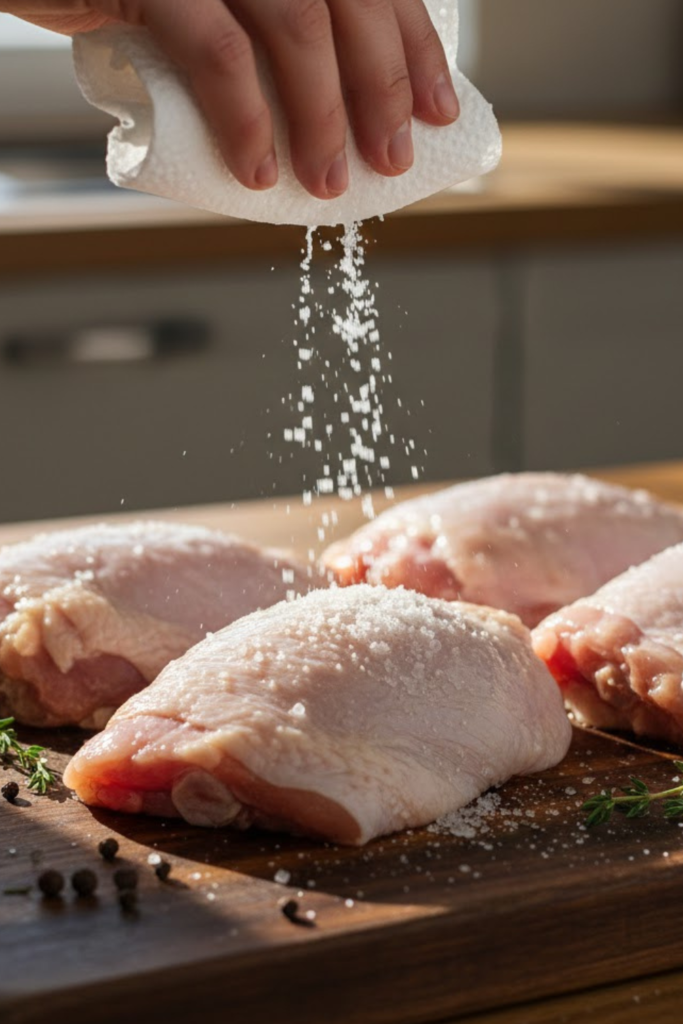
Once they are dry, I hit them with a good amount of kosher salt. I like to sprinkle it from high up so it covers everything evenly. The salt doesn’t just add flavor; it actually draws out even more hidden moisture from the skin. I usually let the chicken sit on the counter for about 10 or 15 minutes after salting. It gives the salt time to do its job.
Give Them Some Space
I used to try and save time by crowding as many thighs as I could into one pan. I hated washing extra dishes! But when the chicken pieces touch each other, they just trap steam between them. Now, I make sure there is at least an inch of space between each piece. If I have to use two pans, I do it. You want that hot oven air to move all the way around the meat.
Crank Up the Heat
Don’t be scared to turn that dial up. I usually roast mine at 425 degrees. This high heat is what renders the fat under the skin. As that fat melts, it basically fries the skin from the inside out. If you go too low, the meat cooks before the skin gets a chance to get brown and crispy. Keep an eye on it, but trust the heat!
Why Fresh Thyme and Citrus Create the Best Pan Sauce
I tell my students all the time that the best part of a meal is usually the stuff people try to scrub off the pan. If you just take the chicken out and put the skillet in the sink, you are missing out on the best part of Roasted Chicken Thighs with Lemon and Thyme. That brown stuff stuck to the bottom? Chefs call it “fond,” but I just call it the flavor base.
When you roast these thighs, the fat from the chicken melts down and mixes with the lemon juice and the herbs. It creates this thin, zesty sauce that is amazing over mashed potatoes or even just some crusty bread.
Fresh Herbs vs. The Jar in the Pantry
I used to be lazy and just use the dried thyme that had been sitting in my cabinet since 2019. It’s fine, I guess, but it doesn’t have that “pop.” Fresh thyme sprigs are cheap and they make the whole house smell like a fancy spa. When the heat hits those fresh leaves, they release oils that you just can’t get from a jar. Plus, they look really pretty when you serve the dish to your friends.
The Magic of Deglazing
Don’t let that flavor go to waste! After I pull the pan out of the oven, I usually squeeze a little extra lemon juice right onto the hot surface. It sizzles like crazy, which is always fun to watch. I use a wooden spoon to scrape up all those little roasted bits. This “deglazing” step turns the drippings into a real sauce. It’s sour, salty, and a little bit earthy from the thyme.
Zest for Extra Credit
One thing I learned the hard way: the juice is for the acid, but the zest is for the smell. If you only use the juice, the lemon flavor can sometimes get lost during the long roast. I like to grate the yellow part of the skin—the zest—right over the chicken before it goes in. It adds a bright, citrusy punch that makes the meat taste much lighter than your typical heavy Sunday roast. Just make sure you don’t grate too deep into the white part, because that part is super bitter and can ruin your sauce.

Choosing Your Gear: Cast Iron vs. Sheet Pan
I used to just grab whatever pan was on top of the pile in my messy cabinet. Usually, it was a thin, cheap baking sheet I bought at a grocery store years ago. My chicken was okay, but it was never really great. Then a fellow teacher gave me an old cast iron skillet for my birthday, and it totally changed how I make Roasted Chicken Thighs with Lemon and Thyme.
Picking the right pan isn’t just about what is clean; it’s about how the heat moves around your food.
The Case for Cast Iron
If I’m only cooking for myself or maybe one other person, I always reach for the cast iron. This heavy metal pan holds onto heat better than anything else. When you put the chicken in, the pan stays hot, which helps the bottom of the thighs get a nice brown crust while the top roasts. Plus, you can start the chicken on the stove to get a head start on that skin and then just slide the whole thing into the oven. It saves you from washing an extra dish, and I am all about doing less work after dinner.
When to Use a Sheet Pan
Now, if the whole family is coming over, the skillet is too small. That is when the sheet pan is your best friend. You can spread out ten or twelve thighs at once. Just make sure you don’t use those super thin pans that “pop” or warp when they get hot. If you hate scrubbing pans as much as I do, you can line it with parchment paper. It makes cleanup a breeze, though you might lose a tiny bit of that bottom crunch compared to the skillet.
Avoid the Deep Dish
One mistake I see people make is using a high-walled baking dish, like what you’d use for brownies. Don’t do that! The high sides trap the moisture and steam the chicken instead of roasting it. You want a pan with low sides so the dry heat can get to the meat from every angle.
Also, no matter which pan you pick, I always suggest using a meat thermometer. I used to just poke the meat and hope for the best, but that’s how you end up with dry chicken. Pull them out when the thickest part hits 165 degrees. It’s the best way to make sure they are safe to eat but still super juicy.

Roasting the perfect chicken doesn’t have to be a struggle, even if you’ve had a few kitchen disasters in the past like I have. Once you nail the balance of zesty lemon and earthy thyme, your family will be begging for seconds! It’s fast, it’s cheap, and it tastes like a million bucks. Seriously, there is nothing better than that smell filling up your house on a Tuesday night.
I usually make a double batch because the leftovers are amazing when they’re cold or tossed into a quick salad for lunch the next day. It’s one of those reliable meals that makes you feel like a real chef, even when you’ve had a long day and don’t really feel like being in the kitchen. Plus, once you get the hang of this, you can start swapping in different herbs like rosemary or oregano to keep things fresh. If you loved this recipe and these tips, please save it and share it on Pinterest so others can find their new favorite dinner!