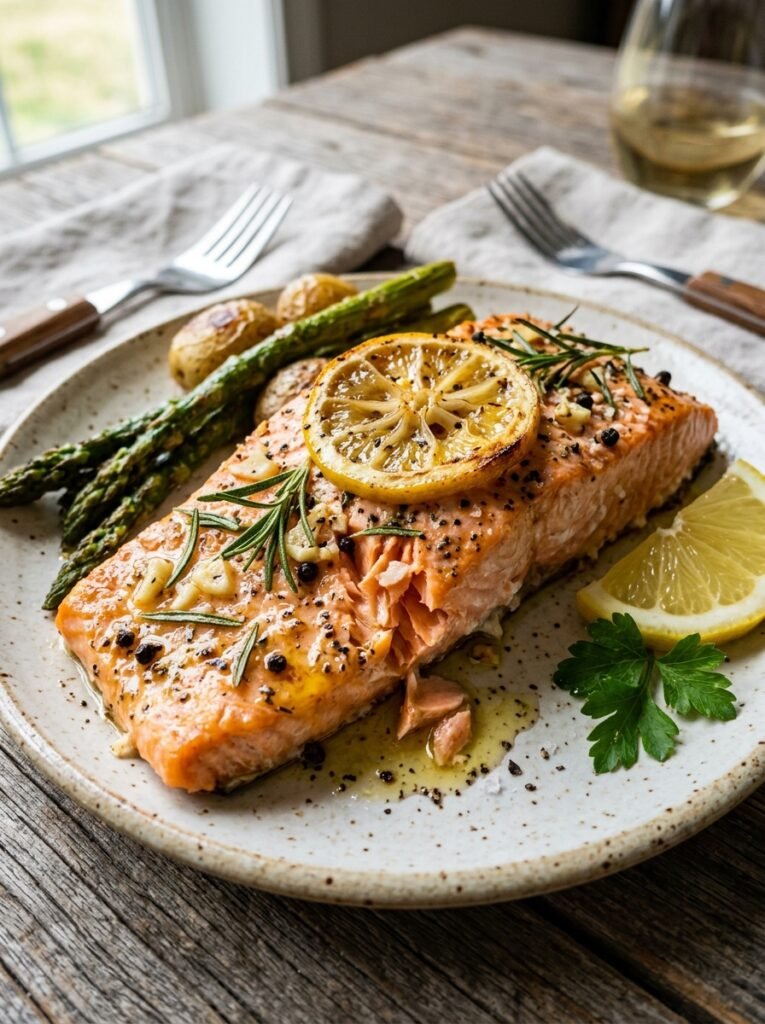
Rosemary lemon baked salmon is a nutrient-rich centerpiece dish combining heart-healthy fats with aromatic herbs and bright citrus. This main course delivers robust flavor through fresh rosemary sprigs and zesty lemon slices roasted directly on the fillet. The preparation requires minimal active time while producing restaurant-quality results for weeknight dinners or special occasions. This salmon preparation method maximizes moisture retention through low-temperature baking and strategic herb placement. The combination creates a savory crust while keeping the interior tender and flaky.
Recipe Overview
| Prep Time | 10 minutes |
|---|---|
| Cook Time | 15-18 minutes |
| Total Time | 28 minutes |
| Servings | 4 people |
| Difficulty | Easy |
| Cuisine | Mediterranean |
Why This Recipe Works
This rosemary lemon baked salmon technique succeeds through controlled heat application and strategic ingredient placement. The salmon fillet cooks evenly at moderate temperatures, preventing dry edges while developing a golden exterior. Fresh rosemary sprigs release essential oils directly onto the fish surface during roasting. Lemon slices steam naturally, creating aromatic moisture that penetrates the fillet fibers. The result is perfectly flaky salmon with distinct herbal and citrus notes throughout every bite.
Olive oil serves as both cooking medium and flavor carrier for the rosemary lemon combination. The oil creates a protective barrier that locks in natural juices during the baking process. Garlic provides savory depth without overpowering the delicate salmon taste. Salt draws out moisture initially but then reabsorbs seasoned liquid back into the protein. This technique produces consistent results regardless of salmon thickness or starting temperature.
Pair this dish with complementary sides for a complete Mediterranean-inspired meal. Visit our fish recipes collection for additional seafood preparation ideas. The method adapts easily to different salmon varieties including Atlantic, Sockeye, or Coho. Understanding sustainable seafood sourcing helps ensure quality and environmental responsibility.
Ingredients
| Ingredient | Quantity | Notes with Alternatives |
|---|---|---|
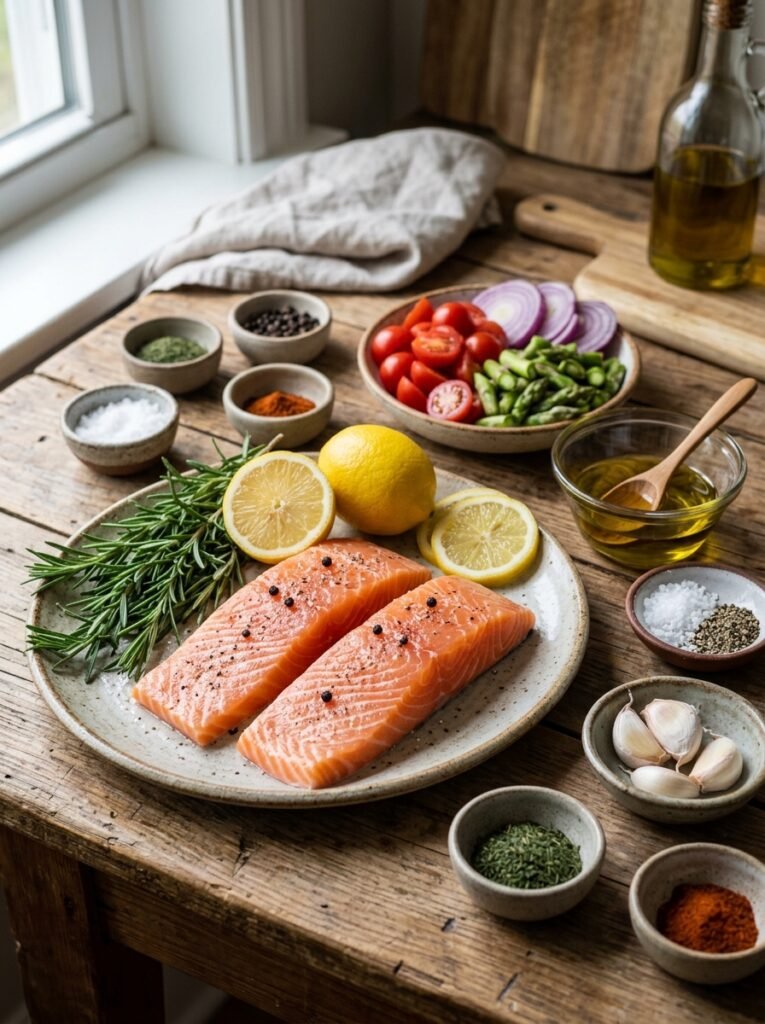
| Salmon fillets | 4 (6-ounce) portions | Fresh, skin-on or skinless; substitute arctic char or steelhead trout |
| Fresh rosemary | 4 sprigs | Whole sprigs; substitute dried rosemary (1 teaspoon) if needed |
| Lemon | 1 large, sliced | Thin rounds; use Meyer lemon for sweeter profile |
| Olive oil | 3 tablespoons | Extra virgin; substitute avocado oil for higher smoke point |
| Garlic | 4 cloves, minced | Fresh garlic preferred; substitute 1 teaspoon garlic powder |
| Kosher salt | 1 teaspoon | Adjust to taste; substitute sea salt or pink Himalayan salt |
| Black pepper | ½ teaspoon | Freshly ground; substitute white pepper for milder heat |
Step-by-Step Instructions
Prepare the Oven and Baking Surface
Preheat your oven to 400°F (200°C) for optimal roasting temperature. Line a rimmed baking sheet with parchment paper for easy cleanup and sticking prevention. The parchment creates a non-stick surface while allowing proper air circulation around the salmon. This preparation step ensures even cooking and simplifies post-dinner cleanup significantly.
Season and Oil the Salmon
Pat the salmon fillets completely dry with paper towels to remove surface moisture. Drizzle olive oil evenly across all fillet portions, spreading with your hands or brush. Season both sides generously with kosher salt and freshly ground black pepper. The dry surface promotes better browning and prevents steaming during the baking process.
Arrange Aromatics on Fillets
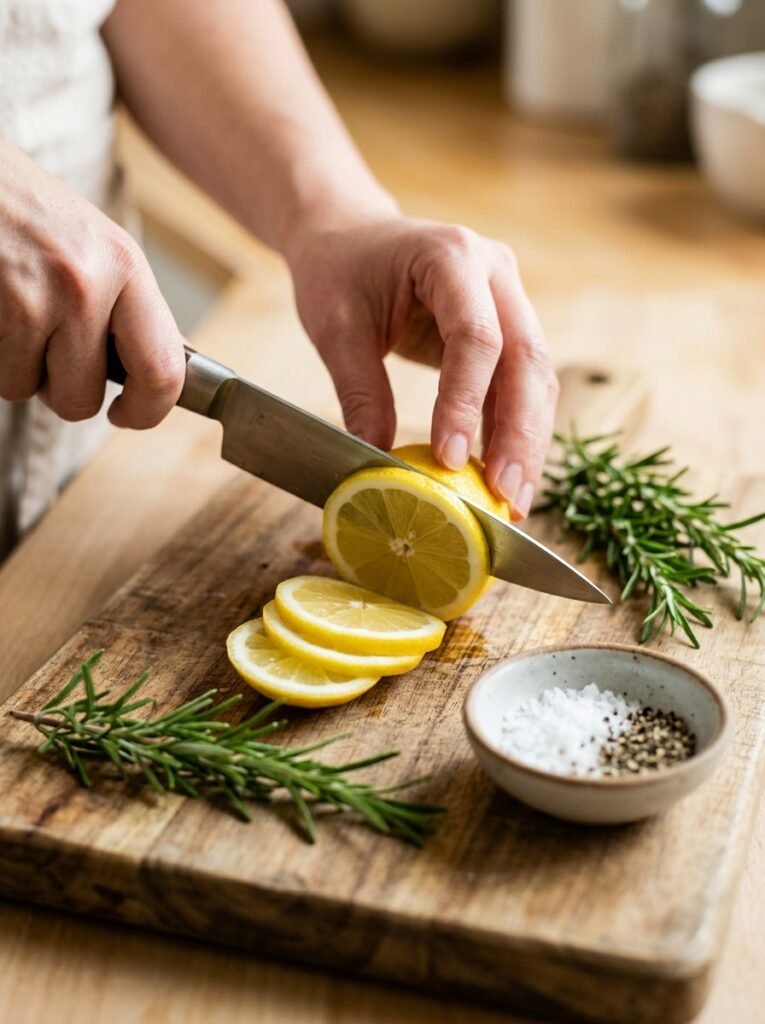
Place two rosemary sprigs on top of each salmon portion, positioning them evenly. Tuck thin lemon slices between and under the rosemary sprigs for maximum coverage. Distribute minced garlic across all fillets, focusing on thicker portions. The aromatics will infuse the fish with flavor as they roast and release their essential oils.
Bake to Perfect Doneness
Transfer the prepared baking sheet to the preheated oven’s center rack. Bake the rosemary lemon baked salmon for 15-18 minutes depending on fillet thickness. The salmon is done when internal temperature reaches 125°F for medium or 145°F for well done. Remove from oven and let rest for 3 minutes before serving to allow juices to redistribute.
Chef Tips for Perfect Results
- Bring salmon to room temperature 15 minutes before baking for even cooking throughout the entire fillet thickness.
- Use an instant-read thermometer to check internal temperature rather than guessing based on appearance alone.
- Choose thicker fillets (1 to 1.5 inches) for better moisture retention and more forgiving cooking window.
- Crush rosemary sprigs gently before placing on fish to release more aromatic oils during roasting.
- Position lemon slices in overlapping patterns to create steam pockets that enhance flavor infusion.
- Let salmon rest after baking to allow residual heat to complete the cooking process gently.
Common Mistakes to Avoid
- Overbaking the salmon: This causes dry, chalky texture instead of flaky tenderness. Use a thermometer and remove at 125°F for medium doneness.
- Using cold salmon straight from refrigerator: This creates uneven cooking with overcooked edges. Let it rest at room temperature for 15 minutes first.
- Skipping the drying step: Wet salmon surfaces steam instead of browning, resulting in pale color. Always pat fillets completely dry with paper towels.
- Crowding the baking sheet: This prevents air circulation and creates uneven cooking. Space fillets at least one inch apart for best results.
- Using dried rosemary incorrectly: Dried herbs burn easily at high heat. Reduce oven temperature by 25°F or use fresh sprigs whenever possible.
Variations and Substitutions
| Ingredient | Substitution | Impact on Flavor |
|---|---|---|
| Fresh rosemary | Dried rosemary (1 teaspoon) | More concentrated flavor; risk of burning if not monitored |
| Lemon | Orange or lime slices | Orange adds sweetness; lime provides sharper citrus notes |
| Olive oil | Avocado oil | Neutral taste with higher smoke point; less Mediterranean character |
| Garlic | Shallots or leeks | Milder allium flavor with subtle sweetness from shallots |
| Salt | Herb salt or lemon salt | Added herbal complexity or enhanced citrus brightness |
Serving Suggestions and Pairings
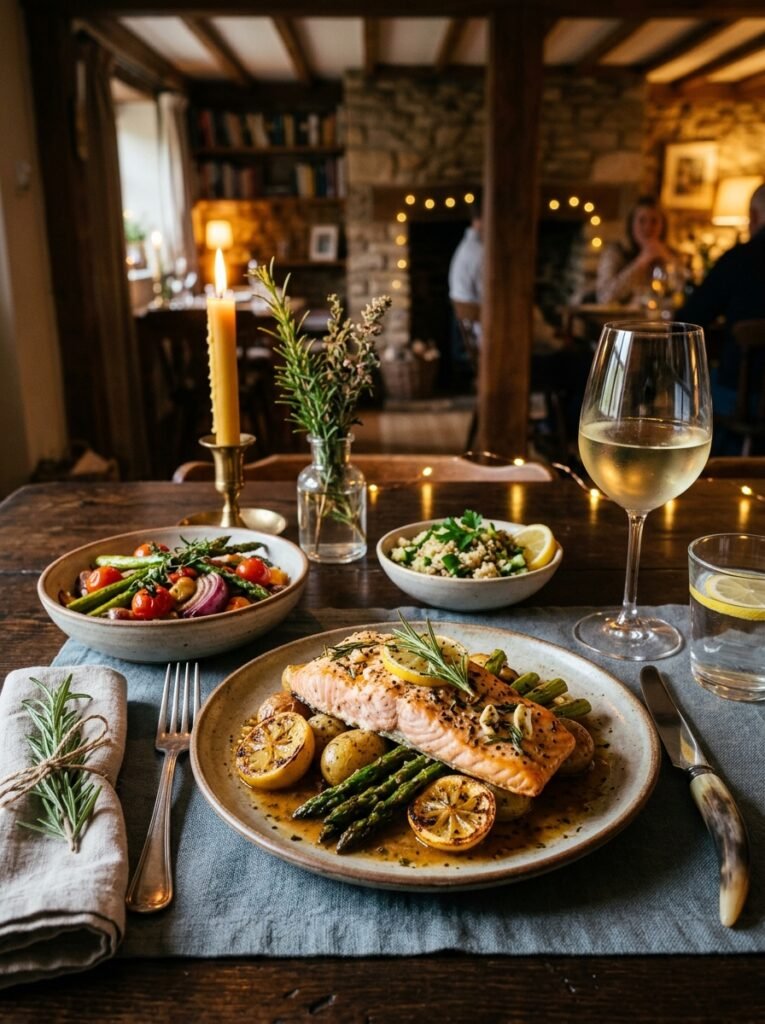
Serve this rosemary lemon baked salmon alongside roasted asparagus or green beans for a complete meal. The herbaceous notes complement steamed rice pilaf or quinoa salad beautifully. For casual dinners, pair with roasted baby potatoes and a simple arugula salad dressed with lemon vinaigrette. This dish works wonderfully for date nights, family gatherings, or meal prep Sundays when you want healthy flavor without extensive preparation time.
Create a Mediterranean-inspired spread with hummus, pita bread, and tabbouleh salad as accompaniments. The bright lemon and rosemary flavors make this salmon perfect for spring and summer entertaining when fresh herbs peak in quality. Consider serving with a chilled cucumber mint yogurt sauce to contrast the warm fish and add cooling refreshment to the plate.
Storage and Reheating
| Method | Duration | Instructions |
|---|---|---|
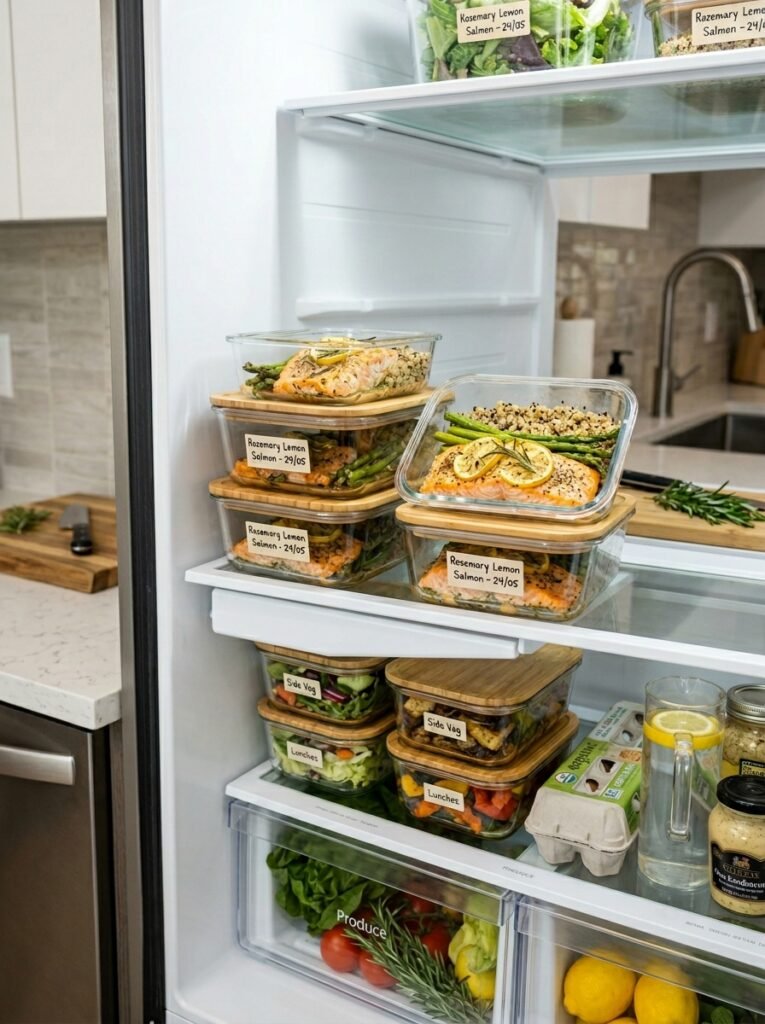
| Refrigerator | 3-4 days | Store in airtight container with any pan juices to maintain moisture |
| Freezer | 2-3 months | Wrap tightly in plastic wrap, then foil, and place in freezer bag |
| Oven Reheating | 10 minutes at 275°F | Wrap in foil with splash of water or broth to prevent drying |
| Stovetop Reheating | 3-4 minutes per side | Use non-stick pan over medium-low heat with added oil or broth |
Nutritional Information
| Nutrient | Amount per Serving |
|---|---|
| Calories | 340 calories |
| Protein | 34 grams |
| Total Fat | 20 grams |
| Saturated Fat | 3 grams |
| Carbohydrates | 3 grams |
| Fiber | 1 gram |
| Sugar | 1 gram |
| Sodium | 480 milligrams |
| Omega-3 Fatty Acids | 2.5 grams |
Approximate values based on 6-ounce Atlantic salmon fillet with listed ingredients.
Frequently Asked Questions
Can I use frozen salmon for this rosemary lemon baked salmon recipe?
Yes, frozen salmon works well when thawed properly in the refrigerator overnight. Never bake salmon directly from frozen as it creates uneven cooking and prevents proper seasoning adhesion. Pat thawed fillets completely dry before applying oil and seasonings. The cooking time may increase by 2-3 minutes for thicker frozen fillets.
How do I know when rosemary lemon baked salmon is perfectly cooked?
Use an instant-read thermometer inserted into the thickest part of the fillet for accurate temperature readings. Remove salmon from oven at 125°F for medium doneness or 145°F for well done fish. The flesh should flake easily with gentle fork pressure while remaining slightly translucent in the center. Visual cues include opaque color changing from translucent pink to matte light pink.
What if I don’t have fresh rosemary for the recipe?
Dried rosemary can substitute for fresh sprigs when used correctly and in reduced quantities. Use one teaspoon dried rosemary per four fillets instead of four fresh sprigs. Crush dried rosemary between your fingers before sprinkling to release more oils and reduce the woody texture. Reduce oven temperature by 25°F to prevent the dried herbs from burning during roasting.
Can I prepare rosemary lemon baked salmon ahead of time?
Yes, you can assemble the salmon up to 24 hours in advance for convenient meal planning. Place seasoned fillets on the prepared baking sheet, cover tightly with plastic wrap, and refrigerate. Remove from refrigerator 15 minutes before baking to take the chill off the fish. Add 1-2 minutes to the cooking time if starting with cold salmon from the refrigerator.
Why did my salmon turn out dry despite following the recipe?
Overbaking is the most common cause of dry salmon, even with proper ingredient ratios. Check internal temperature with a thermometer rather than relying solely on cooking time estimates. Thinner fillets cook much faster than thick portions, so adjust timing accordingly. Always let salmon rest after baking to allow juices to redistribute throughout the fish.
What are the best side dishes for rosemary lemon baked salmon?
Roasted vegetables like asparagus, broccoli, or Brussels sprouts complement the herbal citrus flavors perfectly. Starch sides including rice pilaf, quinoa, or roasted potatoes provide satisfying substance for a complete meal. A simple green salad with lemon vinaigrette echoes the fish’s bright notes without competing with the rosemary. For elegant presentation, consider a cucumber mint yogurt sauce as a cooling contrast.
Can I grill this recipe instead of baking?
Yes, you can adapt this recipe for grilling with some modifications to the technique. Use medium heat (350-400°F) and cook skin-side down on a well-oiled grate or in a grill basket. Reduce cooking time to 8-12 minutes total, flipping halfway through for even cooking. The rosemary and lemon can be placed directly on the grill alongside the salmon for added smoke infusion.
How should I store leftover rosemary lemon baked salmon safely?
Refrigerate leftovers in an airtight container within two hours of cooking to prevent bacterial growth. The salmon will keep safely for 3-4 days when stored properly with any accumulated pan juices. For longer storage, freeze portions wrapped tightly in plastic wrap and foil for up to 3 months. Thaw overnight in the refrigerator before reheating gently to maintain texture and flavor quality.
What salmon varieties work best for this recipe?
Atlantic salmon, Sockeye salmon, and Coho salmon all perform excellently with this herb and citrus method. King salmon is fattier and may require slightly longer cooking time to render excess fat properly. Avoid very thin tail-end pieces that will overcook before the rosemary infuses its flavor. Choose fillets of consistent thickness for the most even cooking results across all portions.
Is rosemary lemon baked salmon suitable for special diets?
This recipe is naturally gluten-free, dairy-free, and fits low-carb and keto dietary approaches. The simple ingredients contain no common allergens beyond fish, making it accessible for many dietary needs. For extra lean preparation, use skinless fillets and reduce olive oil to two tablespoons without significant flavor loss. The recipe is naturally paleo and Whole30 compliant when using compliant oil and spices.
Conclusion
Rosemary lemon baked salmon delivers restaurant-quality results with minimal effort and maximum flavor impact. The aromatic rosemary and bright citrus create a signature Mediterranean taste profile that elevates simple ingredients into an elegant main course. This reliable method produces consistent, flaky results whether you are cooking for a weeknight dinner or special celebration. Master this technique to enjoy healthy, delicious salmon any night of the week with confidence and satisfaction.
Print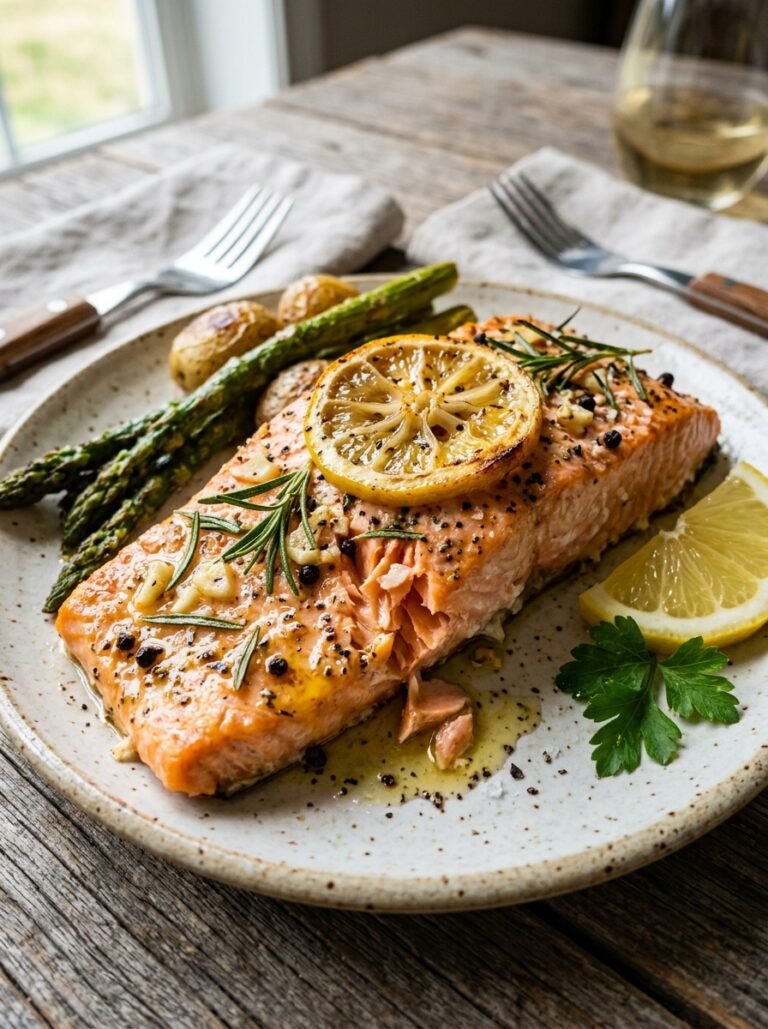
Rosemary Lemon Baked Salmon
A Mediterranean-inspired, healthy salmon dish featuring fresh rosemary and zesty lemon, roasted to perfection. Tender, flaky, and full of herbal and citrus flavor, it’s ideal for weeknight or special meals.
- Total Time: 28
- Yield: 4 servings 1x
Ingredients
4 salmon fillets (6 oz each)
4 fresh rosemary sprigs
2 lemons, thinly sliced
2 tablespoons olive oil
4 cloves garlic, minced
1 teaspoon salt
1/2 teaspoon black pepper
Instructions
Preheat oven to 375°F (190°C)
Line a baking sheet with parchment paper
Place salmon fillets on the sheet, skin-side down
Drizzle olive oil over each fillet
Sprinkle minced garlic, salt, and black pepper evenly over the top
Place fresh rosemary sprigs and lemon slices on top of each fillet
Bake for 15-18 minutes, or until the salmon is opaque and flakes easily with a fork
Notes
Ensure the salmon is fresh and of even thickness for consistent cooking.
For added flavor, marinate the salmon in olive oil, garlic, and rosemary for 20-30 minutes before baking.
Use sustainably sourced salmon when possible.
Pair with Mediterranean sides like roasted vegetables, quinoa, or mashed potatoes.
- Prep Time: 10
- Cook Time: 18
- Category: High Protein Meals
- Method: Baking
- Cuisine: Mediterranean
- Diet: Omnivore
Nutrition
- Serving Size: 1 fillet
- Calories: 250
- Sugar: 0g
- Sodium: 400mg
- Fat: 15g
- Saturated Fat: 3g
- Carbohydrates: 1g
- Fiber: 0g
- Protein: 25g
- Cholesterol: 80mg