You know, they say that about 80% of people overcook their fish at home. It’s a tragedy! I used to be one of those people, serving up salmon that had the texture of a pink pencil eraser. But honestly, once I figured out the magic of the Lemon Dill Baked Salmon combo, everything changed for my weeknight routine. This recipe is a total lifesaver when you want something that feels fancy but takes zero effort. Let’s dive into how to get that flaky, buttery goodness every single time!
I remember the first time I actually got it right; I was so shocked that salmon could actually melt in your mouth instead of being something you have to chew through. It’s funny how a few simple ingredients like fresh citrus and herbs can completely mask the fact that you only spent about five minutes on prep. Whether you are cooking for a date night or just trying to get a healthy meal into your kids on a Tuesday, this method is my go-to. You don’t need to be a pro in the kitchen to master this, you just need to follow a few basic steps that I’ve learned the hard way over the years. Plus, the smell of fresh dill and lemon wafting through the house is way better than any scented candle you can buy!
Choosing the Right Salmon Fillet
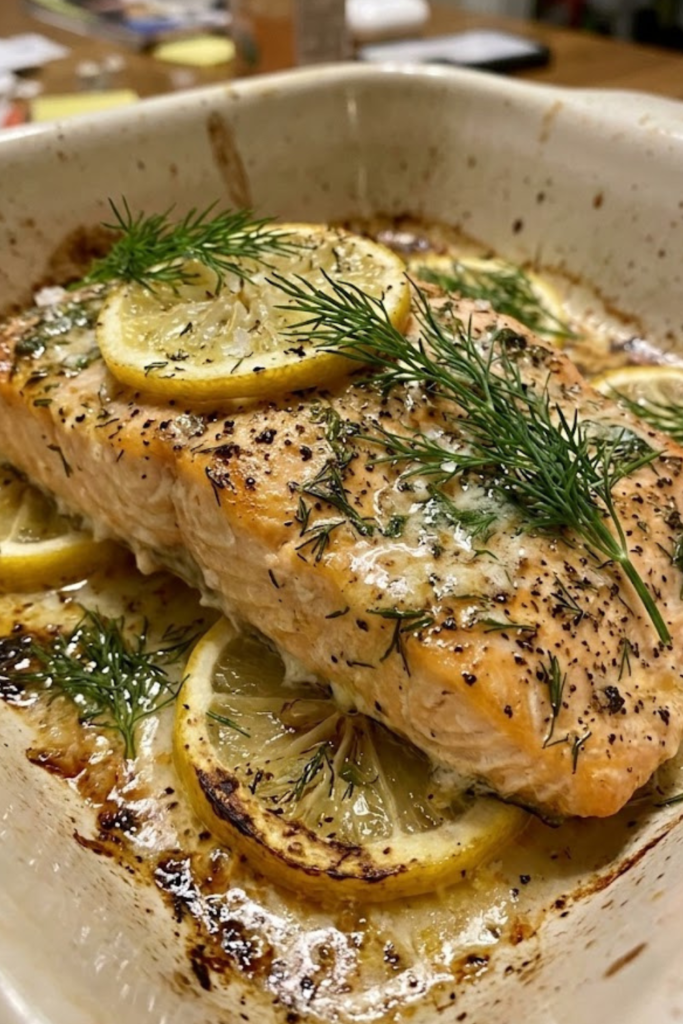
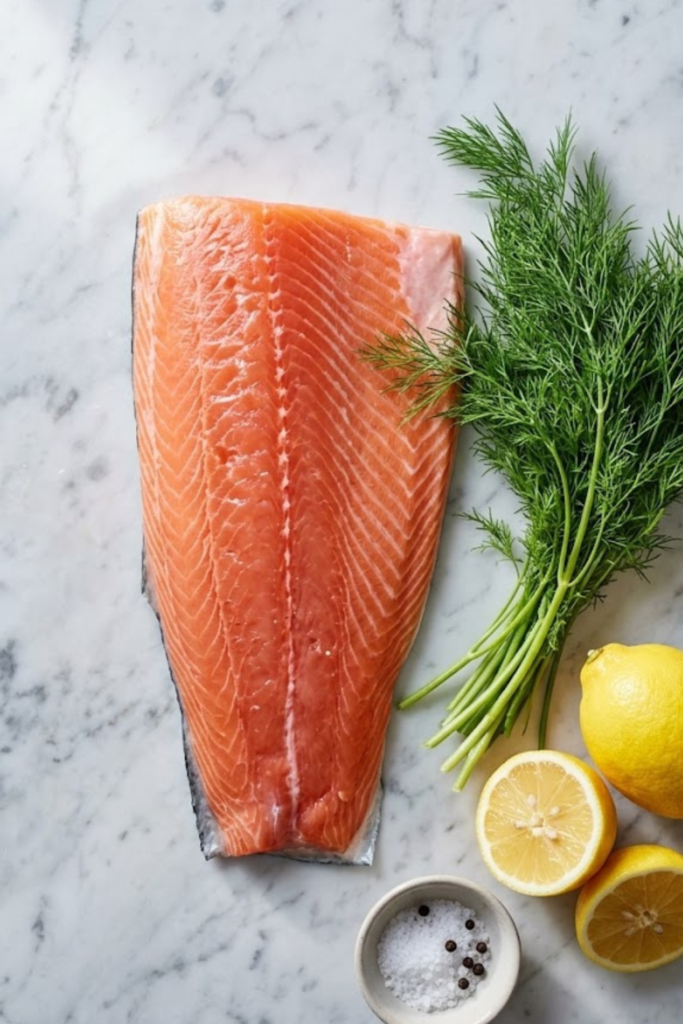
So, let me tell you, picking out your fish is the most important part of this whole thing. If you start with bad salmon, no amount of lemon or dill is gonna save you. When you’re at the store, you usually see two main types: wild-caught and farmed. I usually go for wild-caught like Sockeye or King salmon because the flavor is just so much more “real,” if that makes sense. Farmed Atlantic salmon is okay too, especially if you want something a bit fattier and more mild, but it can be a bit mushy if you aren’t careful.
When I’m standing at the seafood counter, I always look at the eyes first—they should be clear, not cloudy. And the meat should be firm. If you can, poke it (politely, through the plastic!) and it should spring back. If your finger leaves a dent, just walk away. Also, try to get a piece that is the same thickness all the way across. If one end is super thin and the other is thick, the thin part will turn into jerky while the middle is still raw. I like to cut mine into even 6-ounce fillets before they go in the oven so everything cooks at the same speed. It’s a simple trick that makes a huge difference.
Another thing I look for is the color of the flesh; it should be bright and saturated, not dull or fading. If you see any brown spots or bruising, that’s a big red flag that the fish has been sitting there way too long. I also check the smell—good salmon should just smell like the ocean, not “fishy” or like ammonia. If it smells strong, it’s already past its prime. I always ask the guy behind the counter which shipment came in today because they usually have the freshest stuff tucked away in the back. Taking those extra few seconds to inspect your food saves you from a disappointing dinner later on!
The Secret to the Lemon Dill Marinade
So, here is where the magic actually happens. You can’t just throw some lemon juice on a fish and call it a day—that’s how you get a sour, dry mess. The real trick is balancing that acid with a good fat. I always mix my lemon juice with a bit of melted butter or some high-quality olive oil. This creates a little barrier that locks the moisture inside the fish while it’s in the hot oven.
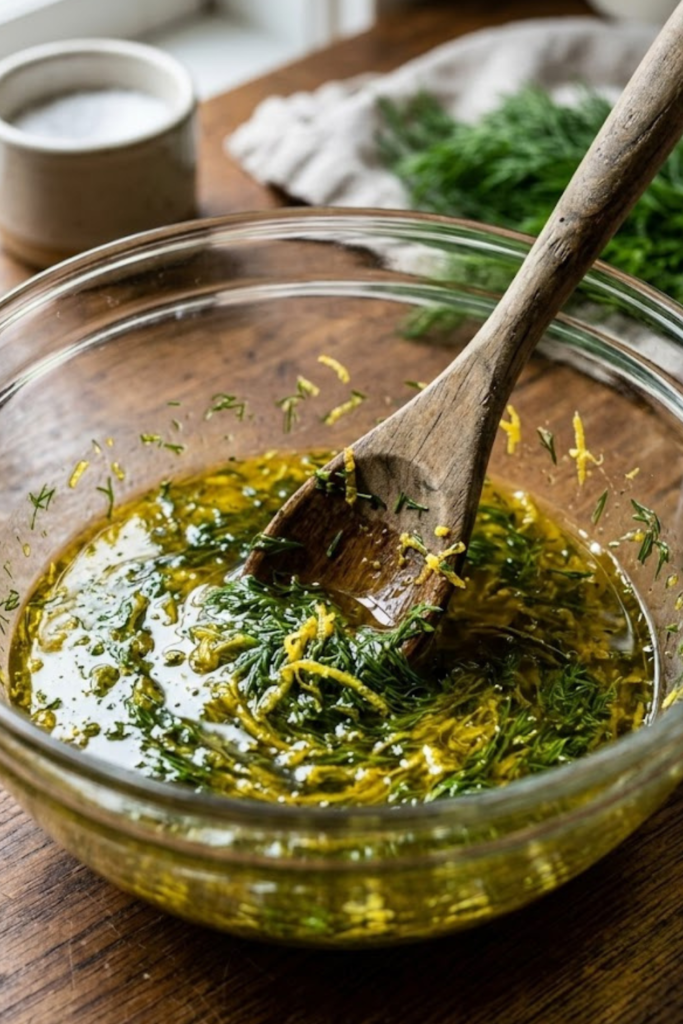
Now, let’s talk about the dill. I’m telling you right now, do not use that dried stuff in the little glass jar if you can help it. It just tastes like dust compared to the real thing. Get a big bunch of fresh dill from the produce section and chop it up. It gives the salmon this bright, grassy flavor that makes people think you’re some kind of professional chef. I also like to toss in some lemon zest. Most people forget the zest, but that’s where all the aromatic oils live! Just whisk the oil, lemon, zest, and a big handful of dill together in a small bowl. It’s simple, but it tastes like a million bucks.
If you really want to kick things up a notch, I suggest adding a tiny bit of Dijon mustard to the mix. It doesn’t make the fish taste like mustard, but it acts as an emulsifier that helps the oil and lemon juice stay stuck to the salmon instead of sliding off onto the pan. I also like to crush a clove of fresh garlic into the marinade because, honestly, garlic makes everything better. Make sure you don’t let the fish sit in this mixture for hours, though! Since there is a lot of acid from the lemon, it will actually start “cooking” the fish like a ceviche if it sits too long. I usually just brush it on right before it goes into the heat. And don’t be shy with the salt—salmon is a fatty fish and it can handle a good pinch to really bring out those citrus notes. Once you see how much flavor this adds, you’ll never go back to plain salt and pepper again.
Perfect Temperature and Timing for Flaky Fish
Cooking fish is honestly a bit of a nerve-wracking game if you don’t have a plan. I used to be so scared of undercooking it that I’d leave it in until it was dry as a bone. The best way I’ve found to avoid that is the 400°F (about 200°C) rule. You want the oven hot! A high heat for a shorter time helps cook the salmon through without letting all those white spots—called albumin—leak out and make the fish look messy.
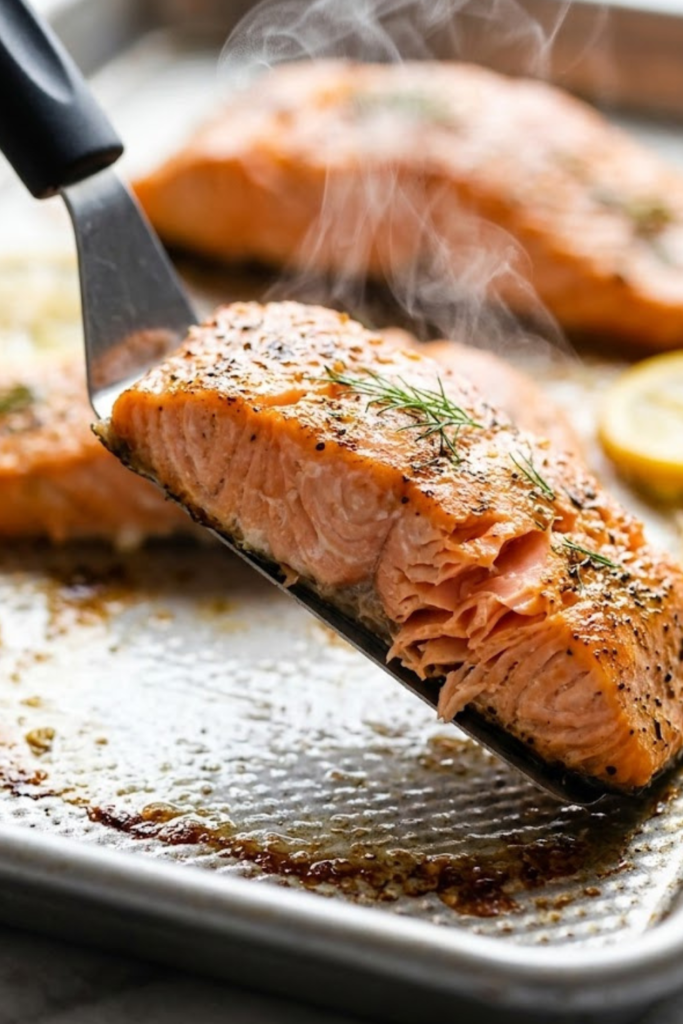
If you really want to get it right every single time, you need a meat thermometer. It’s a total game changer for your kitchen. I pull my salmon out when it hits 145°F (63°C). But here is the part most people skip: you have to let it rest. Just give it about three minutes on the counter before you touch it. This lets the juices settle back into the meat so it stays buttery and flaky instead of just running out all over your plate. Trust me, those three minutes feel like forever when you’re hungry, but they make all the difference.
Another thing I’ve learned is that not all ovens are the same. Some have hot spots in the back, so I always rotate my pan halfway through the baking time. This helps the heat hit every part of the fillet evenly. If you see that white stuff starting to pool on the surface of the fish, don’t panic! It just means the muscle fibers are tightening up and pushing out protein. It’s totally safe to eat, but it usually means the fish is getting close to being done, so keep a close eye on it.
I also like to use a baking rack inside my sheet pan sometimes. This lets the hot air circulate underneath the salmon so the skin doesn’t get all soggy and gross. If you don’t have a rack, just line your pan with some parchment paper so nothing sticks. Also, remember that thick fillets of King salmon will take a few minutes longer than thin pieces of Sockeye. I usually start checking my fish at the 10-minute mark just to be safe. It’s way better to check it early than to realize too late that it’s overdone. Once you get the hang of the timing, you won’t even need the timer as much because you’ll start to see the fish change from translucent to a nice opaque pink.
Look, making Lemon Dill Baked Salmon doesn’t have to be a scary thing! I used to get so nervous about messing up expensive fish, but if you just watch your timer and use the freshest herbs you can find, it’s actually one of the easiest dinners you can make. Your family is going to think you went to culinary school over the weekend, and you won’t even be stressed out.
The best part is how flexible this meal is for your busy schedule. You can prep the marinade in the morning, and then just pop the fillets in the oven right when you get home from work. It’s a total lifesaver for those nights when you want to eat something healthy but really don’t feel like standing over a stove for an hour. Plus, if you have any leftovers, they taste amazing cold on top of a fresh green salad the next day for lunch!
If you loved this recipe and found it helpful, please save it and share it on Pinterest so other people can stop eating dry, overcooked fish too! It really helps me out when you share these tips.