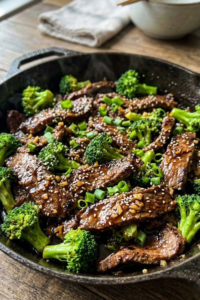
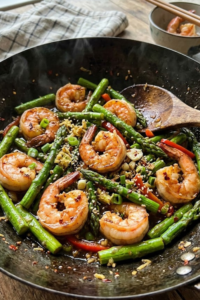
Do you know that feeling when you get home after a long day, and the last thing you want to do is scrub three different skillets? Yeah, me too! In fact, recent data suggests that over 60% of home cooks list “cleanup” as their biggest deterrent to cooking healthy meals. That is exactly why this Sheet Pan Sausage and Green Beans recipe is going to be your new best friend. It’s savory, it’s crispy, and best of all, it only uses one pan. Let’s get cooking!
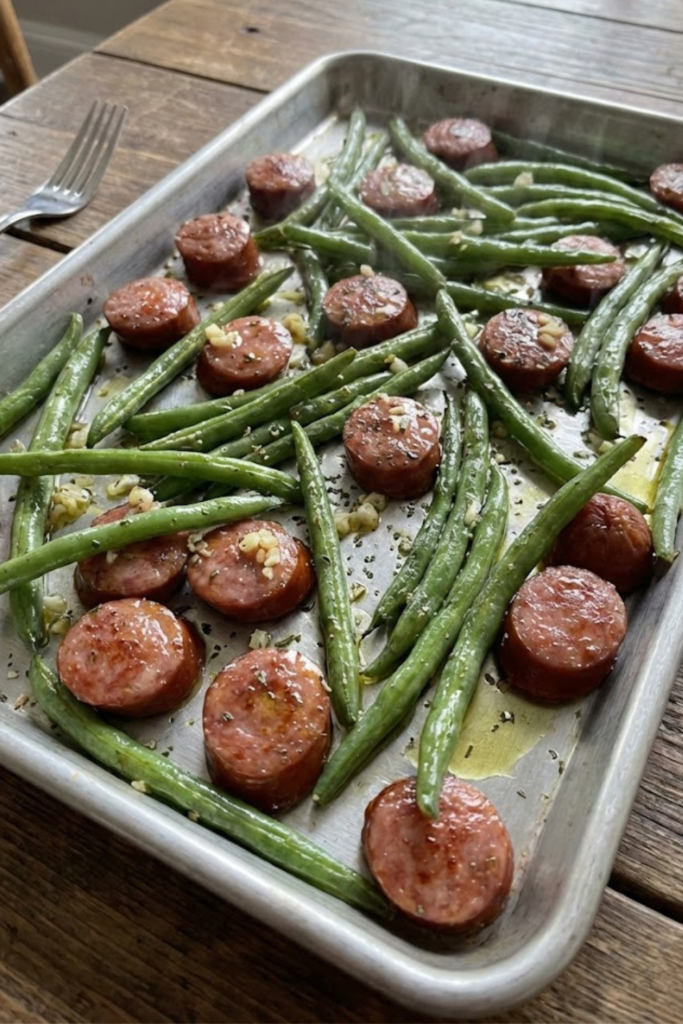
Choosing the Best Ingredients for Your Sheet Pan Dinner
You know, I used to think all sausages were created equal. I really did. Then came the “Great Soggy Dinner Incident of 2018,” and let me tell you, I learned my lesson the hard way. When you are making a sheet pan sausage and green beans dinner, the ingredients you grab at the store make or break the whole meal. It’s not just about throwing stuff on a pan; it’s about science, or at least that’s what I tell my kids when they ask why we can’t just eat cereal.
The Sausage Situation
Here is the deal: you need a sausage that brings its own moisture but doesn’t turn into a grease puddle. I’ve tried using those raw Italian sausages that come in the casings, and honestly? It’s a mess. They take too long to cook, and by the time they are done, your beans are burnt to a crisp.
Stick to pre-cooked smoked sausage. Kielbasa is my absolute go-to because it gets those crispy, caramelized edges that everyone fights over. Andouille is great if you want a little kick, but warn the family first—my youngest drank a gallon of milk the last time I switched it up without telling him. If you are trying to be a bit healthier, chicken apple sausage works, but keep an eye on it. It dries out faster than you’d think.
Fresh Beans vs. The Frozen Block
Please, I am begging you, put down the bag of frozen green beans. I know they are cheaper. I know they are convenient. But for a sheet pan sausage and green beans recipe, they are the enemy.
Frozen veggies release a ton of water when they roast. Instead of getting that nice, roasted “snap,” you end up with steamed, mushy beans swimming in liquid. I’ve been there, and it’s sad. Go for fresh green beans. Spend the five minutes snapping the ends off; it’s actually kind of therapeutic after a day of grading papers. You want them to hold up to the high heat so they get blistered, not soggy.
Oil and Smoke Points
Let’s talk about smoke detectors. Mine is apparently very sensitive, which I discovered while trying to roast veggies with extra virgin olive oil at 425 degrees. Bad idea.
For this dish, you are roasting hot and fast. You need an oil with a higher smoke point. I’ve switched to avocado oil or just a light olive oil (not the fancy extra virgin stuff for salads). It coats the veggies well and doesn’t start smoking up the kitchen halfway through cooking.
While I love the simplicity of just sausage and beans, sometimes the fridge is looking a little empty, and I need to bulk things up. I’ve found that red potatoes are a solid addition, but here is a tip: cut them small. Like, really small.
If your potato chunks are too big, the beans will be done, the sausage will be burning, and the potatoes will still be raw in the middle. Nobody wants crunchy potatoes. Bell peppers and onions are also safe bets because they cook at roughly the same speed as the beans. Just don’t overcrowd the pan, or you’re back to steaming instead of roasting!
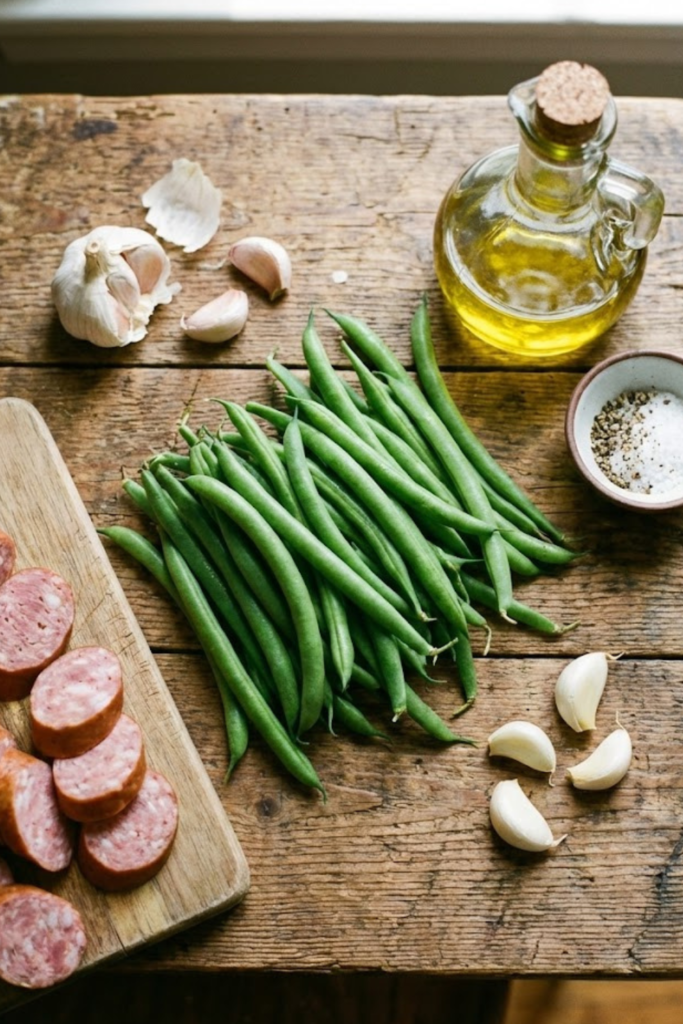
Essential Seasoning Blends for Roasted Sausage and Veggies
I will be the first to admit that for years, my seasoning strategy was just salt, pepper, and a prayer. I figured the sausage had flavor, so why bother? Well, I was wrong. While the sausage does do a lot of the heavy lifting in a sheet pan sausage and green beans recipe, the vegetables need some love too. Otherwise, you end up with bland green beans next to tasty sausage, and my kids will just pick out the meat and leave the green stuff.
The Basics: Don’t Overthink It
You really don’t need a fancy spice cabinet to make this taste good. I stick to the “holy trinity” of roasting: kosher salt, cracked black pepper, and garlic powder.
Please notice I said garlic powder, not fresh garlic. I learned this the hard way after setting off the smoke alarm (again). When you roast at 400 degrees or higher, minced fresh garlic tends to burn and turn bitter before the potatoes or beans are done. Garlic powder gives you that savory flavor without the burnt, acrid taste. It sticks to the veggies better with the oil, too.
Adding a Little Kick
If your family handles spice better than mine, adding some heat is a game changer. My husband loves it when I sprinkle a little Cajun seasoning over everything. It gives the green beans a nice crust.
If you have picky eaters or little ones, just keep a jar of red pepper flakes on the table. That way, the brave souls can add their own heat, and you don’t have to cook two separate dinners. I am all about doing less work, not more.
Herb it Up
Dried herbs are your friend here. Fresh herbs look pretty on TV, but in a hot oven for 25 minutes, they just shrivel up. I usually grab dried oregano or a generic Italian seasoning blend. Since dried herbs are stronger than fresh ones, you don’t need a ton. Just a teaspoon tossed in with your oil does the trick.
The Secret Ingredient
Okay, here is a trick I picked up from a neighbor at a potluck. Right before I toss everything in the oven, I add just a tiny splash of soy sauce or balsamic glaze to the oil mixture. I know it sounds weird for a sausage dish. But it adds this savory depth—I think they call it umami?—that salt alone just can’t give you. It helps the veggies brown up nicely, too. Just don’t go overboard, or it’ll get too salty.
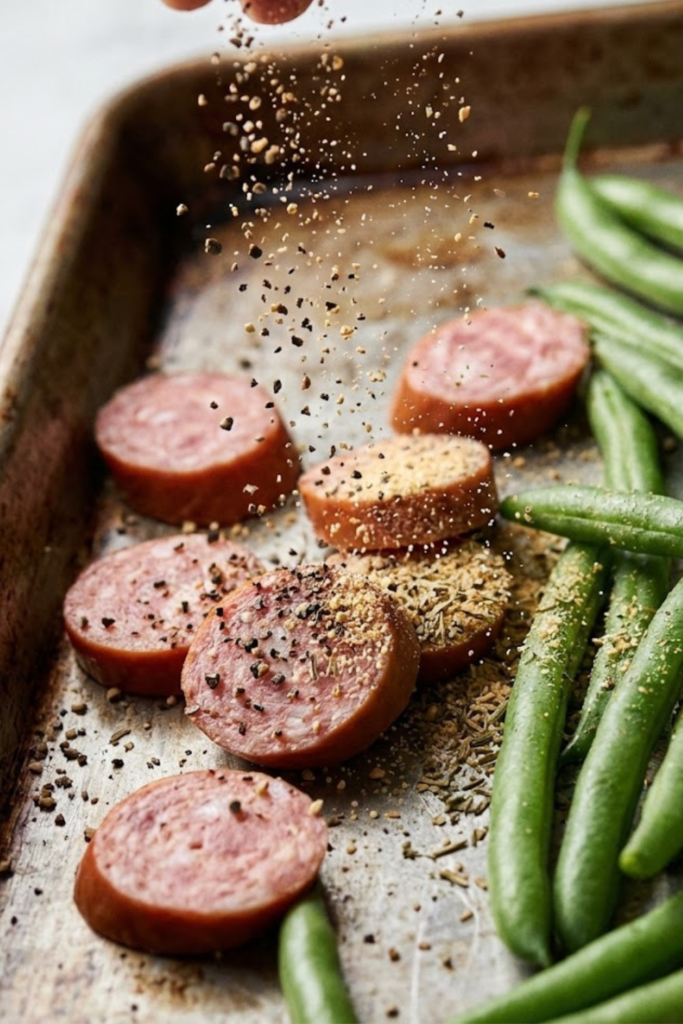
Step-by-Step Guide: How to Cook Sheet Pan Sausage
Alright, class is in session. Just kidding. But seriously, after making this sheet pan sausage and green beans dish almost every Tuesday for three years, I have got the process down to a science. It is pretty hard to mess up, but there are a few little things that make the difference between “meh” leftovers and a dinner your family actually asks for.
Crank Up the Heat
First things first, do not be afraid of your oven. I used to cook everything at 350 degrees because that is what I bake cookies at. Big mistake for veggies.
You need to preheat your oven to 400°F (200°C). If your oven is old and temperamental like mine, maybe even go to 425°F. The high heat is what roasts the green beans instead of just steaming them soft. You want that blast of heat to caramelize the sausage edges quickly.
Give Them Some Personal Space
This is probably the number one rule I tell people: do not overcrowd the pan! If you pile the sausage and beans on top of each other, the air can’t circulate.
When the food is stacked up, it creates steam. Steam makes things soggy. You want everything in a single layer, touching the metal of the pan. If you are doubling the recipe for a big family, just use two sheet pans. It is worth the extra dishwashing to have food that is actually crispy.
The Timing and The Toss
Pop the tray in the oven for about 20 to 25 minutes. But don’t just walk away and watch TV. Set a timer for the halfway mark (about 10 or 12 minutes in).
Pull the pan out and give it a good shake, or use a spatula to flip things around. This makes sure the sausage browns on both sides and the beans don’t get burnt on just the bottom. It helps everything cook evenly.
The Broiler Finish
Here is a little trick I use if the veggies are soft but look a little pale. Turn your oven to “Broil” for the last 2 minutes.
But listen to me: stand right there. Do not walk away to fold laundry. The broiler works fast. It will take your sausage from “perfectly golden” to “burnt charcoal” in about 60 seconds if you aren’t looking. Just give it a minute or two to get that nice char, then pull it out immediately.
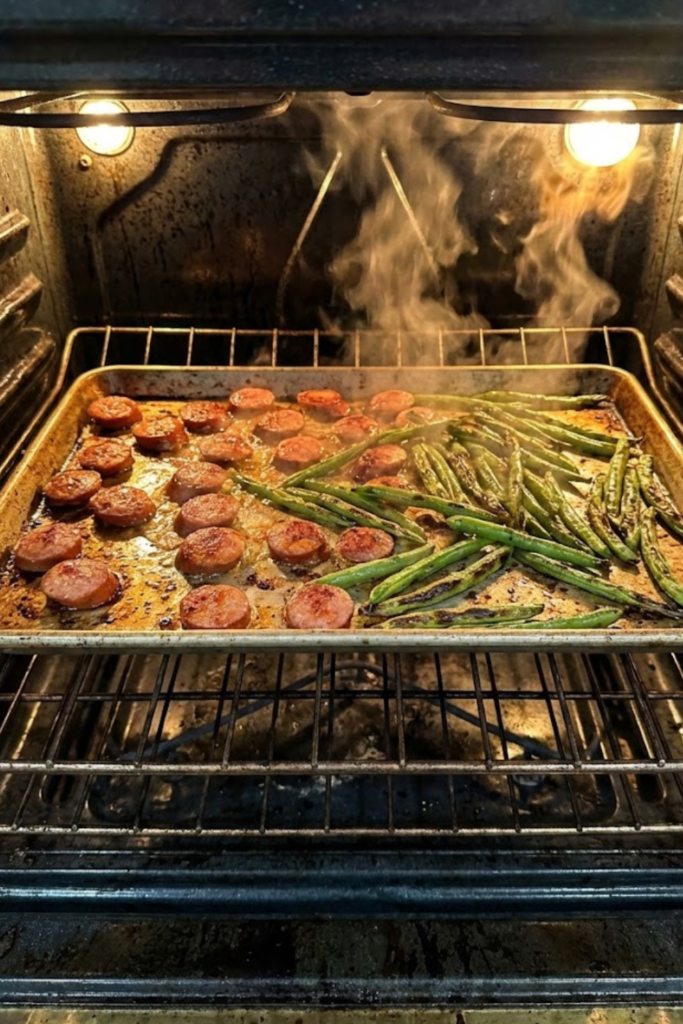
Storage, Reheating, and Meal Prep Ideas
If you are anything like me, you cook once and hope it feeds you for at least two days. With a full-time job and kids running around, I don’t have time to cook from scratch every single night. The good news is that this sheet pan sausage and green beans recipe actually holds up pretty well in the fridge, which saves me from ordering pizza on Thursday nights.
Storing Your Leftovers
After we eat, I let the pan cool down completely. You don’t want to put hot food straight into the fridge because it creates condensation, and moisture is the enemy of roasted veggies.
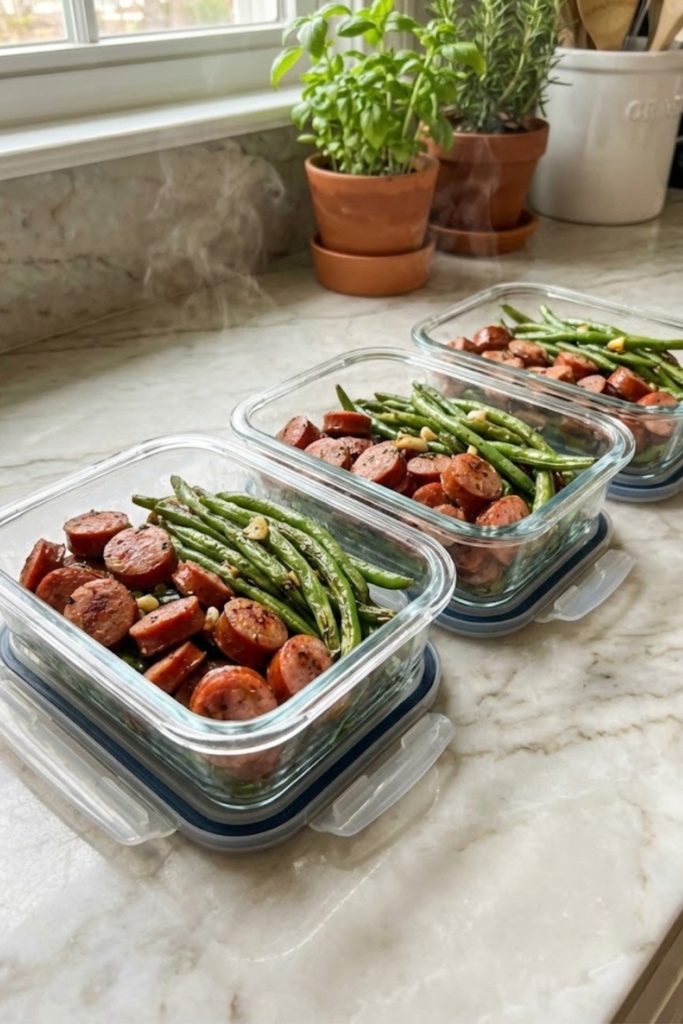
I usually divide the leftovers into glass airtight containers. They stay good in the refrigerator for about 3 to 4 days. After day 4, the sausage is fine, but the green beans start to get a weird texture, so I try to finish them before then.
How to Reheat Without the Mush
Okay, listen carefully. Do not put this in the microwave if you can help it. I mean, you can, but the beans will get rubbery, and the sausage loses its crispiness. It just tastes like sad cafeteria food.
If you have an air fryer, that is the best way to bring this dish back to life. Pop it in at 350 degrees for about 3 or 4 minutes. It crisps the sausage right back up. If you don’t have an air fryer, sticking it back in the oven or a toaster oven for 10 minutes works great too. It tastes almost as good as the first night.
Meal Prep for Work Lunches
Since I have a short lunch break, I love turning this dinner into meal prep bowls for the week. I will roast a huge batch on Sunday afternoon while I’m doing laundry.
I grab four plastic containers and put a scoop of brown rice or cauliflower rice in the bottom. Then I pile the roasted sausage and veggies on top. It’s a solid lunch that actually keeps me full until dinner. Sometimes I’ll bring a little container of BBQ sauce or mustard just to switch up the flavor so I don’t get bored by Wednesday.
Can You Freeze It?
I get asked this a lot. Technically, yes, you can freeze it. But honestly? I don’t love it. Green beans have a high water content, so when you freeze and then thaw them, they turn pretty mushy. The sausage freezes fine, but the veggies suffer. If you absolutely have to freeze it, eat it within a month, but just know the texture won’t be quite the same as fresh.
So there you have it. This is the dinner that saves my sanity at least once a week. It is not fancy, and it certainly won’t win any awards from food critics, but it fills hungry bellies and leaves you with only one pan to scrub. That is a major win in my book.
I really hope this sheet pan sausage and green beans recipe helps you out on those nights when you just don’t have the energy to deal with a complicated meal. Cooking doesn’t have to be perfect to be good. If you try it, let me know how it turns out. And hey, if you want to find this again when you are standing in the grocery store panic-buying ingredients, do yourself a favor and pin this to your Weeknight Dinners board on Pinterest. It helps me out, and it saves you from scrolling for twenty minutes later. Happy cooking!