Have you ever walked into a house that smells like pure comfort? That savory, deep aroma that just wraps around you like a warm blanket on a freezing Tuesday? That is exactly what we are making today. I remember the first time I tried to make a beef stew; it was watery, the meat was tough as shoe leather, and I honestly wanted to cry! But after years of tweaking, I’ve finally cracked the code to the perfect Slow Cooker Beef Stew with Root Vegetables.
This isn’t just throwing things in a pot and hoping for the best. We are talking about building layers of flavor that transform humble ingredients like chuck roast, carrots, and parsnips into a gourmet meal. Whether you are a busy parent needing a hands-off dinner or just craving something soupy and satisfying, this recipe is your new best friend. Let’s get that slow cooker fired up!

Choosing the Right Cut for Your Stew
Okay, let’s talk about the meat because this is where most people mess up. I know I did! For years, I would just grab those packages at the grocery store labeled “stew meat.” You know the ones? They look easy because they are already chopped up. But honestly, that is usually a trap. That meat is often a mix of leftover scraps from different lean cuts, and no matter how long you cook it, it stays tough and chewy. It’s like eating rubber bands.
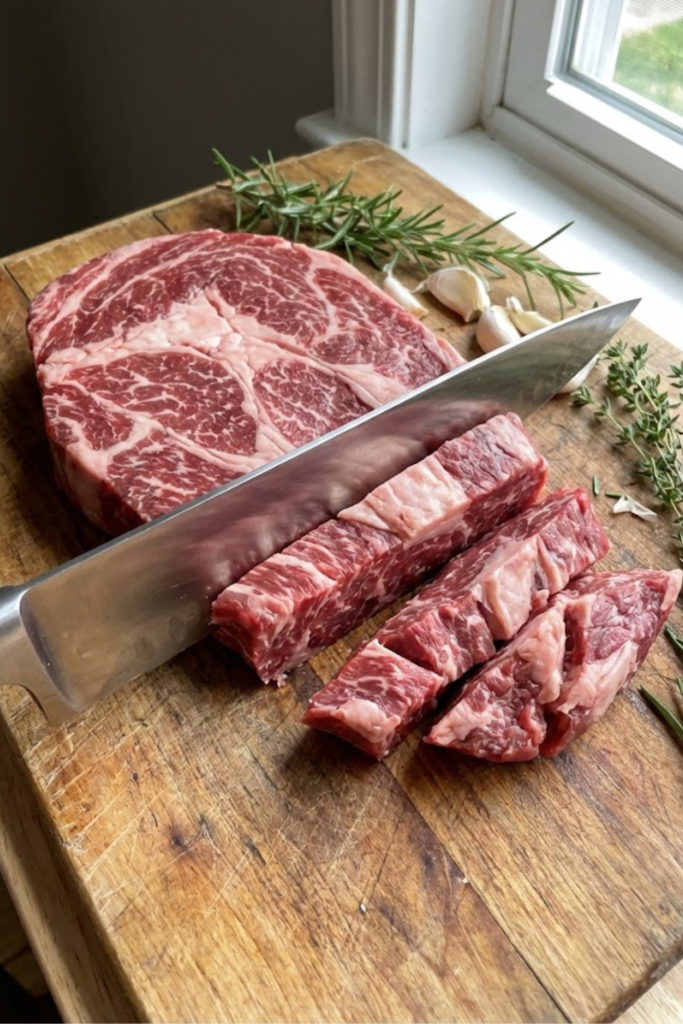
If you want that fork-tender, falling-apart beef, you have to buy a Chuck Roast. I cannot stress this enough. Chuck roast has all that white fat running through it, which is called marbling. When you cook it slow and low, that fat and the connective tissue break down. It turns into gelatin, which keeps the meat juicy and gives the sauce that rich, sticky feel.
Here is what I do:
- Buy a whole roast: I look for a big 3 or 4-pound piece. It is usually cheaper per pound than the pre-cut stuff anyway.
- Cut it yourself: I get out my big cutting board and chop it into chunks myself. It takes maybe 5 minutes.
- Watch the size: You want big pieces. I aim for about 2-inch cubes. If you cut them too small, they just turn into mush after 8 hours. If they are too big, they might be tough in the middle.
Don’t be scared of the fat. I used to trim every little piece of white off, but then my stew tasted flat. You need that fat for flavor. Just cut off the big, hard gristle pieces on the edge, but leave the rest. Trust me, it makes a huge difference.
The Essential Root Vegetables for Deep Flavor
Okay, so we have the meat sorted. Now we need to talk about the veggies. I think a lot of people treat the vegetables as an afterthought, but in a Slow Cooker Beef Stew with Root Vegetables, they are just as important as the beef.
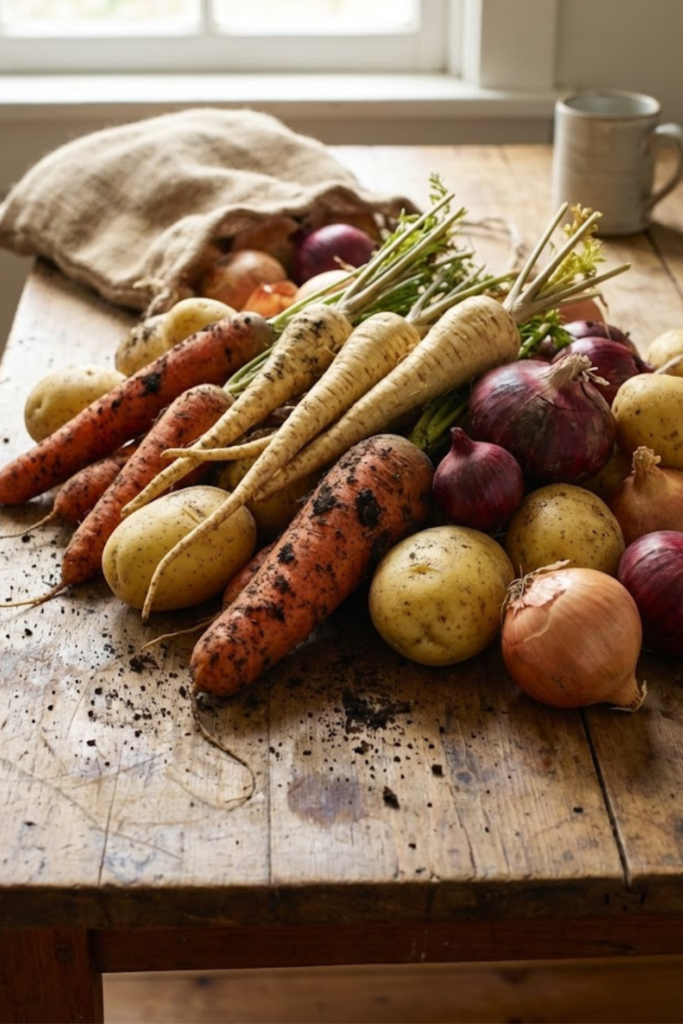
I used to be lazy and just dump a bag of those pre-peeled baby carrots in the pot. Don’t do that! They get weirdly soft and kind of slimy after cooking all day. Plus, they honestly don’t have much flavor. You really want to buy whole, big carrots and peel them yourself. I cut them into big 2-inch chunks, basically the same size as the meat. If you cut them too small, they will just dissolve into the sauce and you won’t even find them later.
Now, here is a trick I learned a few years ago that changed everything: Parsnips. If you haven’t used them before, they look like white carrots. They have this sweet, earthy taste that adds so much depth. I usually swap out half the carrots for parsnips.
For potatoes, I always stick with Yukon Golds. They are the yellow ones with thin skin. If you use Russets (the baking potatoes), they tend to fall apart and make the stew grainy. The yellow ones hold their shape better so you actually get a nice bite of potato at the end.
And don’t forget the onion! I chop a big yellow onion into large pieces too. I don’t bother mincing the garlic for this; I just smash a few cloves with the side of my knife and throw them in whole. It gives a nice background flavor without being overpowering.
Searing: The Step You Cannot Skip
Listen, I know what you are thinking. You see “Slow Cooker” and you think, “Great, I can just dump everything in and walk away.” And technically, you could. But if you want your Slow Cooker Beef Stew with Root Vegetables to actually taste good, you really have to sear the meat first.
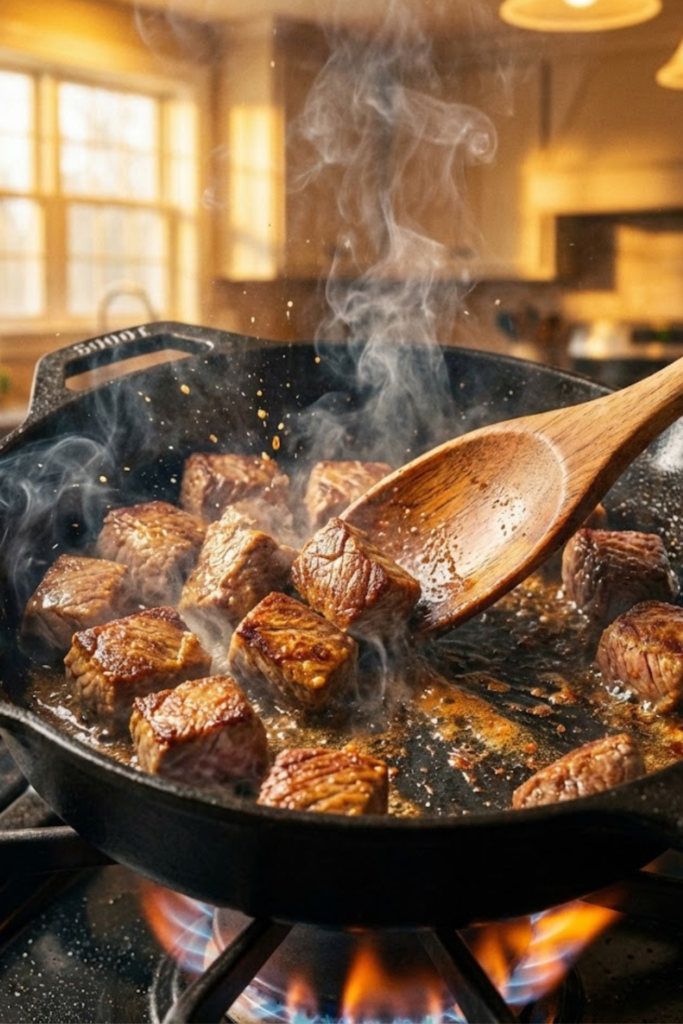
I used to be so lazy about this. I hated dirtying an extra skillet. But then I realized why my stew always tasted kinda plain. When you brown the meat in a hot pan, it creates this deep, savory flavor that you just can’t get from boiling raw meat. It’s science—I think it’s called the Maillard reaction or something—but basically, brown food tastes better.
Here is how I do it without making a huge mess:
- Pat the meat dry: If the beef is wet, it won’t brown. It will just steam. So I take a paper towel and dry the chunks off before seasoning them with salt and pepper.
- Dust with flour: I toss the beef in a little flour. This helps it brown, but it also helps thicken the stew later on so it’s not watery.
- Don’t crowd the pan! This is the big one. If you put all the meat in at once, the temperature drops and it starts steaming in its own juices. You end up with gray, chewy meat. I usually sear mine in two or three batches.
Once the meat is browned and in the slow cooker, don’t put that pan in the sink yet! Pour a little red wine or beef broth into the hot skillet. Use a wooden spoon to scrape up all those stuck-on brown bits at the bottom. That is pure gold. Pour that liquid right into the slow cooker. It adds so much flavor, you wont believe it.
Setting the Slow Cooker for Success
Alright, the hard part is over. Now we just have to load up the crockpot. It sounds simple, but I actually messed this up a few times before I figured out the right way to do it.
First off, the heat setting. I know we are all busy and sometimes you just want dinner done fast. But for Slow Cooker Beef Stew with Root Vegetables, you really gotta use the LOW setting. I tried cooking it on HIGH once because I started late, and the meat just got tough and dry. It needs that long, slow time—like 7 or 8 hours—to get really tender. If you blast it on high, it boils the meat instead of braising it.
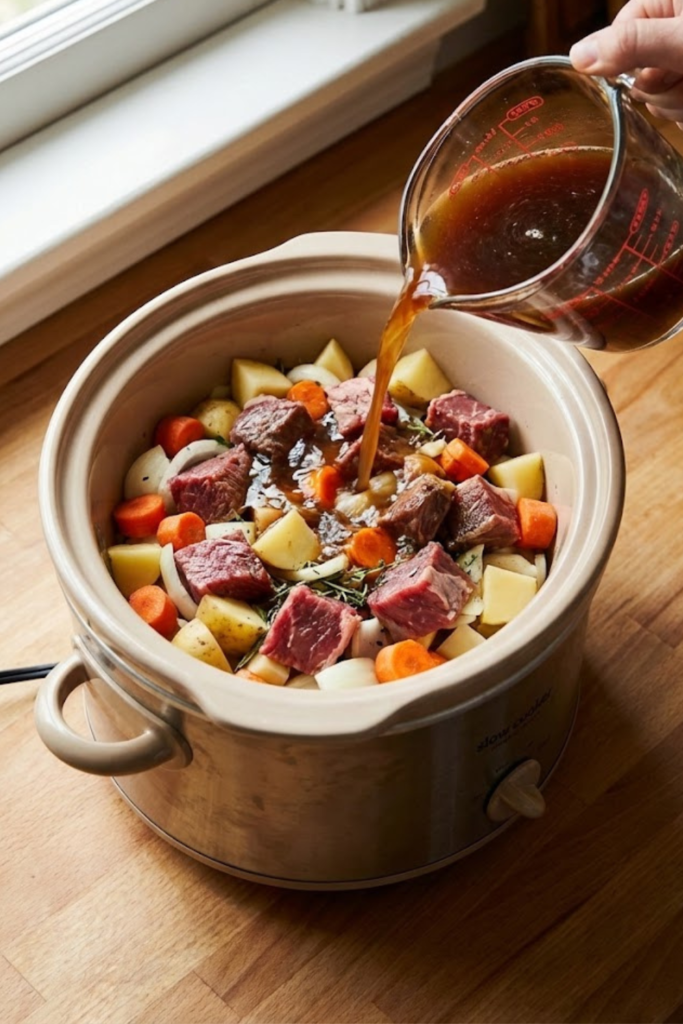
When you put stuff in the pot, order matters. The root vegetables—the carrots, parsnips, and potatoes—take longer to cook than the meat. Weird, right? So I always put them on the very bottom of the slow cooker where it’s hottest. Then I pile the seared beef on top of them.
Then comes the liquid. I pour in that beef broth and maybe a little red wine if I have a bottle open. You don’t need to fill it to the top! The veggies release a lot of their own water while they cook. If you add too much liquid, you end up with soup instead of stew. I usually just barely cover the ingredients.
Finally, put the lid on and WALK AWAY. My husband always wants to take the lid off and smell it or give it a stir. I have to slap his hand away! Every time you take the lid off, you lose a ton of heat and it adds like 20 minutes to the cooking time. Just let it do its thing.
Thickening and Finishing Touches
Okay, we are in the home stretch! The house smells amazing, everyone is hungry, and you take off the lid. But wait—why does it look so watery?
This used to happen to me every single time. The slow cooker is great at keeping moisture in, but that means the sauce doesn’t reduce and get thick like it does on the stove. Don’t panic! We can fix this in like two minutes.
I use what is called a “cornstarch slurry.” It sounds fancy, but it’s just equal parts cornstarch and cold water.
- Don’t dump the powder straight in! If you do that, you get these nasty white lumps that never dissolve. I did that once and my kids refused to eat it.
- Mix it in a cup first: Stir about a tablespoon of cornstarch with a tablespoon of water until it looks like milk.
- Stir it in: Pour that into the bubbling stew about 30 minutes before you want to eat. I usually turn the heat up to HIGH just for this part to help it thicken up fast.
Now for my secret weapon. Even after 8 hours of cooking, sometimes the stew tastes… I don’t know, kinda heavy? It needs something to wake it up. I always stir in a tiny splash of vinegar—balsamic or red wine vinegar works best—or even a squeeze of lemon juice right at the end. It sounds weird, but it cuts through all that rich fat and makes the flavors pop.
Finally, throw in some fresh herbs. Dried herbs are fine for the long cook, but fresh parsley or thyme stirred in right before serving makes it look beautiful and taste fresh. And please, taste it before you serve it! Does it need more salt? A lot of times, if it tastes “bland,” it just needs a pinch more salt.
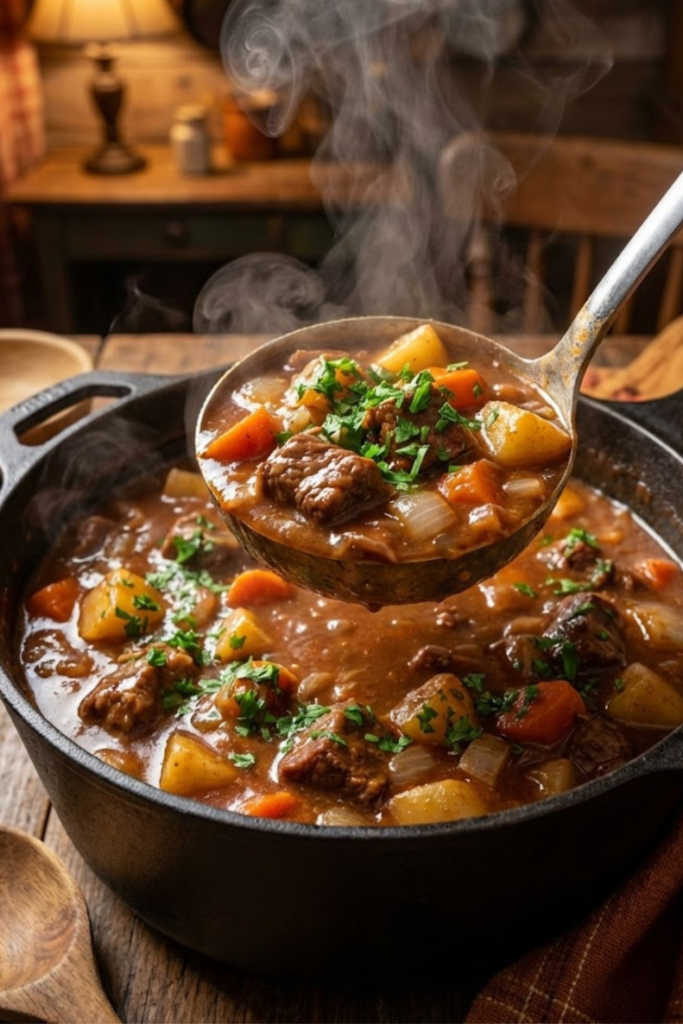
There you have it—a big bowl of comfort. This Slow Cooker Beef Stew with Root Vegetables is honestly one of my favorite things to make when it gets cold out. It’s rich, it fills you up, and the best part is that it basically cooks itself while you are doing other stuff.
Make sure you have some good crusty bread ready when you serve this. You are going to want to dip it in that gravy to get every last drop. If you try this recipe, let me know how it turned out! And hey, if you want to save this for a rainy day, pin it to your dinner board on Pinterest so you don’t lose it. Enjoy!