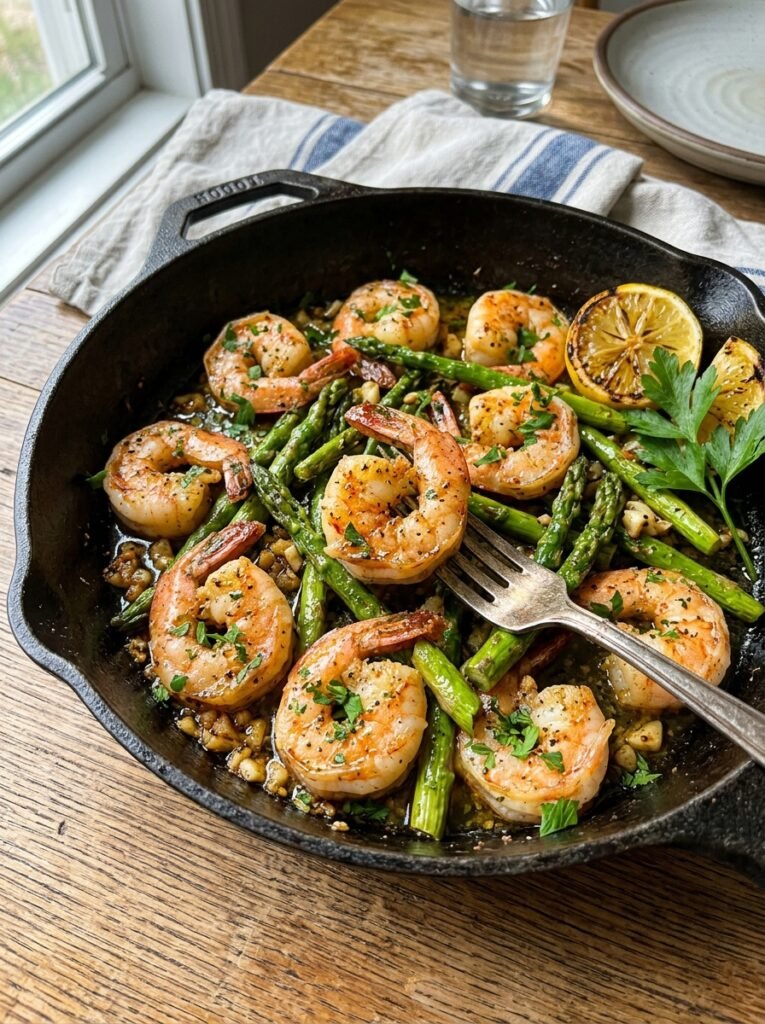
Garlic shrimp and asparagus skillet is a vibrant, quick-cooking meal featuring plump shrimp and crisp-tender asparagus in a savory garlic sauce. This one-pan wonder delivers restaurant-quality flavor with minimal cleanup and maximum freshness. The natural pairing of succulent seafood and earthy green vegetables creates a balanced, nutrient-dense dish perfect for busy weeknights. Your kitchen will smell incredible as the garlic infuses the air and the shrimp sear to perfection. Enjoy a healthy, elegant dinner that comes together in under twenty minutes.
Recipe Overview
| Prep Time | Cook Time | Total Time | Servings | Difficulty | Cuisine |
|---|---|---|---|---|---|
| 10 minutes | 15 minutes | 25 minutes | 4 | Easy | Fusion/Mediterranean |
Why This Recipe Works
This recipe works because it maximizes flavor and texture through efficient high-heat cooking. The shrimp cook quickly, remaining juicy and tender, while the asparagus retains a satisfying snap. Using one skillet reduces cleanup and allows the ingredients to develop a cohesive, garlic-infused sauce. The method layers flavors by searing the shrimp first, then sautéing the vegetables in the same aromatic fat. This approach is backed by culinary science for optimal taste and nutritional retention, as recommended by authoritative sources like Serious Eats.
The combination of fresh ingredients creates a balanced meal that is high in protein and low in carbohydrates. You can easily adjust the seasoning to your preference, making it versatile for various dietary needs. The simplicity of the steps ensures success for cooks of all experience levels. By controlling the heat and timing, you prevent overcooking, which is crucial for delicate seafood. This foundational technique can be applied to other one-pan skillet dinners for consistent results.
Ingredients
| Ingredient | Quantity | Notes |
|---|---|---|
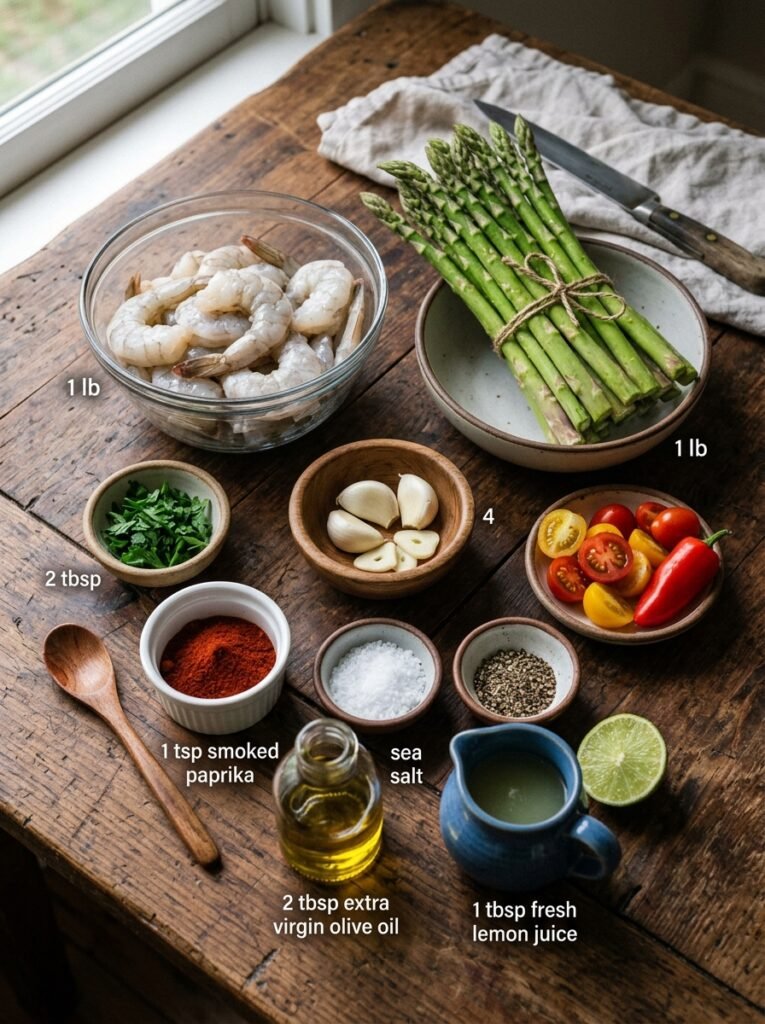
| Large Shrimp | 1 lb, peeled and deveined | Fresh or thawed frozen; tails on or off |
| Fresh Asparagus | 1 lb, trimmed | Cut into 2-inch pieces; use thick stalks for better texture |
| Garlic | 4 cloves, minced | Adjust to taste; fresh is best for flavor |
| Olive Oil | 2 tablespoons | For sautéing; avocado oil can be a substitute |
| Lemon Juice | 1 tablespoon | Freshly squeezed; adds brightness and acidity |
| Paprika | 1 teaspoon | Sweet or smoked; for color and depth |
| Salt and Black Pepper | To taste | Season throughout cooking |
| Fresh Parsley | 2 tablespoons, chopped | Garnish and fresh flavor; use cilantro for variation |
Step-by-Step Instructions
Prepare the Ingredients
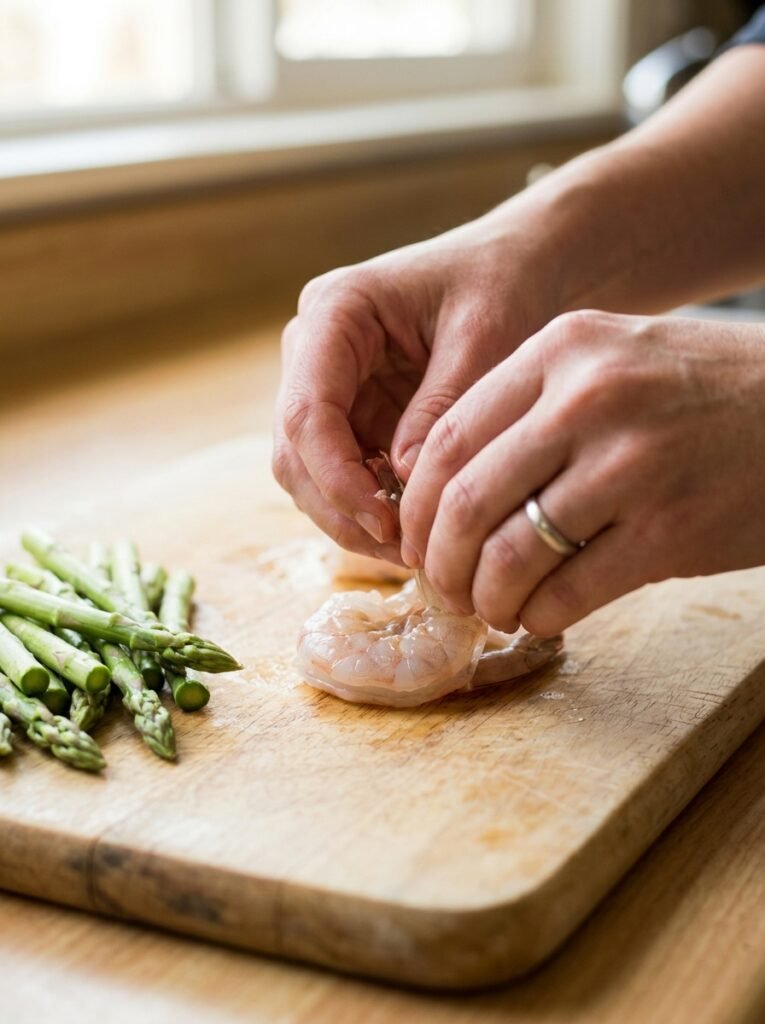
Rinse the shrimp and pat them dry with paper towels to ensure a good sear. Trim the woody ends from the asparagus and cut the stalks into uniform two-inch pieces. Mince the garlic finely and chop the fresh parsley. Measure out the olive oil, lemon juice, and spices. Having everything ready, or mise en place, streamlines the cooking process.
Cook the Shrimp
Heat the olive oil in a large skillet over medium-high heat until it shimmers. Add the shrimp in a single layer, seasoning with salt, pepper, and half the paprika. Cook for one to two minutes per side until they turn pink and opaque. Do not overcrowd the pan to avoid steaming. Transfer the cooked shrimp to a plate and set aside.
Sauté the Aromatics
In the same skillet, reduce the heat to medium and add the minced garlic. Sauté for about thirty seconds until fragrant, being careful not to burn it. Stir constantly to release the garlic’s essential oils. The residual shrimp flavor will enrich the oil. This step builds the foundational flavor for the dish.
Cook the Asparagus
Add the asparagus pieces to the skillet, seasoning with the remaining paprika, salt, and pepper. Cook for four to five minutes, stirring occasionally, until the asparagus is bright green and tender-crisp. If needed, add a splash of water to help steam. Avoid overcooking to maintain texture and nutrients.
Combine and Finish
Return the shrimp to the skillet with the asparagus. Drizzle with lemon juice and toss everything together to combine. Cook for another minute to heat through. Garnish generously with fresh parsley. Serve immediately from the skillet for a rustic presentation.
Chef Tips for Perfect Results
- Use fresh shrimp for the best texture and flavor; frozen shrimp should be thawed completely and patted dry to prevent excess water from steaming the pan.
- Preheat the skillet properly before adding oil; a hot pan ensures a quick sear on the shrimp, locking in juices and creating a slight crust.
- Don’t crowd the pan; cook shrimp in batches if necessary to maintain high heat and avoid overcooking, which can make them rubbery.
- Trim asparagus correctly by snapping the woody ends; this prevents a tough texture and ensures even cooking.
- Adjust garlic based on preference; for a milder flavor, sauté whole cloves and remove them before serving, or use roasted garlic paste.
- Acid timing; add lemon juice at the end to preserve its fresh brightness and prevent a bitter taste from prolonged cooking.
Common Mistakes to Avoid
- Overcooking the shrimp; this makes them tough and rubbery. Fix by cooking just until they turn pink and opaque, then removing them promptly.
- Burning the garlic; burnt garlic tastes bitter. Fix by adding garlic later in the cooking process and stirring constantly over medium heat.
- Cutting asparagus unevenly; this leads to some pieces being undercooked and others mushy. Fix by trimming and cutting stalks to consistent size.
- Using a cold pan; this causes ingredients to steam instead of sear. Fix by preheating the skillet thoroughly before adding oil and shrimp.
- Skip drying shrimp; moisture prevents browning. Fix by patting shrimp dry with paper towels for a better sear and flavor development.
Variations and Substitutions
| Ingredient | Substitution | Impact on Flavor |
|---|---|---|
| Shrimp | Scallops or chicken breast | Scallops offer a sweeter, delicate taste; chicken provides a heartier, leaner protein. |
| Asparagus | Green beans or broccoli | Green beans are slightly sweeter; broccoli adds a robust, earthy note. |
| Paprika | Red pepper flakes | Adds heat instead of smokiness; adjust quantity for spice level. |
| Lemon Juice | White wine vinegar or lime juice | Vinegar adds sharp acidity; lime offers a different citrus profile. |
| Fresh Parsley | Cilantro or basil | Cilantro gives a fresh, citrusy lift; basil adds sweet, aromatic notes. |
Serving Suggestions and Pairings
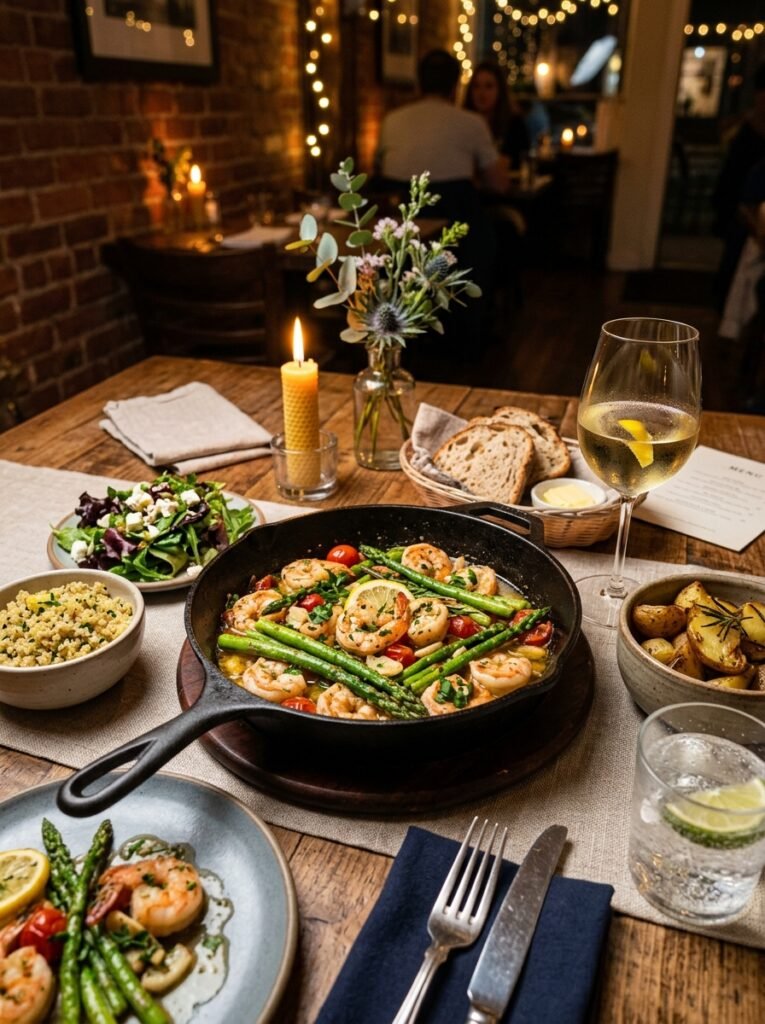
Serve the garlic shrimp and asparagus skillet over a bed of fluffy rice, quinoa, or orzo pasta for a complete meal. It pairs excellently with a simple arugula salad dressed in lemon vinaigrette for added freshness. For a casual dinner, offer crusty whole-grain bread to soak up the savory sauce. This dish is ideal for weeknight family dinners, date nights, or light summer entertaining. Complement it with a chilled sparkling water with citrus or a non-alcoholic rosé for a festive touch.
Storage and Reheating
| Method | Duration | Instructions |
|---|---|---|
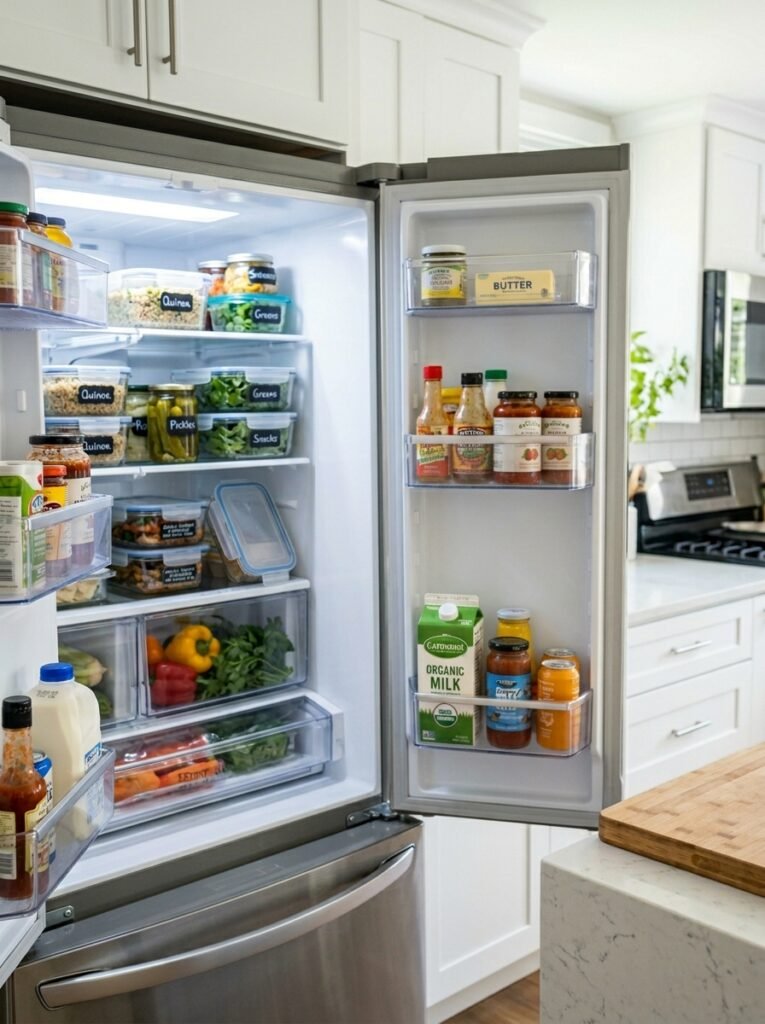
| Refrigeration | 3-4 days | Cool completely, store in an airtight container, and place in the refrigerator. |
| Freezing | 2-3 months | Freeze in a sealed container or bag; note texture may change slightly upon thawing. |
| Reheating | 5-7 minutes | Warm in a skillet over medium heat with a splash of water to refresh moisture. |
Nutritional Information
| Nutrient | Amount per Serving |
|---|---|
| Calories | Approximately 280 |
| Protein | Approximately 35g |
| Fat | Approximately 12g |
| Carbohydrates | Approximately 10g |
| Fiber | Approximately 3g |
| Sugar | Approximately 4g |
| Sodium | Approximately 600mg |
Approximate values.
Frequently Asked Questions
Can I use frozen shrimp for this skillet recipe?
Yes, you can use frozen shrimp for the garlic shrimp and asparagus skillet. Ensure they are fully thawed and patted dry before cooking to achieve a proper sear. This prevents excess moisture from steaming the ingredients.
How do I know when the shrimp are perfectly cooked?
The shrimp are perfectly cooked when they turn pink and opaque, forming a loose C-shape. This typically takes one to two minutes per side over medium-high heat. Avoid overcooking to maintain a tender, juicy texture.
What if my asparagus is too thick or thin?
Adjust cooking time based on asparagus thickness; thicker stalks may need an extra minute or two. Cut them uniformly for even cooking. If using thin asparagus, reduce the cooking time to prevent mushiness.
Can I make this recipe ahead of time?
You can prepare the ingredients ahead, but cook the shrimp and asparagus fresh for best texture. Assembled uncooked ingredients can be stored in the refrigerator for up to 24 hours. Reheat cooked leftovers gently to avoid rubbery shrimp.
What should I serve with this dish?
Serve with rice, quinoa, or pasta to absorb the flavorful sauce. A side salad with a lemon vinaigrette complements the dish well. This makes it suitable for a light lunch or dinner party menu.
Is this recipe suitable for a gluten-free diet?
Yes, the garlic shrimp and asparagus skillet is naturally gluten-free. Ensure all ingredients, like paprika and spices, are certified gluten-free if you have severe sensitivities. Serve with gluten-free grains if desired.
How can I add more spice to the dish?
Add red pepper flakes with the garlic for a spicy kick. You can also increase the paprika or add a dash of hot sauce. Start with a small amount and adjust to your heat preference.
What is the best way to store leftovers?
Store leftovers in an airtight container in the refrigerator for up to four days. For longer storage, freeze for up to three months. Reheat in a skillet to maintain texture and flavor.
Can I use other vegetables instead of asparagus?
Yes, substitute with green beans, broccoli, or bell peppers for similar cooking times. Adjust the seasoning to match the vegetable’s flavor profile. This variation keeps the dish fresh and adaptable.
Why is my garlic turning bitter?
Bitter garlic usually results from burning over high heat. To prevent this, add minced garlic later and stir constantly. Use medium heat and consider using whole cloves that you can remove after infusing flavor.
Conclusion
Garlic shrimp and asparagus skillet offers a simple yet sophisticated meal that highlights fresh, wholesome ingredients. By following the detailed steps and tips, you can achieve a restaurant-quality dish at home with ease. The combination of juicy shrimp and crisp asparagus, bathed in a garlic butter sauce, creates a memorable dining experience. Incorporate this recipe into your weekly meal rotation for a healthy, flavorful option that never disappoints. The signature garlic-infused flavor will keep you coming back for more.
Print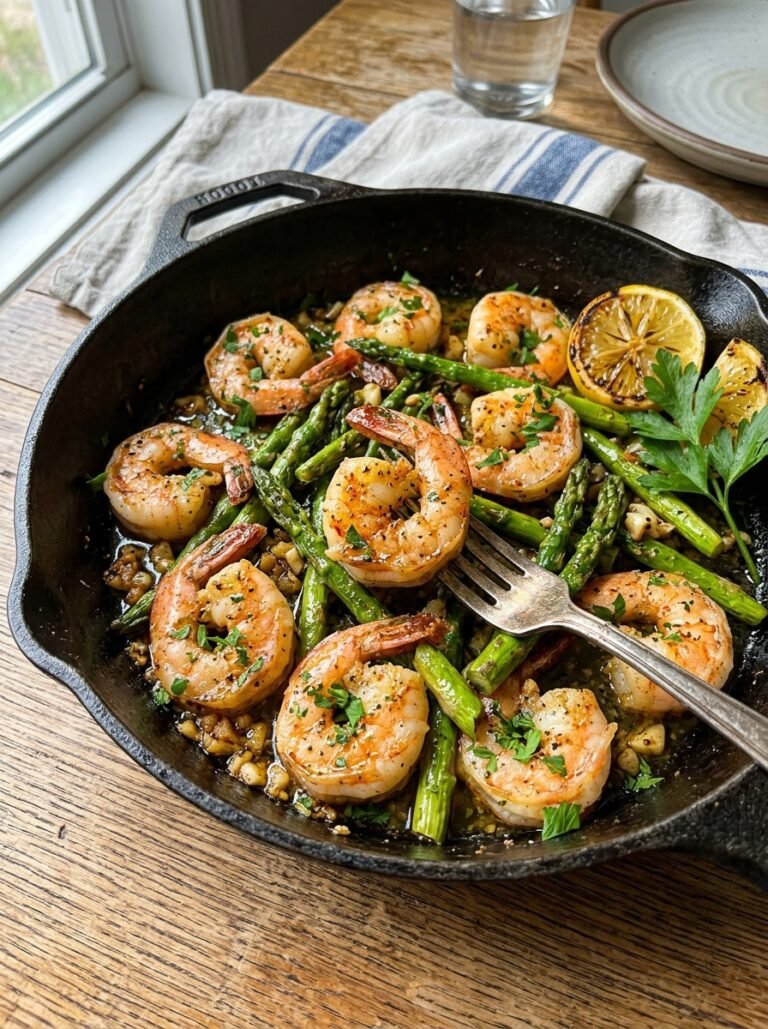
Garlic Shrimp and Asparagus Skillet
A quick, one-pan meal with plump shrimp and crisp asparagus in a garlic-lemon sauce. This vibrant, protein-packed dish offers restaurant-quality flavor in 25 minutes with minimal cleanup.
- Total Time: 25
- Yield: 4 servings
Ingredients
Large Shrimp (1 lb, peeled and deveined)
Fresh Asparagus (1 lb, trimmed into 2-inch pieces)
Garlic (4 cloves, minced)
Olive Oil (2 tbsp)
Lemon Juice (1 tbsp)
Paprika (1 tsp)
Salt (to taste)
Black Pepper (to taste)
Fresh Parsley (2 tbsp, chopped)
Instructions
Heat 1 tbsp olive oil in a large skillet over medium-high heat
Sear shrimp for 2-3 minutes per side until pink; remove
Add remaining 1 tbsp oil and sauté asparagus for 3-4 minutes
Add garlic, paprika, and a pinch of salt; cook 30 seconds
Return shrimp to skillet, drizzle with lemon juice, and toss
Garnish with parsley and adjust seasoning
Notes
Use fresh asparagus for best texture
For extra flavor, add sun-dried tomatoes
Store leftovers in airtight containers for up to 3 days
- Prep Time: 10
- Cook Time: 15
- Category: High Protein Meals
- Method: Sautéing
- Cuisine: Fusion/Mediterranean
- Diet: Low-Carb
Nutrition
- Serving Size: 1 1/2 cups
- Calories: 320
- Sugar: 2g
- Sodium: 480mg
- Fat: 14g
- Saturated Fat: 2g
- Carbohydrates: 12g
- Fiber: 3g
- Protein: 32g
- Cholesterol: 200mg