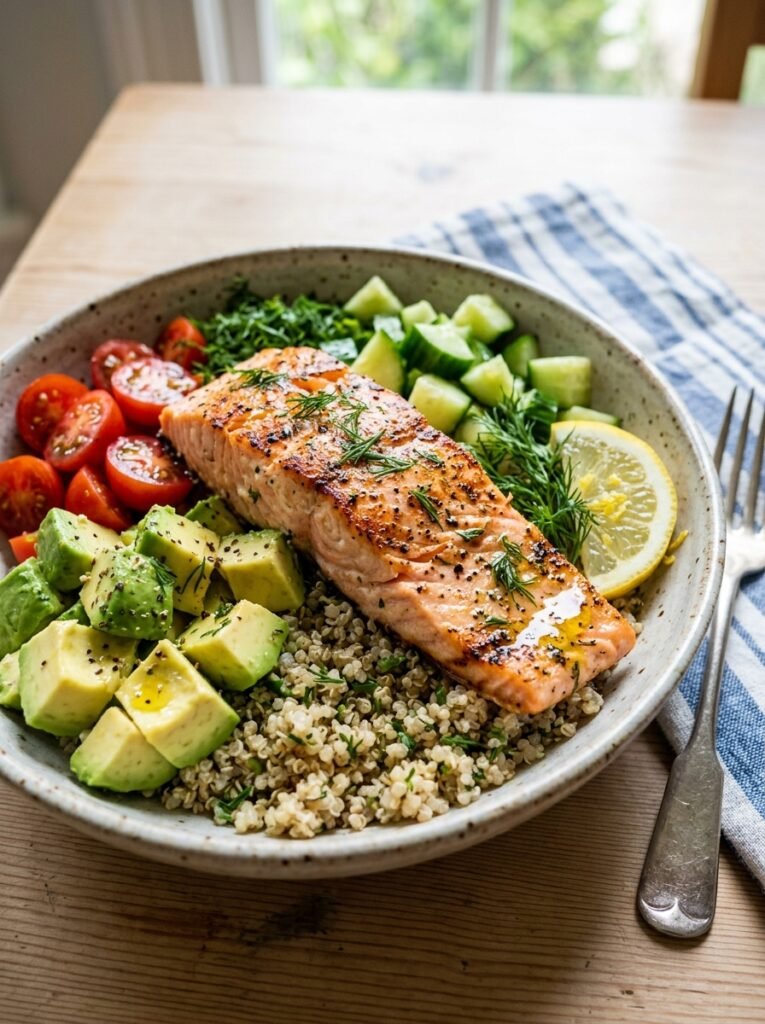
This high protein low calorie salmon bowl provides a nutrient-dense, satisfying meal built around lean salmon and fresh vegetables. A balanced combination of protein and fiber supports energy levels while keeping calories in check for weight management goals. The bowl features flaky baked salmon, fluffy quinoa, and vibrant seasonal vegetables tossed in a light, zesty citrus dressing for a refreshing finish. Each component contributes to a complete amino acid profile and sustained fullness without heavy sauces or unnecessary fats. This recipe is designed for meal prep enthusiasts and quick weeknight dinners alike, delivering restaurant-quality flavor at home.
Recipe Overview
| Prep Time | 15 minutes |
|---|---|
| Cook Time | 20 minutes |
| Total Time | 35 minutes |
| Servings | 2 |
| Difficulty | Easy |
| Cuisine | Mediterranean-inspired |
Why This Recipe Works
This recipe works because it pairs lean salmon with slow-digesting quinoa to deliver complete protein and long-lasting energy. I rely on this bowl for post-workout recovery because the omega-3s from salmon reduce inflammation while supporting muscle repair. The combination of fiber from vegetables and protein increases satiety, which naturally helps control portions and supports a calorie-controlled diet. Cooking methods are intentionally simple to preserve nutrients and avoid excess oil, which keeps the calorie count moderate without sacrificing taste.
The citrus-based dressing uses minimal olive oil and bright acidity to enhance natural flavors instead of masking them. Fresh herbs add aroma and micronutrients without calories, making every bite more satisfying. I find that roasting salmon at a controlled temperature keeps it tender and flaky, while quick-pickling the vegetables adds crunch and tang that balance the richness. This bowl adapts well to meal prep because components stay fresh when stored separately, so you can assemble quickly throughout the week.
From a nutritional standpoint, the recipe prioritizes whole foods to minimize added sugars and refined carbs. The balance of protein and fiber stabilizes blood sugar, which can reduce cravings and support consistent energy. Using lemon zest and garlic boosts flavor intensity without relying on heavy sauces or high-sodium condiments. The overall approach aligns with a high protein low calorie salmon bowl goal while remaining practical for everyday cooking.
Ingredients
| Ingredient | Quantity | Notes with alternatives |
|---|---|---|
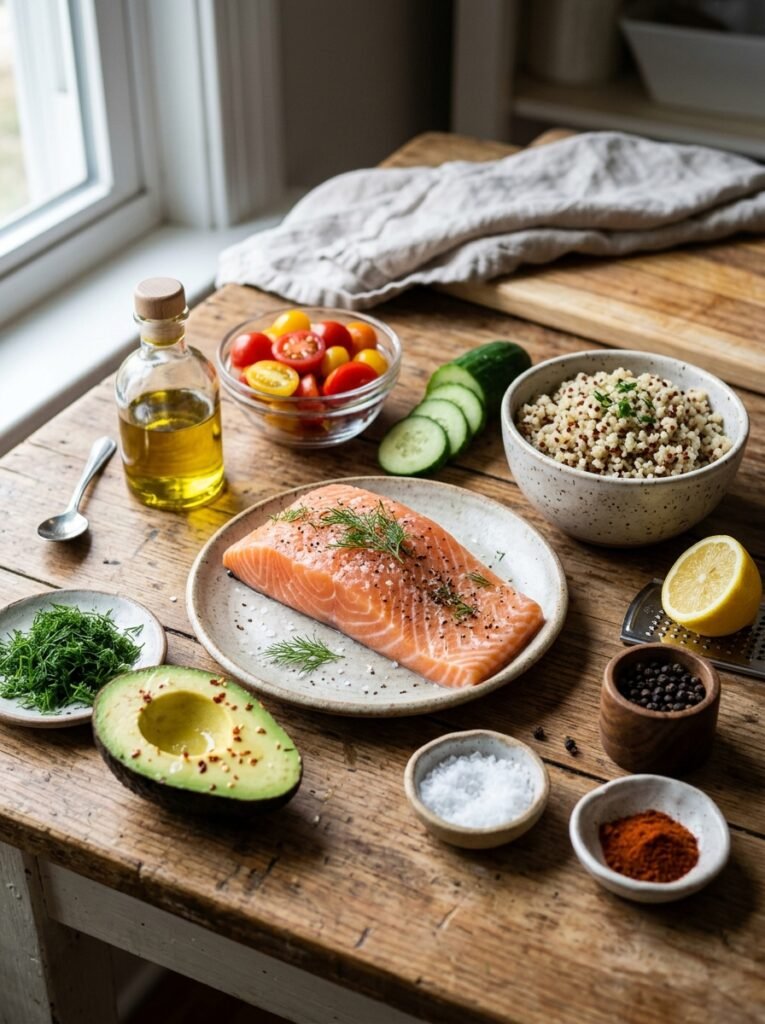
| Salmon fillets, skinless | 10 ounces | Wild-caught preferred; cod or halibut are lighter alternatives |
| Cooked quinoa | 1 cup | Use brown rice or cauliflower rice for different carbs |
| Avocado | ½ small | Use edamame for less fat and more protein |
| Cherry tomatoes | 1 cup | Substitute roasted red peppers for a sweeter note |
| Cucumber | ½ cup diced | Use zucchini ribbons for a softer texture |
| Lemon | 1 small | Lime works for a brighter, sharper acidity |
| Olive oil | 1 teaspoon | Swap with avocado oil or omit for fewer calories |
| Fresh dill | 1 tablespoon chopped | Use parsley or chives for a milder profile |
| Garlic | 1 clove minced | Use garlic powder if fresh is unavailable |
| Salt and pepper | To taste | Low-sodium salt blends help reduce sodium intake |
Step-by-Step Instructions
Phase 1: Prep the Base
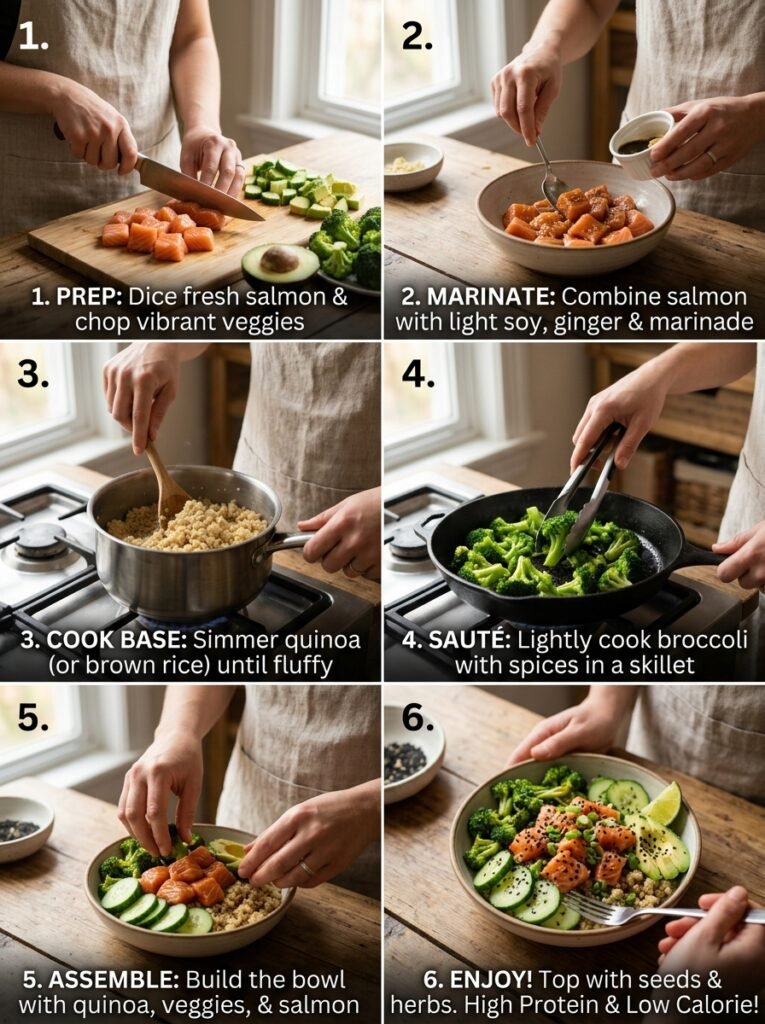
Measure one cup of cooked quinoa and fluff with a fork to separate grains evenly for a light texture. Rinse cherry tomatoes and dice cucumber into small cubes for consistent bites. Mince garlic finely and chop fresh dill to release aromatic oils for better flavor distribution.
Phase 2: Roast the Salmon
Preheat oven to 400°F and line a baking sheet with parchment paper to prevent sticking. Pat the salmon fillets dry, then brush lightly with olive oil and season with salt, pepper, and minced garlic. Bake for 12 to 15 minutes until the internal temperature reaches 145°F and the flesh flakes easily with a fork.
Phase 3: Make the Citrus Dressing
Zest half the lemon and squeeze the juice into a small bowl, avoiding seeds for a clean taste. Whisk the lemon juice with a teaspoon of olive oil, a pinch of salt, and chopped dill until emulsified. Toss the quinoa with half the dressing to coat the grains without making them soggy.
Phase 4: Assemble the Bowl
Divide the dressed quinoa between two bowls and arrange the tomatoes and cucumber on one side. Flake the roasted salmon into large pieces and place in the center, then add sliced avocado. Drizzle with the remaining dressing and finish with extra dill and black pepper for a fresh finish.
Chef Tips for Perfect Results
- Pat salmon dry before seasoning to encourage light browning and prevent excess moisture from pooling on the quinoa.
- Use a meat thermometer to hit 145°F precisely; this ensures safety without overcooking and drying the fish.
- Prep quinoa in advance and chill for 30 minutes to increase resistant starch, which supports satiety and digestion.
- Toss vegetables lightly with dressing just before serving to preserve crunch and prevent sogginess in meal prep.
- Adjust acidity by adding more lemon zest to brighten flavors without increasing calories or sodium.
- Choose wild-caught salmon when possible for a cleaner taste and a more favorable omega-3 to omega-6 ratio.
Common Mistakes to Avoid
- Overbaking the salmon leads to dryness; fix by checking temperature early and removing from heat as soon as it flakes.
- Adding dressing too early can make quinoa mushy; wait until just before assembly for best texture.
- Using wet herbs introduces excess water; pat dill or parsley dry with paper towels before chopping.
- Skipping seasoning layers results in bland quinoa; salt lightly at each stage, including the cooking water and final dressing.
- Overloading the bowl increases calories; keep portions balanced by measuring quinoa and avocado accurately.
- Reheating salmon aggressively toughens proteins; use gentle heat or enjoy cold from the refrigerator.
Variations and Substitutions
| Ingredient | Substitution | Impact on Flavor |
|---|---|---|
| Salmon fillet | Grilled chicken breast | Leaner taste, similar protein, slightly less omega-3s |
| Quinoa | Cauliflower rice | Lower carbs and calories, milder nutty flavor |
| Avocado | Edamame | More protein, less fat, slightly sweet, earthy notes |
| Olive oil | Avocado oil spray | Lighter mouthfeel, neutral taste, fewer calories |
| Fresh dill | Cilantro | Brighter citrusy notes, different herbaceous profile |
Serving Suggestions and Pairings
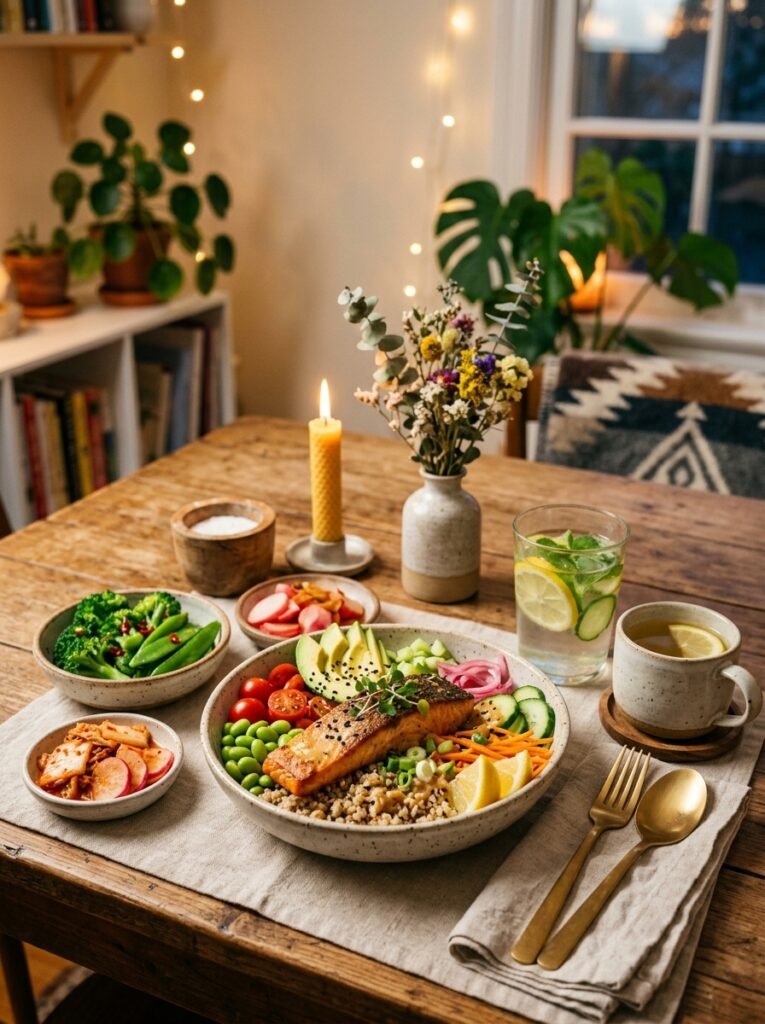
Serve this high protein low calorie salmon bowl as a light lunch for a busy office day or as a quick dinner after a workout. Pair with a side of mixed greens dressed with lemon and a sprinkle of hemp seeds to boost fiber and omega-3s. For a family-style gathering, set up a build-your-own bowl bar with extra vegetables and herbs to customize portions. On a warm evening, complement the bowl with sparkling water infused with cucumber and mint for a refreshing, zero-calorie drink.
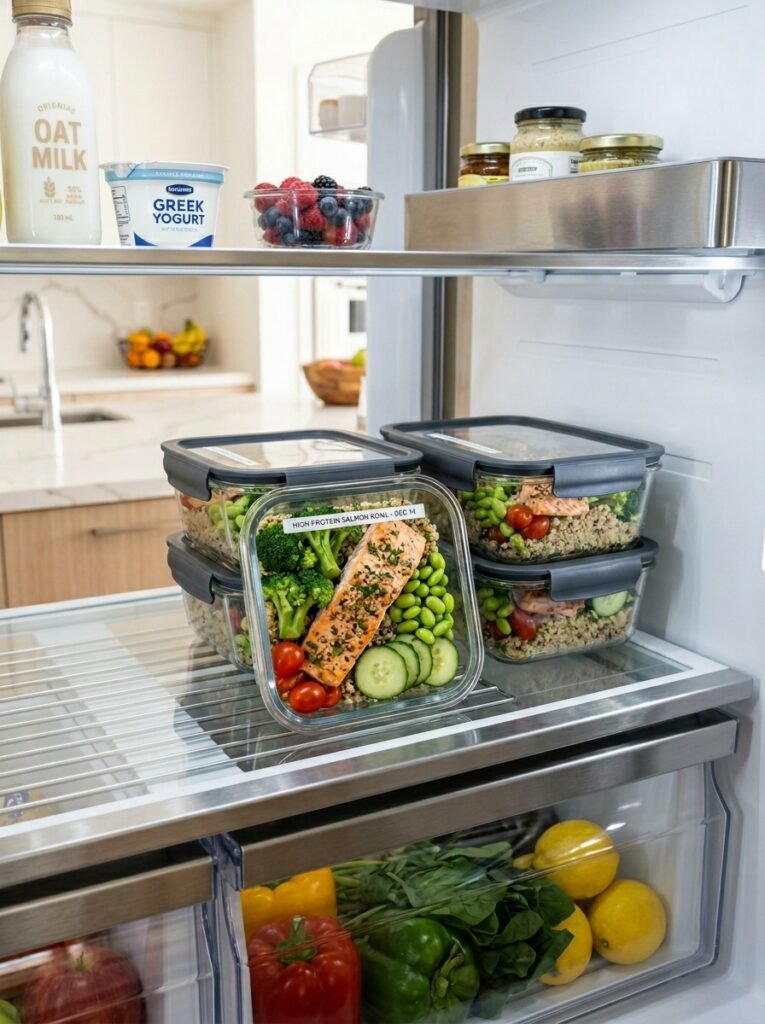
For meal prep, portion the components into glass containers and pack the dressing separately to maintain crisp textures. This method works well for picnics and travel, as the ingredients are naturally sturdy and easy to assemble on the go. Consider adding a small side of Greek yogurt with lemon zest for a creamy, high-protein dip that pairs beautifully with the salmon. These pairings keep the meal light while delivering balanced nutrients that align with your wellness goals.
Storage and Reheating
| Method | Duration | Instructions |
|---|---|---|
| Refrigerator | 3 to 4 days | Store quinoa, vegetables, and salmon separately; add dressing before serving |
| Freezer | 1 month | Freeze cooked salmon and quinoa only; avoid freezing fresh vegetables |
| Reheat Salmon | 2 to 3 minutes | Warm gently at 300°F or eat cold to preserve texture and moisture |
| Reheat Quinoa | 1 to 2 minutes | Steam briefly or microwave with a splash of water to rehydrate |
Nutritional Information
| Nutrient | Amount per Serving |
|---|---|
| Calories | Approximately 420 |
| Protein | Approximately 38 g |
| Fat | Approximately 16 g |
| Carbohydrates | Approximately 35 g |
| Fiber | Approximately 8 g |
| Sugar | Approximately 3 g |
| Sodium | Approximately 420 mg |
Approximate values.
Frequently Asked Questions
What is the best salmon for a high protein low calorie salmon bowl?
Wild-caught salmon provides superior flavor and a better omega-3 profile, which supports heart and brain health. Choose fillets with minimal marbling for lower fat content while still maintaining moisture. Skinless cuts streamline cooking and make flaking into the bowl easier.
Can I substitute quinoa with another grain?
Yes, brown rice, farro, or barley work well and offer similar fiber and protein levels. For lower calories, cauliflower rice is an excellent alternative that keeps the bowl light. Adjust cooking times and seasoning for each grain to maintain balanced flavor.
How do I know when salmon is fully cooked?
Check the internal temperature with a thermometer; 145°F is the safe minimum. The flesh should flake easily with a fork and appear opaque throughout. Avoid overcooking by removing salmon from heat as soon as it reaches temperature.
What if my quinoa turns mushy?
Fluff quinoa immediately after cooking and spread it on a tray to cool quickly. Chill for 30 minutes to firm up the grains before assembling. Use less water when cooking next time and keep the pot uncovered for the final minute.
Can I make this recipe ahead for meal prep?
Yes, store components separately and assemble just before eating for the best texture. Dress the quinoa lightly and keep vegetables crisp by avoiding excess moisture. Portion salmon into single servings for easy grab-and-go meals.
Is this bowl suitable for a low-carb diet?
Swap quinoa for cauliflower rice to reduce carbs while keeping the bowl satisfying. Maintain portion sizes for protein and vegetables to stay within your targets. The dressing remains carb-friendly and helps brighten the dish.
What is the best way to reheat without drying out salmon?
Reheat gently at 300°F for a few minutes until just warmed through. Alternatively, enjoy the salmon cold, which preserves moisture and works well with the dressing. Avoid high heat to prevent tough, rubbery textures.
Can I add more vegetables to the bowl?
Yes, include spinach, roasted broccoli, or shredded carrots for extra fiber and volume. Choose low-calorie options to keep the bowl aligned with your goals. Toss them with a small amount of dressing to coat without drowning flavors.
How can I boost protein even more?
Add edamame, Greek yogurt, or a sprinkle of hemp seeds for additional protein. Keep portions balanced to maintain moderate calories while increasing satiety. These additions integrate smoothly with the existing ingredients and flavor profile.
What dressing alternatives keep calories low?
Use lemon juice and herbs alone, or add a splash of vinegar for acidity without oil. A small amount of tahini thinned with water creates a creamy dressing with fewer calories than oil-based versions. Always measure to avoid accidental excess.
Conclusion
This high protein low calorie salmon bowl proves that satisfying meals do not require heavy sauces or large portions. By combining roasted salmon, fluffy quinoa, and crisp vegetables with a citrus dressing, you get a balanced dish that fuels the body and delights the palate. The recipe supports weight management goals while delivering essential omega-3s, fiber, and complete proteins for recovery and energy. Try this bowl for your next meal prep session or weeknight dinner, and enjoy the bright, signature flavor of lemon, garlic, and fresh dill in every bite.
Print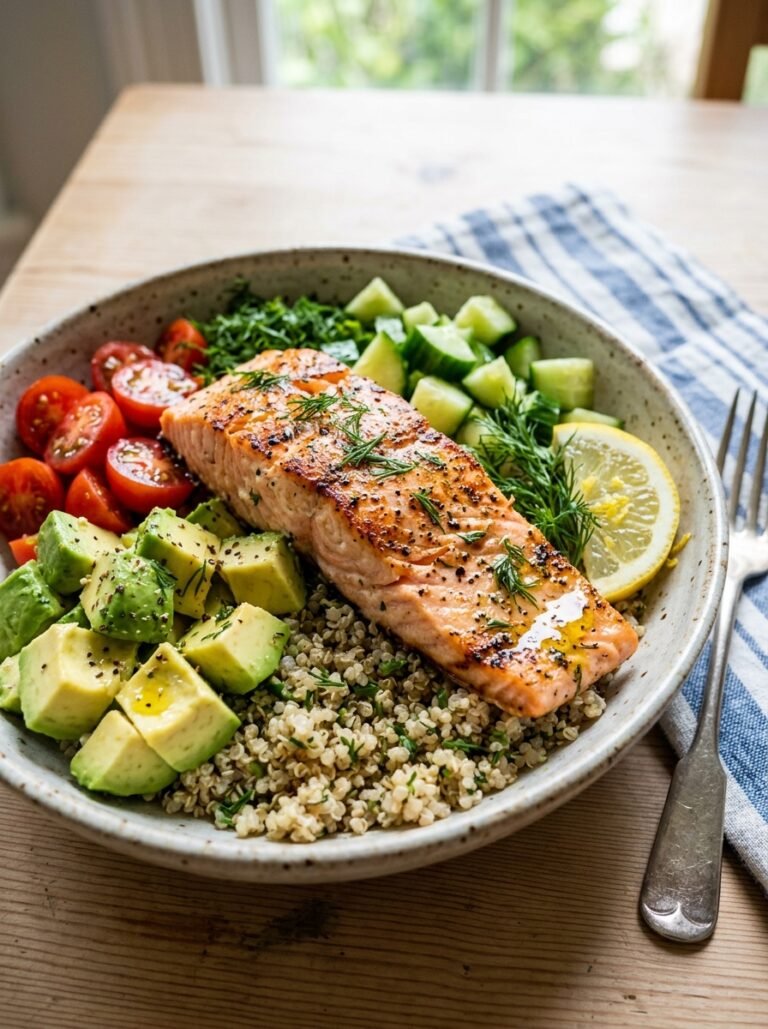
High Protein Low Calorie Salmon Bowl
A Mediterranean-inspired, nutrient-packed salmon bowl featuring flaky baked salmon, fluffy quinoa, and seasonal vegetables tossed in a zesty citrus dressing. Light, satisfying, and perfect for weight management or post-workout recovery.
- Total Time: 35
- Yield: 2 servings 1x
Ingredients
2 salmon fillets (6 oz each)
1/2 cup uncooked quinoa
1 ripe avocado
1 cup cherry tomatoes (halved)
1/2 cup diced cucumber
1/4 cup lemon juice
1 tbsp olive oil
1 tsp lemon zest
1 tbsp fresh dill (chopped)
1/2 tsp salt
1/4 tsp black pepper
1/4 cup red onion (thinly sliced)
1 jalepeno (sliced for optional heat)
Instructions
Preheat oven to 375°F (190°C)
Line a baking sheet with parchment paper and place salmon fillets skin-side down. Season with salt, pepper, half the lemon zest, and 1 tsp dill
Bake salmon for 15-20 minutes until flaky
Cook quinoa in 1 cup water for 15 minutes, then cool
Whisk dressing ingredients (lemon juice, 1 tbsp olive oil, remaining dill, 1/4 tsp salt, and pepper) in a small bowl
Combine quinoa, cherry tomatoes, cucumber, red onion, and jalepeno in a mixing bowl. Toss with half the dressing
Slice salmon into flakey pieces and portion into two bowls. Top with quinoa-veg mix and remaining dressing
Garnish with additional dill and lemon zest
Notes
Store components separately for 4-5 days
Add steamed broccoli or multicolored bell peppers for more fiber
Use rice vinegar instead of lemon juice as a gluten-free alternative
Pair with whole grain bread if additional satiety is needed
- Prep Time: 15
- Cook Time: 20
- Category: Low Calorie Meals
- Method: Baking
- Cuisine: Mediterranean-inspired
- Diet: High-protein, Low-calorie
Nutrition
- Serving Size: 1 bowl
- Calories: 420
- Sugar: 3g
- Sodium: 240mg
- Fat: 24g
- Saturated Fat: 5g
- Carbohydrates: 28g
- Fiber: 7g
- Protein: 40g
- Cholesterol: 85mg