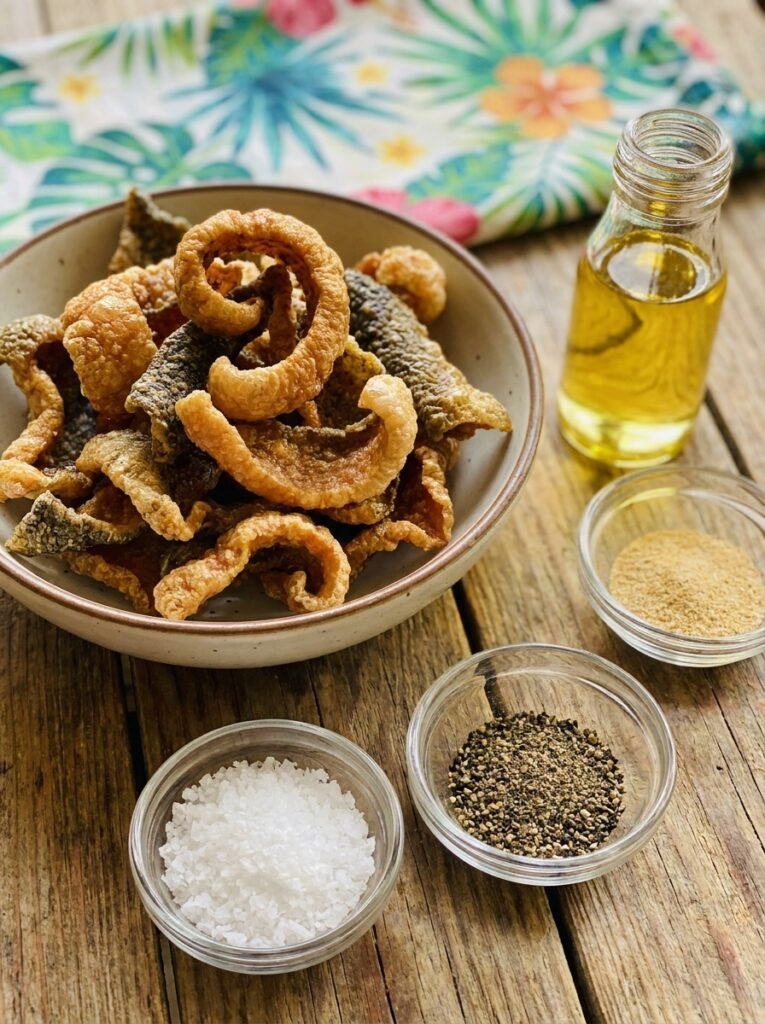
Crispy Salmon Skin Cracklings are an irresistible snack made by rendering salmon skin until it transforms into golden, crunchy chips. This recipe maximizes the natural collagen in the skin to create a delicate, airy crisp texture that pairs perfectly with a savory seasoning blend. Unlike traditional pork rinds, these fish skin cracklings offer a rich omega-3 profile and a uniquely seafood-forward flavor that elevates any appetizer spread or bar snack rotation.
Recipe Overview
| Prep Time | Cook Time | Total Time | Servings | Difficulty | Cuisine |
|---|---|---|---|---|---|
| 20 mins | 25 mins | 45 mins | 4 | Easy | Asian-Fusion |
Why This Recipe Works
This recipe renders salmon skin slowly to remove moisture while preserving the delicate fat layer, resulting in a chip that shatters with a satisfying crunch. The high heat method activates the collagen in the skin, creating a bubble-like texture similar to pork rinds but entirely seafood-based and halal compliant. Seasoning the skins after drying ensures the spices adhere without burning, delivering consistent flavor in every bite.
I developed this technique after struggling with soggy salmon skins that lacked snap; the key is a two-stage drying process followed by a quick flash fry. Using vegetable oil or another neutral fat keeps the focus on the salmon flavor without introducing any pork products or alcohol-based extracts. The result is a clean, savory bite that works as a standalone snack or a garnish for soups and salads.
The nutritional profile makes these cracklings a guilt-free indulgence, packed with healthy omega-3 fatty acids and protein while remaining low in carbohydrates. This method also utilizes a common byproduct of filet preparation, reducing waste and creating a sustainable kitchen practice. For those following halal or non-alcoholic dietary restrictions, this recipe provides a fully compliant alternative to traditional fried snacks.
Finally, the versatility of the seasoning allows for customization based on personal preference or regional flavor profiles, from spicy chili lime to umami-rich seaweed blends. The crispy texture remains stable for hours, making these cracklings ideal for meal prep or party platters where you need a make-ahead crunch element.
Ingredients
| Ingredient | Quantity | Notes |
|---|---|---|
| Salmon skins | 4 large, cleaned | Scaled and patted dry; use wild-caught for better flavor. |
| Vegetable oil | 1 tablespoon | Neutral oil for drying; avocado oil works as a substitute. |
| Sea salt | 1 teaspoon | Fine grain for even distribution. |
| Garlic powder | ½ teaspoon | Optional; substitute with onion powder for variation. |
| Black pepper | ¼ teaspoon | Freshly ground for best aroma. |
| Paprika | ½ teaspoon | Sweet or smoked depending on preference. |
Step-by-Step Instructions
Phase 1: Preparation
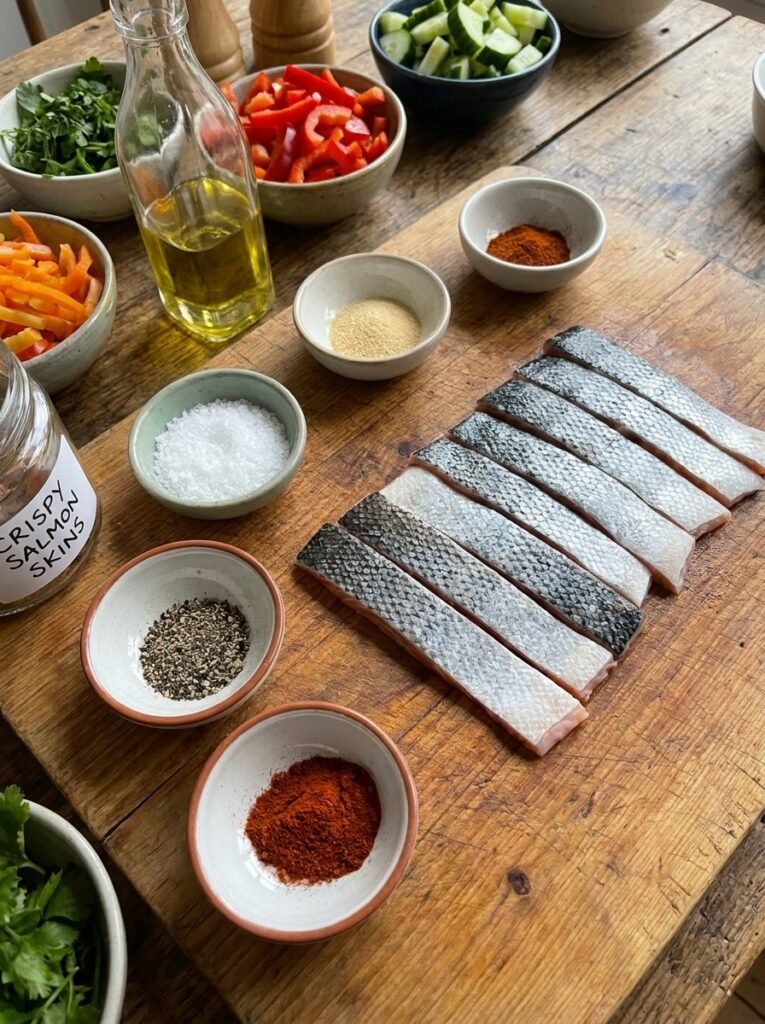
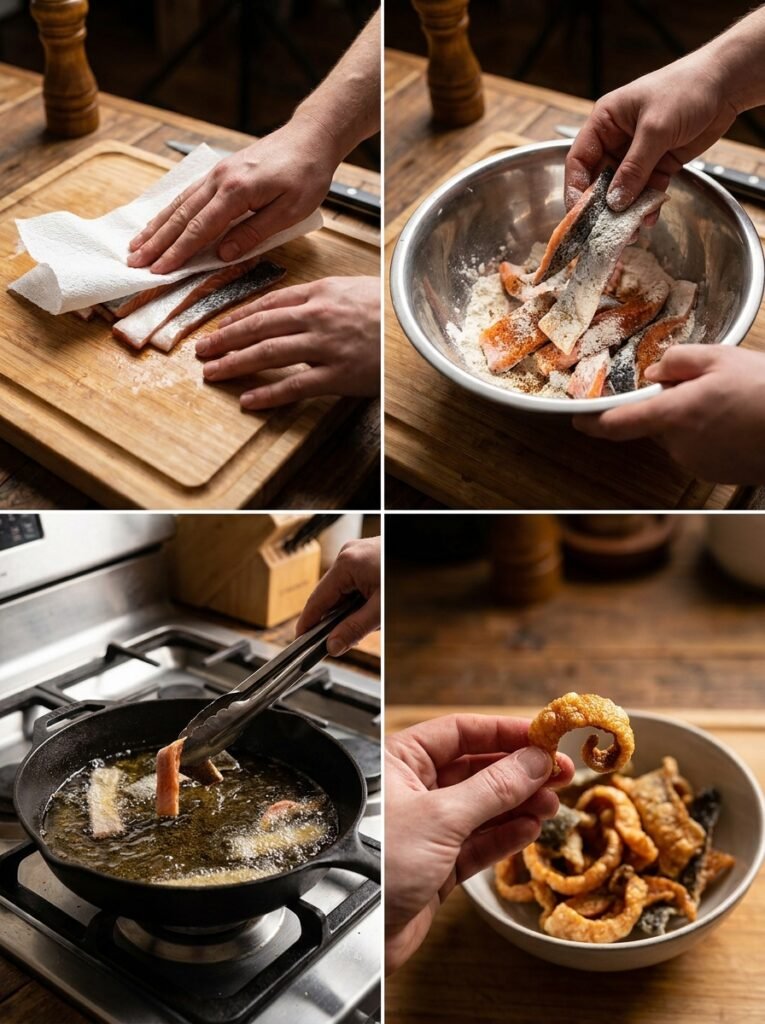
Step 1: Rinse the salmon skins under cold water to remove any residual scales or slime, then pat them completely dry with paper towels to ensure crispiness. Step 2: Cut the skins into uniform strips approximately 1 inch wide by 3 inches long to promote even cooking and consistent crunch. Step 3: Toss the strips in vegetable oil, sea salt, garlic powder, black pepper, and paprika, ensuring each piece is lightly coated without clumping.
Phase 2: Drying and Rendering
Step 4: Arrange the seasoned skins in a single layer on a wire rack set over a baking sheet to allow air circulation during the drying process. Step 5: Preheat your oven to 200°F (95°C) and bake the skins for 45 minutes to slowly render the fat and remove surface moisture. Step 6: Increase the oven temperature to 400°F (200°C) and continue baking for 5–7 minutes until the skins begin to bubble and turn golden.
Phase 3: Final Crisp and Storage
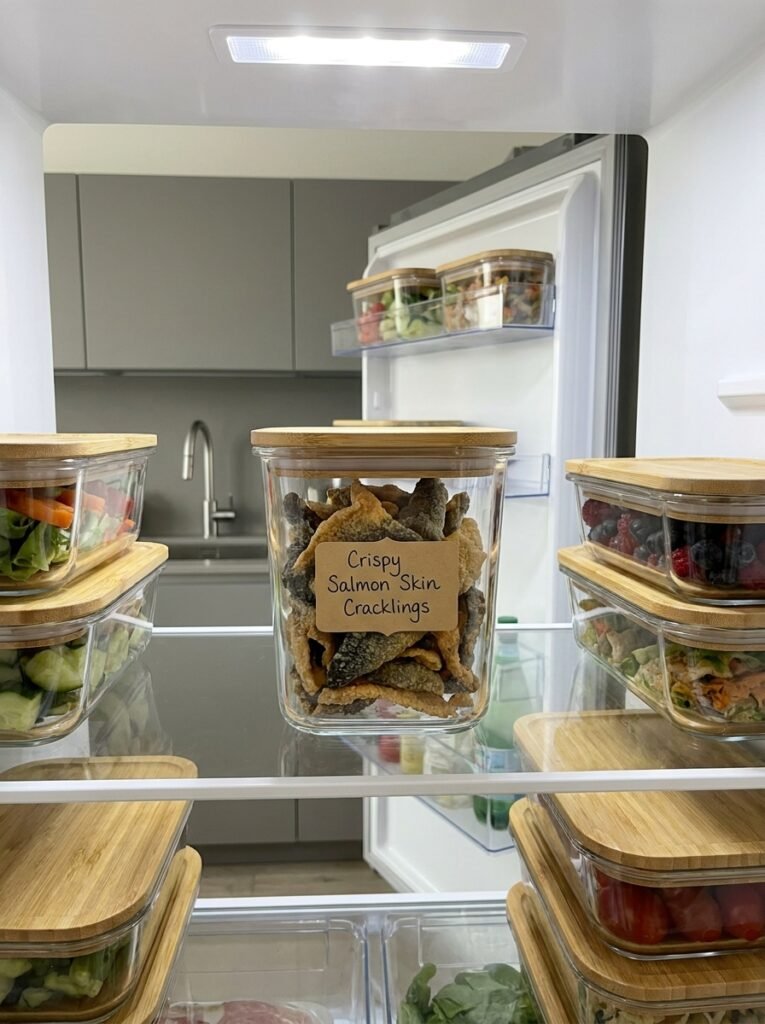
Step 7: Remove the salmon skins from the oven and let them cool on the rack for 2–3 minutes; they will continue to crisp as they cool. Step 8: Serve immediately for maximum crunch, or store in an airtight container once fully cooled to maintain texture. Step 9: Reheat in a hot oven for 2–3 minutes if they lose crispness after storage, avoiding microwaving which can make them chewy.
Chef Tips for Perfect Results
- Use skins from freshly filleted salmon whenever possible, as older skins can develop off-flavors and lose flexibility during cooking.
- Pat the skins extremely dry before seasoning; any remaining moisture will steam the skin rather than allow it to crisp.
- Space the strips evenly on the rack with at least half an inch between pieces to promote hot air circulation and uniform texture.
- Monitor the high-heat phase closely, as salmon skin can go from golden to burnt in under a minute at 400°F.
- Season immediately after the final bake while the skins are slightly porous for optimal spice adhesion.
- For extra crunch, finish the skins under a broiler for 30–60 seconds, watching constantly to prevent charring.
Common Mistakes to Avoid
- Leaving the skin wet: Moisture creates steam, resulting in chewy rather than crispy cracklings; always blot thoroughly with paper towels.
- Overcrowding the pan: Packing skins together traps steam and prevents even rendering; use multiple racks if necessary.
- Using high heat too early: Starting at 400°F can cause uneven cooking; begin with low heat to render fat before crisping.
- Underseasoning: Salmon skin needs ample seasoning as the fat content can mute flavors; taste a test piece and adjust.
- Storing while warm: Trapping heat in a container creates condensation and sogginess; cool completely before sealing.
Variations and Substitutions
| Ingredient | Substitution | Impact on Flavor |
|---|---|---|
| Sea salt | Himalayan pink salt | Slightly mineral finish with a softer saltiness. |
| Garlic powder | Onion powder | Sweeter, more savory depth without garlic pungency. |
| Paprika | Chili powder | Adds mild heat and smokiness to the cracklings. |
| Vegetable oil | Avocado oil | Higher smoke point, subtle buttery undertone. |
Serving Suggestions and Pairings
Serve Crispy Salmon Skin Cracklings alongside a tangy lemon-dill yogurt dip for a refreshing contrast to the rich, crunchy texture. They make an excellent appetizer for casual gatherings, game-day parties, or as a bar snack paired with non-alcoholic ginger beer or sparkling citrus soda. Incorporate them as a garnish for Asian-style noodle bowls or salads to add a surprise crunch element and boost protein content.

Storage and Reheating
| Method | Duration | Instructions |
|---|---|---|
| Room temperature | 1–2 days | Store in a paper bag to absorb excess moisture. |
| Refrigeration | Up to 5 days | Use an airtight container; reheat in oven. |
| Freezing | Up to 1 month | Layer with parchment paper; thaw before reheating. |
Nutritional Information
| Nutrient | Amount per Serving |
|---|---|
| Calories | 180 (approximate) |
| Protein | 12g (approximate) |
| Fat | 14g (approximate) |
| Carbohydrates | 1g (approximate) |
| Fiber | 0g (approximate) |
| Sugar | 0g (approximate) |
| Sodium | 350mg (approximate) |
Frequently Asked Questions
Can I use frozen salmon skins for this recipe?
Yes, frozen salmon skins work well if thawed completely and patted dry before seasoning. Excess ice crystals will prevent crisping, so ensure the skins are room temperature when you start. Rinse briefly to remove freezer odor if needed.
How do I know when the cracklings are fully cooked?
The skins are done when they turn golden brown and bubble slightly during the high-heat phase. They should feel rigid and light to the touch after cooling. If they bend without snapping, return them to the oven for an additional 2–3 minutes.
Why are my cracklings chewy instead of crispy?
Chewy cracklings usually result from insufficient drying or overcrowding during the cooking process. Ensure the skins are completely dry before seasoning and space them evenly on the rack. Low oven temperature can also leave moisture trapped inside.
Can I make these cracklings ahead of time?
Yes, you can prepare the skins up to two days in advance and store them in an airtight container at room temperature. Reheat in a 375°F oven for 3–5 minutes to restore crispness before serving. Avoid refrigerating before the final bake to preserve texture.
What is the best oil for frying salmon skins?
Vegetable oil or avocado oil are ideal due to their high smoke points and neutral flavor profiles. These oils allow the salmon taste to shine without introducing competing notes. Olive oil is not recommended as it can burn at high temperatures.
Can I season the skins before the low-heat drying phase?
Yes, seasoning before drying helps the spices adhere to the porous surface of the skins. Use a light hand with salt to avoid over-seasoning as moisture concentrates during rendering. Mix the spices with the oil first for even coating.
Are these cracklings suitable for a gluten-free diet?
Yes, the recipe is naturally gluten-free as it contains no wheat-based ingredients. Always check spice labels to ensure no cross-contamination for strict gluten-free needs. The salmon skin provides a pure protein crunch without added fillers.
How do I prevent the cracklings from shrinking too much?
Shrinking occurs as fat renders out during cooking; using skins with a slight fat layer can reduce this effect. Cutting strips larger than 1 inch wide helps maintain size. Avoid excessively high heat during the initial drying phase.
What should I serve with Crispy Salmon Skin Cracklings?
Pair them with creamy dips like yogurt-based sauces or tangy citrus salsas for contrast. They complement salads, grain bowls, or Asian-inspired soups as a garnish. For drinks, try sparkling water or non-alcoholic cocktails to balance the richness.
Can I reuse the oil from frying these cracklings?
If you opt for shallow frying instead of baking, let the oil cool completely and strain through a fine mesh to remove particles. Use it within a week for other low-heat cooking, as fish oil can become rancid faster. Discard if it smells off.
Conclusion
Crispy Salmon Skin Cracklings offer a delightful crunch that transforms a simple byproduct into a gourmet snack worthy of any occasion. By following the precise drying and baking steps outlined here, you achieve a perfect balance of texture and flavor without any pork or alcohol ingredients. Incorporate these cracklings into your culinary repertoire to reduce waste and enjoy the distinctive taste of perfectly crisped salmon skin.
Print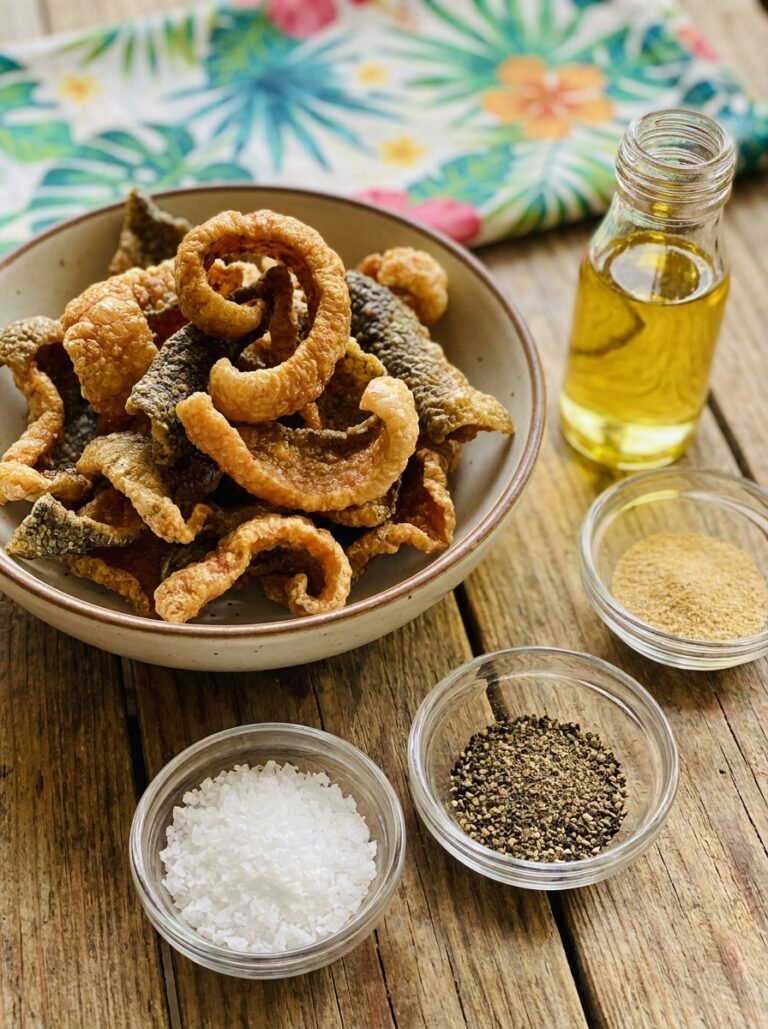
Crispy Salmon Skin Cracklings
Golden, crunchy salmon skin chips rendered for maximum snap and savory flavor. A halal-compliant, omega-3-rich alternative to pork rinds, perfect as a snack or garnish.
- Total Time: 45
- Yield: 4 servings 1x
Ingredients
4–6 fresh salmon skins (from 4 6-oz fillets)
1 tsp sea salt
1/2 tsp garlic powder
1/4 tsp black pepper
2 tbsp vegetable oil (for frying)
Instructions
Pat salmon skins dry with paper towels and blot with a paper towel to remove moisture
Line a baking sheet with parchment paper and arrange skins in a single layer
Place in dehydrator at 155°F for 4 hours (or use oven on lowest setting with door slightly open)
Heat vegetable oil in a large skillet to 325°F (160°C)
Fry each skin in batches for 1-2 minutes until deep golden and puffed, turning once
Drain on paper towels
Sprinkle with salt, garlic powder, and pepper immediately after frying
Notes
Use a dehydrator for best results; oven drying requires careful monitoring to avoid burning
Works with wild-caught or sustainably farmed salmon
Store in airtight container for up to 5 days
Adjust seasoning to taste (trust chili flakes, smoked paprika, or lemon zest add nice variations)
- Prep Time: 20
- Cook Time: 25
- Category: High Protein Snacks
- Method: Frying
- Cuisine: Asian-Fusion
- Diet: Halal/Pescetarian
Nutrition
- Serving Size: 40g
- Calories: 145
- Sugar: 0g
- Sodium: 570mg
- Fat: 12g
- Saturated Fat: 3g
- Carbohydrates: 1g
- Fiber: 0g
- Protein: 4g
- Cholesterol: 35mg