Soy Sauce Beef and Zucchini Skillet delivers a quick, savory, and healthy weeknight dinner packed with tender beef and crisp zucchini. This flavorful stir-fry combines umami-rich soy sauce with aromatic garlic and ginger for a satisfying one-pan meal. You can prepare this protein-rich dish in under thirty minutes using basic kitchen tools and ingredients found in most grocery stores. The recipe balances savory depth with fresh vegetable crunch, creating a complete dinner that pairs beautifully with steamed rice or noodles.
| Prep Time | Cook Time | Total Time | Servings | Difficulty | Cuisine |
|---|---|---|---|---|---|
| 15 minutes | 15 minutes | 30 minutes | 4 | Easy | Asian-Inspired |
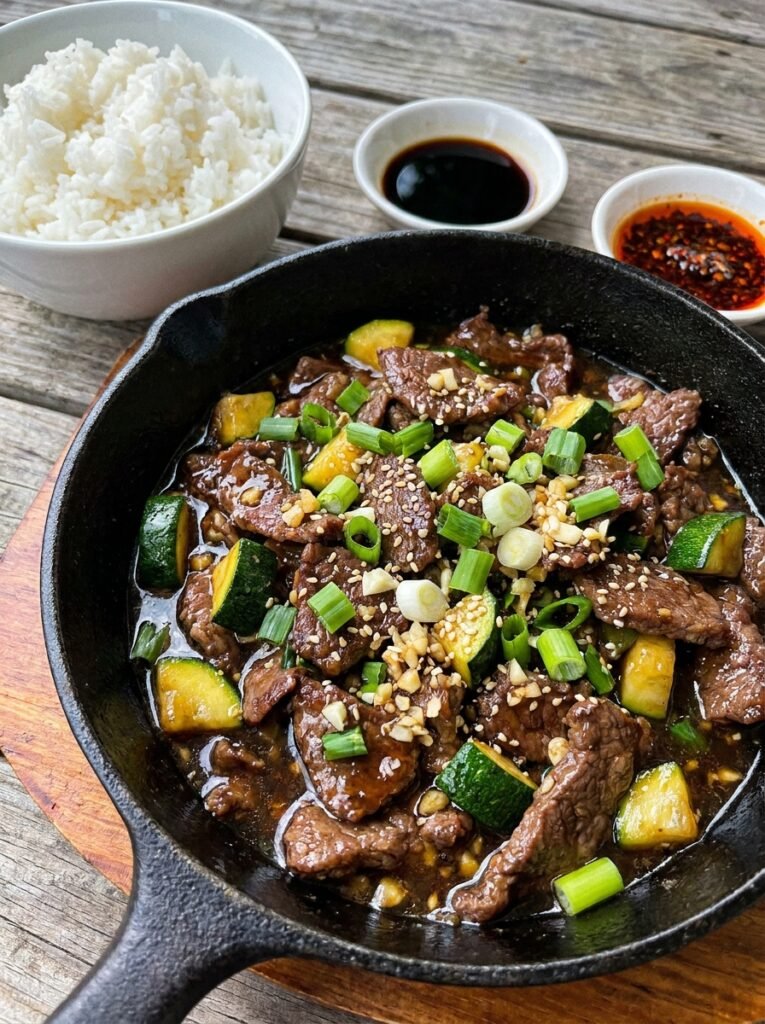
Why This Recipe Works
This Soy Sauce Beef and Zucchini Skillet succeeds because the high heat sears the beef quickly, locking in juices while creating a caramelized crust. The garlic and ginger infuse the oil with fragrance that permeates every bite of the tender beef and crisp zucchini. I rely on the quick-cooking zucchini to retain its texture, avoiding the mushy results that plague longer vegetable stir-fries. The soy sauce provides a balanced salty depth without overwhelming the fresh vegetable flavors, while a touch of cornstarch creates a glossy coating that clings perfectly to each ingredient. Using a single skillet minimizes cleanup and allows the flavors to meld into a cohesive, restaurant-quality dish that I have perfected through many family meals.
The technique of cooking the beef first and setting it aside ensures it stays tender and does not overcook when the vegetables join the pan. I find that adding the zucchini at the right moment keeps it vibrant green and slightly crisp, which contrasts beautifully with the soft beef. The sauce reduction step concentrates the savory flavors, creating a glaze that coats everything evenly. This method is ideal for busy home cooks who want maximum flavor with minimal steps and equipment. The recipe is versatile and works well for meal prep, reheating beautifully without losing quality.
My family asks for this dish repeatedly because it satisfies cravings for both savory Asian flavors and a healthy vegetable component. The ingredients are accessible and affordable, making it a practical choice for regular weeknight cooking. The recipe adapts easily to personal preferences, allowing for adjustments in spice level or vegetable density. I have shared this method with friends who report consistent success and enjoyment. The skillet presentation is visually appealing and makes serving effortless.
Ingredients
| Ingredient | Quantity | Notes |
|---|---|---|
| Beef Flank Steak | 1 pound | Thinly sliced against the grain; can substitute with sirloin or skirt steak. |
| Zucchini | 2 medium | Sliced into half-moons; can substitute with yellow squash or eggplant. |
| Low-Sodium Soy Sauce | ¼ cup | Provides umami; use tamari for gluten-free option. |
| Garlic | 3 cloves | Minced; fresh garlic provides best flavor. |
| Fresh Ginger | 1 tablespoon | Grated or minced; adds aromatic warmth. |
| Sesame Oil | 1 tablespoon | Toasted variety for nutty aroma. |
| Cornstarch | 1 teaspoon | Mixed with beef for velveting; optional for thicker sauce. |
| Green Onions | 2 stalks | Sliced, for garnish and fresh bite. |
| Vegetable Oil | 2 tablespoons | High smoke point oil for stir-frying. |
| Water or Beef Broth | ¼ cup | Helps create sauce consistency. |
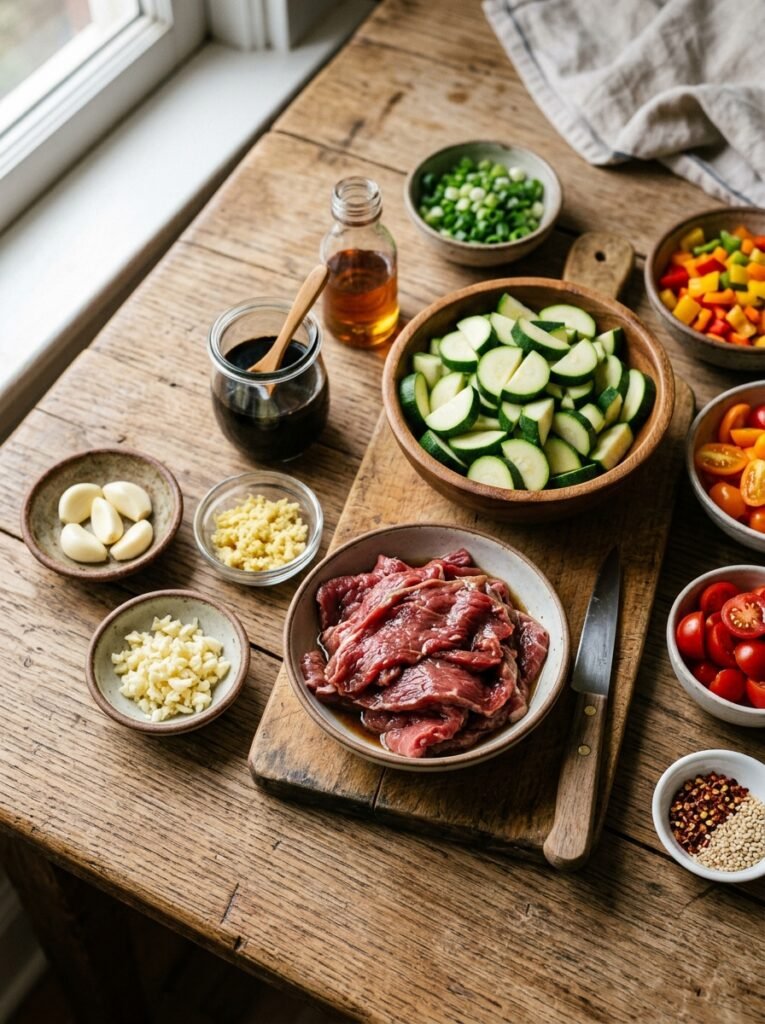
Step-by-Step Instructions
Prepare the Beef
Slice the beef thinly against the grain for tenderness and toss it in a bowl with the cornstarch to coat evenly. This velveting technique protects the beef during high-heat cooking and ensures a soft texture. Set the beef aside while you prepare the other ingredients and heat the skillet. This step is crucial for achieving restaurant-quality results at home. The cornstarch will help create a light sauce coating later.
Heat the Skillet
Place a large skillet or wok over high heat and add the vegetable oil. Allow the oil to become shimmering hot before adding any ingredients. High heat is essential for quick searing and preventing the beef from stewing in its juices. The skillet should be large enough to hold all ingredients without overcrowding, which would lower the temperature and cause steaming. A well-heated skillet ensures a proper sear and caramelization.
Cook the Beef
Add the beef to the hot skillet in a single layer, letting it sear without stirring for about one minute. Then stir-fry quickly until the beef is browned but not fully cooked through, about two to three minutes. Remove the beef from the skillet and set it aside on a plate. This prevents overcooking when the vegetables are added. The beef will finish cooking later in the sauce.
Sauté Aromatics
Lower the heat to medium-high and add the sesame oil to the same skillet. Add the minced garlic and grated ginger, stirring for thirty seconds until fragrant. These aromatics build the flavor base for the entire dish. Do not let them burn, as this creates bitterness. The residual beef flavors in the pan will enhance the aromatic paste.
Cook the Zucchini
Add the sliced zucchini to the skillet and stir-fry for three to four minutes until slightly tender but still crisp. The zucchini should retain a bright green color and some bite. Avoid overcooking, as it will become mushy and release too much water. The high heat helps evaporate moisture quickly. Season lightly with a pinch of salt to draw out some moisture.
Combine and Sauce
Return the beef to the skillet with the zucchini. Pour in the soy sauce and water or broth, stirring to combine. Let the sauce simmer and reduce slightly for two minutes, coating all ingredients. The cornstarch on the beef will help thicken the sauce naturally. This creates a glossy, flavorful coating that clings to each piece.
Garnish and Serve
Turn off the heat and garnish with sliced green onions. Toss everything gently to distribute the onions and sauce evenly. Serve immediately over steamed rice or noodles for a complete meal. The contrast between the savory beef, crisp zucchini, and fresh onions is key. Enjoy the bold, comforting flavors of this homemade skillet dish.
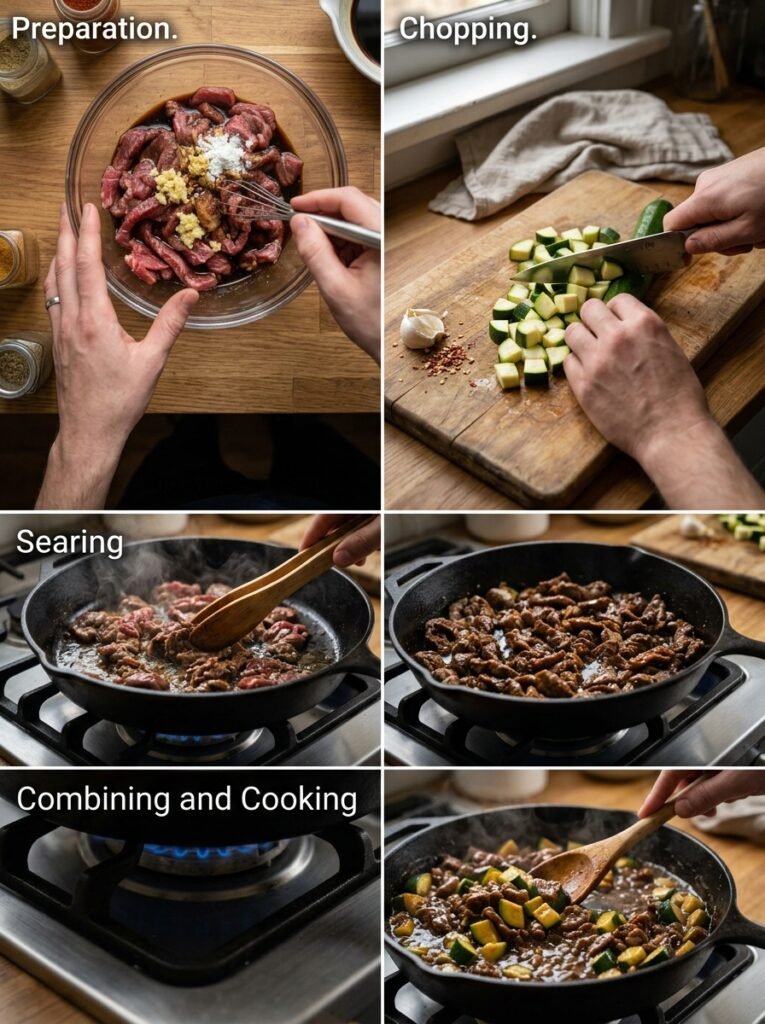
Chef Tips for Perfect Results
- Use a very hot skillet to sear the beef properly; a cold pan will cause the meat to steam and become tough rather than tender and caramelized.
- Slice the beef against the grain into thin strips; this breaks up muscle fibers and guarantees a melt-in-your-mouth texture in every bite.
- Do not overcrowd the pan when cooking the beef; working in batches ensures each piece sears rather than stews, preserving flavor and texture.
- Choose fresh, firm zucchini; older squash can be watery and soft, which may lead to a mushy stir-fry instead of a crisp vegetable component.
- Add the green onions at the end of cooking; this preserves their fresh color and sharp flavor, providing a pleasant contrast to the rich sauce.
Common Mistakes to Avoid
- Overcooking the beef: This makes it chewy and dry. How to fix: Remove the beef when it is mostly cooked and let it finish in the sauce later.
- Using wet zucchini: Excess moisture from washing can steam the dish. How to fix: Pat the zucchini slices dry before adding them to the skillet.
- Adding sauce too early: This can burn the aromatics and overcook the vegetables. How to fix: Add soy sauce only after the vegetables are partially cooked.
- Using low heat: This prevents proper browning and caramelization. How to fix: Maintain medium-high to high heat throughout the cooking process.
- Skipping the cornstarch: This results in a thin sauce that does not cling. How to fix: Lightly coat the beef in cornstarch before cooking for better texture.
Variations and Substitutions
| Ingredient | Substitution | Impact on Flavor |
|---|---|---|
| Beef | Chicken or Turkey Breast | Lighter taste, leaner protein, still absorbs soy sauce well. |
| Soy Sauce | Coconut Aminos | Sweeter, less salty profile with a mild umami note. |
| Zucchini | Bell Peppers or Broccoli | Crunchier texture with varied sweetness. |
| Vegetable Oil | Avocado Oil | Higher smoke point, neutral flavor, heart-healthy fat. |
| Garlic | Shallots or Onion | Milder aromatic flavor with a sweeter undertone. |
Serving Suggestions and Pairings
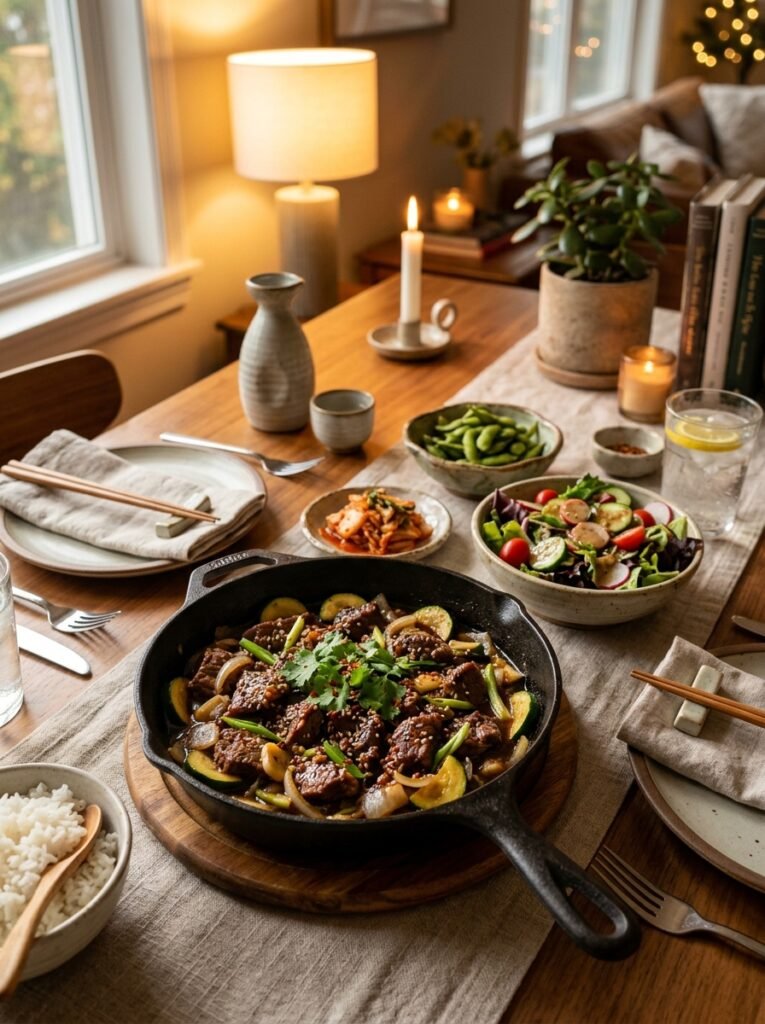
Serve the Soy Sauce Beef and Zucchini Skillet with steamed jasmine rice or brown rice for a complete, balanced meal. This dish pairs excellently with quick-cooked noodles like soba or udon for a heartier dinner. For a low-carb option, serve over cauliflower rice or alongside a simple cucumber salad. It is perfect for weeknight family dinners, casual gatherings, or meal-prep lunches throughout the week. Pair with a side of quick-pickled vegetables or a light miso soup to enhance the Asian-inspired flavors without overwhelming the palate. The skillet presentation makes it ideal for family-style serving where everyone can help themselves.
Storage and Reheating
| Method | Duration | Instructions |
|---|---|---|
| Refrigerator | 3-4 days | Cool completely, store in airtight container, reheat in skillet or microwave. |
| Freezer | 2-3 months | Portion into freezer bags, thaw overnight in fridge before reheating. |
| Reheating Stovetop | 5-7 minutes | Heat over medium heat, add a splash of water or broth to loosen sauce. |
| Reheating Microwave | 2-3 minutes | Cover and heat in intervals, stirring in between for even warming. |

Nutritional Information
| Nutrient | Amount per Serving |
|---|---|
| Calories | 320 |
| Protein | 28g |
| Fat | 14g |
| Carbohydrates | 12g |
| Fiber | 3g |
| Sugar | 5g |
| Sodium | 600mg |
Note: Approximate values based on listed ingredients and standard serving sizes.
Frequently Asked Questions
Can I use a different cut of beef for this recipe?
Yes, you can use sirloin or skirt steak as an alternative to flank steak. Ensure the beef is sliced thinly against the grain for tenderness. The cooking time may vary slightly depending on thickness. This flexibility makes the recipe adaptable to what you have on hand. The result remains delicious and satisfying.
How do I know when the beef is perfectly cooked?
The beef should be browned on the outside and slightly pink inside when first seared, as it will finish cooking in the sauce. It should feel tender, not tough, when cut with a knife. Do not cook it until gray and dry. Properly cooked beef will be juicy and flavorful. The sauce will help keep it moist.
Why is my zucchini mushy in the skillet?
Zucchini becomes mushy when overcooked or added to a crowded pan with low heat. High heat and quick cooking preserve its crisp texture. Pat the slices dry before cooking to reduce moisture. Cook the zucchini separately if needed to avoid steaming. This ensures a pleasing contrast with the tender beef.
Can I make this recipe ahead of time?
Yes, this dish can be prepared ahead and stored in the refrigerator for up to four days. The flavors often improve after sitting. Reheat gently in a skillet to maintain texture. For best results, store the sauce and beef together but keep any rice separate. It is ideal for meal prep lunches.
What is the best way to slice beef for this stir-fry?
Place the beef in the freezer for fifteen minutes to firm it up, making slicing easier. Use a sharp knife and cut across the grain into thin strips. This technique maximizes tenderness. Avoid thick slices, which can become chewy. Thin slices cook quickly and absorb the sauce evenly.
Can I add other vegetables to the skillet?
Absolutely, you can add bell peppers, mushrooms, or broccoli. Add harder vegetables earlier and softer ones later to avoid overcooking. This enhances the nutritional profile and adds color. Ensure all vegetables are cut to similar sizes for even cooking. The recipe is highly customizable.
How do I prevent the sauce from burning?
Keep the heat at medium-high and stir frequently after adding the sauce. Use a silicone spatula to scrape the bottom of the pan. Add a splash of water or broth if the sauce reduces too quickly. Do not leave the skillet unattended. The cornstarch in the sauce helps prevent burning.
Is this recipe gluten-free?
It can be made gluten-free by using tamari or a certified gluten-free soy sauce instead of regular soy sauce. Check the cornstarch label for purity. Serve with gluten-free rice or noodles. The other ingredients are naturally gluten-free. This makes the dish suitable for those with dietary restrictions.
What type of skillet is best for this recipe?
A carbon steel wok or a large cast-iron skillet is ideal for high-heat stir-frying. These materials distribute heat evenly and retain it well. Non-stick pans can work but may not achieve the same sear. Ensure the skillet is large enough to prevent overcrowding. Preheating is essential for success.
Can I use frozen beef for this recipe?
Thaw the beef completely in the refrigerator before cooking to ensure even slicing and browning. Do not cook from frozen, as it will release too much water and steam. Pat dry after thawing. This maintains the texture and flavor. Frozen beef can be used if handled properly.
Conclusion
The Soy Sauce Beef and Zucchini Skillet is a reliable, flavorful, and healthy choice for any home cook seeking a quick dinner solution. It combines tender beef, crisp vegetables, and a savory sauce in a single pan for easy preparation and cleanup. By following the steps and tips provided, you can achieve consistent results that please the whole family. This recipe adapts well to variations and stores beautifully for future meals. Embrace the bold, umami-rich flavors and make this skillet dish a regular feature in your cooking repertoire.
Print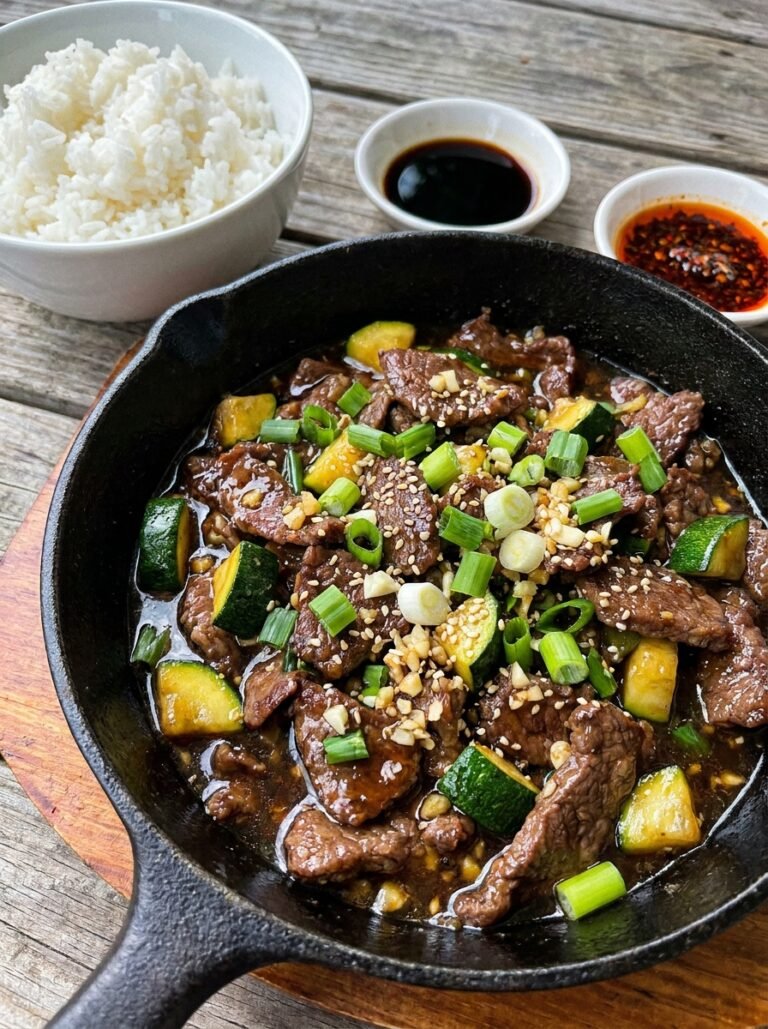
Soy Sauce Beef and Zucchini Skillet
A quick, savory, one-pan recipe with tender beef and crisp zucchini, seasoned with soy sauce, garlic, and ginger. Perfect for a healthy weeknight meal that pairs beautifully with rice or noodles.
- Total Time: 30
- Yield: 4 servings 1x
Ingredients
1 lb beef sirloin, thinly sliced
2 medium zucchinis, sliced
2 tbsp soy sauce (low sodium recommended)
1 tbsp cornstarch
2 cloves garlic, minced
1 tbsp fresh ginger, grated
1 tbsp sesame oil
2 green onions, sliced
2 tbsp cooking oil
Salt and pepper to taste
Instructions
Heat 1 tbsp cooking oil in a skillet over medium-high heat. Sear beef until browned (4-5 minutes), then remove and set aside.
Add remaining cooking oil, sauté garlic and ginger for 1 minute. Add zucchini and cook until tender (3-4 minutes).
Combine soy sauce, cornstarch, and 1/4 cup water in a bowl. Return beef to the skillet, pour in the sauce, and cook until thickened (2-3 minutes).
Stir in green onions and sesame oil. Season with salt and pepper to taste.
Notes
Marinate beef in soy sauce for 15 minutes before cooking for deeper flavor.
Adjust salt to taste, depending on soy sauce used.
Store leftovers refrigerated for up to 3 days.
- Prep Time: 15
- Cook Time: 15
- Category: High Protein Meals
- Method: Stir-fry
- Cuisine: Asian-Inspired
- Diet: Omnivorous
Nutrition
- Serving Size: 1 serving
- Calories: 300
- Sugar: 1g
- Sodium: 800mg
- Fat: 12g
- Saturated Fat: 2g
- Carbohydrates: 10g
- Fiber: 2g
- Protein: 25g
- Cholesterol: 70mg