Miso cabbage steaks are thick-cut slices of cabbage roasted until caramelized and tender, then brushed with a savory miso glaze that transforms this humble vegetable into an elegant, restaurant-quality side dish. These miso cabbage steaks deliver complex umami flavor with a crispy exterior and buttery interior, making them perfect for weeknight dinners and special occasions alike. The combination of miso’s fermented depth and cabbage’s natural sweetness creates a dish that appeals to both vegetable lovers and skeptics. Unlike traditional cooked cabbage, miso cabbage steaks maintain their structural integrity while developing golden-brown edges that add textural contrast. This straightforward recipe requires minimal prep work but delivers impressive results that will elevate any meal.
| Prep Time | Cook Time | Total Time | Servings | Difficulty | Cuisine |
|---|---|---|---|---|---|
| 10 minutes | 30 minutes | 40 minutes | 4 | Easy | Japanese-Inspired |
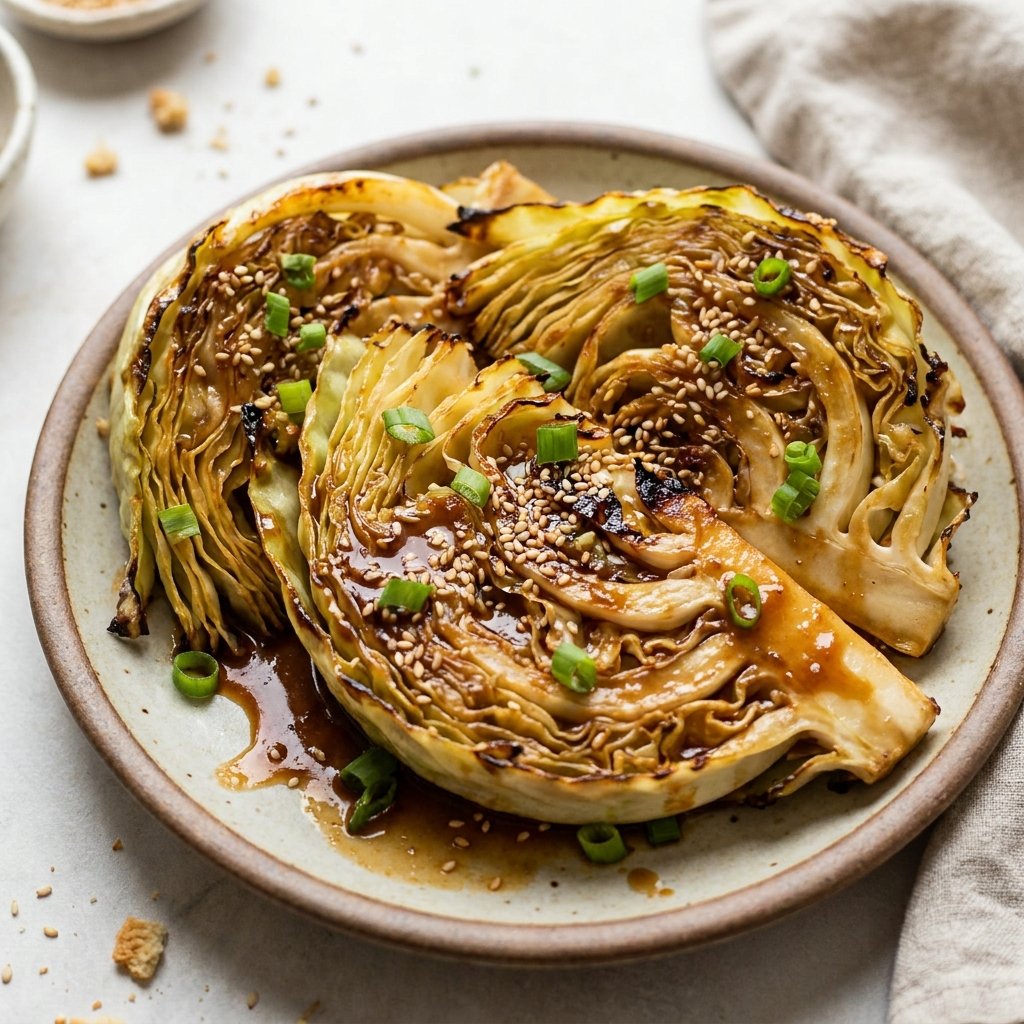
Table of Contents
Table of Contents
Why These Miso Cabbage Steaks Work
Miso cabbage steaks have become my go-to side dish because they deliver exceptional flavor with virtually zero complexity. The magic happens when you slice cabbage into thick steaks and roast them cut-side down in a hot oven, allowing the natural sugars to caramelize and create a crispy, golden crust. The miso glaze adds layers of umami depth that make these miso cabbage steaks taste like they came from a high-end restaurant kitchen, yet they require only basic cooking skills.
What makes miso cabbage steaks so reliable is their forgiving nature. Unlike delicate vegetables that require precise timing, cabbage is naturally sturdy and hard to overcook. The miso component provides assertive flavor that masks imperfections and transforms even basic preparation into something memorable. I’ve made miso cabbage steaks dozens of times, and the results are consistently excellent regardless of cabbage variety or minor variations in technique.
The texture contrast in these miso cabbage steaks is what keeps people coming back for more. The caramelized exterior develops a slight char that provides crunch, while the interior becomes tender and almost creamy when properly roasted. This textural interplay, combined with the savory miso glaze, creates a deeply satisfying dish that works as a vegetable side, a light main course, or even a component in grain bowls.
Miso cabbage steaks also appeal to diverse dietary preferences. They’re naturally vegan and gluten-free when you use tamari instead of regular miso, making them inclusive for various tables. The simple preparation means you can easily adjust seasoning levels to match your family’s preferences, from mild and subtle to bold and intensely flavored.
Miso Cabbage Steaks Ingredients
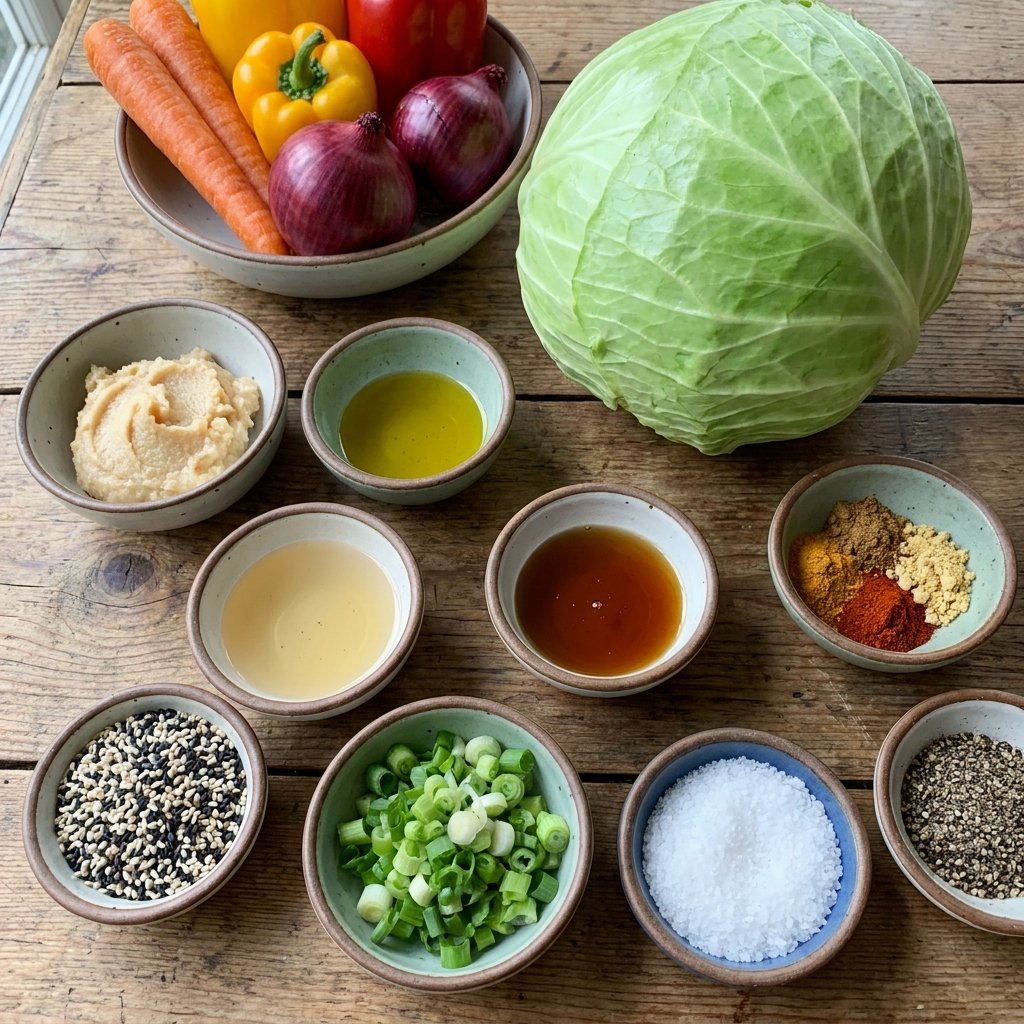
Building the perfect miso cabbage steaks requires quality ingredients that work together harmoniously to create balanced, memorable flavor. Each component plays a specific role in developing the final dish’s complexity and appeal.
| Ingredient | Quantity | Notes and Alternatives |
|---|---|---|
| Green or Napa cabbage | 1 large head (about 2 pounds) | Green cabbage is more widely available; Napa cabbage is more tender. Red cabbage works but turns purple. Choose firm, unblemished heads for best results. |
| White miso paste | 3 tablespoons | White miso is milder and slightly sweet. Red miso can substitute for deeper flavor but use only 2 tablespoons. Look for unpasteurized miso for maximum probiotic benefits. |
| Olive oil | 3 tablespoons | Extra virgin olive oil adds richness but regular olive oil works fine. Avocado oil is a neutral alternative with a higher smoke point. |
| Rice vinegar | 1 tablespoon | Rice vinegar provides gentle acidity that balances miso’s saltiness. Apple cider vinegar or white vinegar are acceptable substitutes. |
| Maple syrup or honey | 2 teaspoons | Maple syrup adds subtle complexity; honey provides different sweetness. Agave or brown sugar work if needed. |
| Sesame seeds (white or black) | 2 tablespoons | Optional garnish that adds nutty flavor and visual appeal. Black sesame seeds provide striking contrast; white sesame seeds are more traditional. |
| Scallions or green onions | 1 bunch (about 4 stalks), chopped | Fresh scallions add brightness and mild onion flavor. Green garlic or chives are possible substitutes during their seasons. |
| Sea salt and freshly ground black pepper | To taste | Proper seasoning is critical. Taste as you season. Consider using a fleur de sel for finishing for extra depth. |
| Water | 2 tablespoons | Used to thin the miso glaze to proper consistency. Adjust quantity based on your miso paste thickness. |
These miso cabbage steaks ingredients are designed to work together, creating a glaze that clings to the cabbage while developing deep caramelization during roasting. The miso provides umami foundation, while vinegar and sweetness balance the flavor profile into something truly special.
How to Make Miso Cabbage Steaks
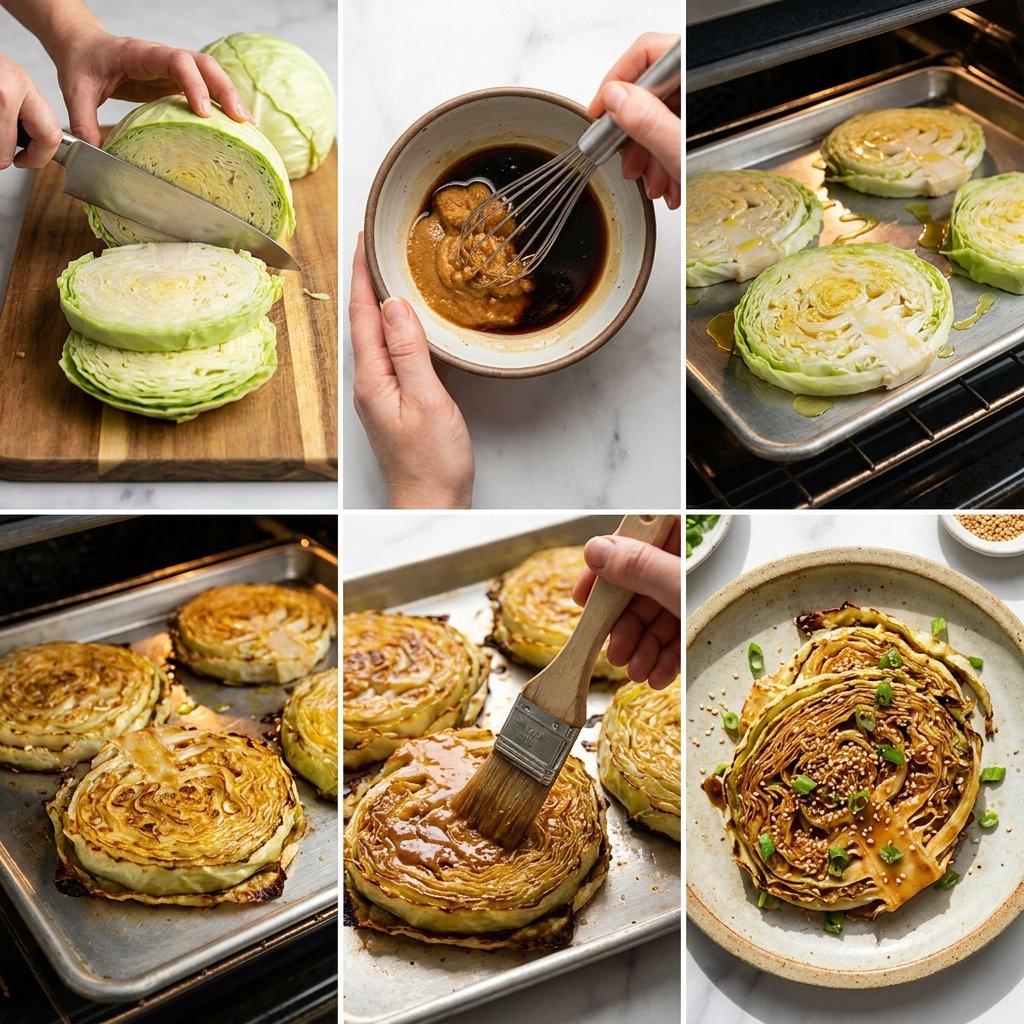
Creating perfect miso cabbage steaks involves straightforward steps that result in caramelized, tender vegetable slices with a savory glaze. The process is more about proper technique than complicated cooking skills.
Preparing Your Cabbage
- Preheat your oven to 425 degrees Fahrenheit, allowing it to reach full temperature before adding the miso cabbage steaks for even cooking.
- Trim the stem end of your cabbage with a sharp knife, removing any damaged outer leaves but leaving the core intact for structural support.
- Slice the cabbage into four to six thick steaks, cutting from top to bottom through the core in one-inch-thick sections that maintain their shape during roasting.
- Pat each cabbage steak dry with paper towels to remove excess moisture, which allows better caramelization during the roasting process.
- Arrange the miso cabbage steaks on a parchment-lined baking sheet, leaving space between each piece for air circulation and even browning.
Making the Miso Glaze
- Combine three tablespoons of white miso paste with one tablespoon of rice vinegar in a small mixing bowl, stirring until partially combined.
- Add two teaspoons of maple syrup to the miso mixture, continuing to whisk until you achieve a smooth, pourable consistency.
- Stir in two tablespoons of water gradually, adjusting the amount until your glaze reaches a brushable thickness similar to heavy cream.
- Taste your miso glaze and adjust seasoning with additional salt or vinegar as needed to balance the flavors.
Roasting the Miso Cabbage Steaks
- Brush both sides of each cabbage steak generously with olive oil, using about three tablespoons total across all pieces for proper caramelization.
- Season the miso cabbage steaks with sea salt and fresh pepper on both sides, being generous with seasoning since cabbage absorbs flavors readily.
- Place the miso cabbage steaks cut-side down on your prepared baking sheet, allowing direct contact with the hot pan surface.
- Roast for fifteen minutes without disturbing the miso cabbage steaks, allowing the bottom surface to develop deep golden-brown caramelization.
- Flip each miso cabbage steak carefully using a spatula, then brush the newly exposed top surface with your prepared miso glaze.
- Return to the oven and roast for another ten to fifteen minutes until the miso cabbage steaks are fork-tender and the glaze has darkened slightly.
- Remove from the oven and immediately brush the roasted miso cabbage steaks with any remaining glaze while they’re still warm.
Finishing and Serving
- Transfer your finished miso cabbage steaks to a serving platter, arranging them in an attractive presentation.
- Sprinkle sesame seeds and fresh chopped scallions over the warm miso cabbage steaks for added flavor and visual appeal.
- Serve your miso cabbage steaks immediately while still warm, as they’re most flavorful and textured in this state.
Chef Tips for Perfect Miso Cabbage Steaks
These professional techniques will help you achieve restaurant-quality miso cabbage steaks every single time you make them. Small adjustments make substantial differences in the final result.
- Use a preheated baking sheet on the oven rack to ensure the miso cabbage steaks make immediate contact with heat, creating a crispy caramelized crust that builds flavor through browning.
- Don’t flip your miso cabbage steaks too early; wait for at least fifteen minutes to allow proper caramelization on the first side, developing deep golden-brown color that indicates proper Maillard reaction.
- Make your miso glaze slightly thinner than you think necessary, since it thickens as it cools and as the cabbage releases moisture during roasting.
- Brush the miso glaze on the cabbage steaks after flipping rather than before, preventing the glaze from burning on the second roasting phase while ensuring it sets properly on the finished dish.
- Temperature matters significantly for miso cabbage steaks; avoid temperatures below 400 degrees, which prevents proper caramelization, and don’t exceed 450 degrees, which can char the edges before the interior cooks.
- Pat your cabbage steaks completely dry before oil and seasoning, as residual moisture creates steam that prevents browning and affects the texture of the final miso cabbage steaks.
Common Miso Cabbage Steaks Mistakes to Avoid
Understanding these frequent missteps helps ensure your miso cabbage steaks turn out perfectly every time. Learning from others’ experiences saves time and frustration.
Mistake 1: Slicing cabbage too thin. Many home cooks slice their miso cabbage steaks into thin pieces, thinking they’ll cook faster. This actually causes the cabbage to fall apart during roasting and creates a mushy texture. Solution: Cut your miso cabbage steaks at least one inch thick, ideally closer to one and a half inches, so they maintain structure and develop proper caramelization.
Mistake 2: Overcrowding the baking sheet. Cramming too many miso cabbage steaks onto one pan prevents air circulation and causes steaming instead of roasting. The cabbage becomes soggy rather than crispy. Solution: Arrange miso cabbage steaks with at least two inches between pieces, using two baking sheets if necessary to maintain proper spacing.
Mistake 3: Using oven temperatures that are too low. When the oven isn’t hot enough, miso cabbage steaks cook through before developing caramelization, resulting in pale, bland vegetables. Solution: Preheat your oven to at least 425 degrees and verify temperature with an oven thermometer to ensure accuracy for proper miso cabbage steaks development.
Mistake 4: Applying miso glaze too early. Coating miso cabbage steaks with glaze before roasting causes the glaze to burn rather than caramelize, creating bitter flavors instead of complex sweetness. Solution: Apply your miso glaze only after flipping the miso cabbage steaks, during the second roasting phase when the main caramelization is complete.
Mistake 5: Not seasoning properly. Cabbage requires generous seasoning to develop flavor, but many cooks under-season their miso cabbage steaks. The result is bland, uninspiring vegetables. Solution: Season your miso cabbage steaks generously with sea salt and pepper before roasting, tasting as you season to achieve proper depth.
Best Miso Cabbage Steaks Variations and Substitutions
These miso cabbage steaks variations let you adapt the basic recipe to match your preferences, available ingredients, and dietary needs. Each variation maintains the essential character while introducing new flavor dimensions.
| Ingredient | Substitution | Impact on Flavor |
|---|---|---|
| White miso paste | Red miso paste (reduce to 2 tablespoons) | Creates deeper, more fermented flavor with slightly more assertive umami. Better for those who enjoy bold, complex tastes. |
| Maple syrup | Honey or agave nectar | Honey adds floral sweetness; agave provides neutral sweetness. Both work equally well; choose based on flavor preference. |
| Rice vinegar | Apple cider vinegar or white vinegar | Apple cider vinegar adds subtle fruity notes; white vinegar provides sharper acidity. Adjust quantity as white vinegar is more intense. |
| Sesame seeds | Toasted pumpkin seeds or crushed peanuts | Pumpkin seeds add earthiness; peanuts introduce nutty, protein-rich dimension. Both create different textural experiences. |
| Green cabbage | Napa cabbage or red cabbage | Napa cabbage is more delicate and slightly sweeter; red cabbage is earthier but turns purple. Both roast beautifully in miso cabbage steaks preparation. |
| Scallions (garnish) | Fresh cilantro or mint leaves | Cilantro adds brightness and herbal quality; mint provides cooling contrast. Both change the overall flavor profile in interesting ways. |
| Olive oil | Sesame oil (use only 2 tablespoons, drizzle at end) | Sesame oil intensifies Asian-inspired flavors and adds toasted nuttiness. Use sparingly to avoid overwhelming the miso cabbage steaks. |
These miso cabbage steaks variations maintain the core technique while allowing creative expression. Experiment with different miso types, sweeteners, and garnishes to discover your preferred version of this versatile dish.
Serving Suggestions for Miso Cabbage Steaks
Miso cabbage steaks shine in numerous culinary contexts, adapting beautifully to various meal styles and occasions. These serving ideas help you incorporate these cabbage steaks into your regular rotation.
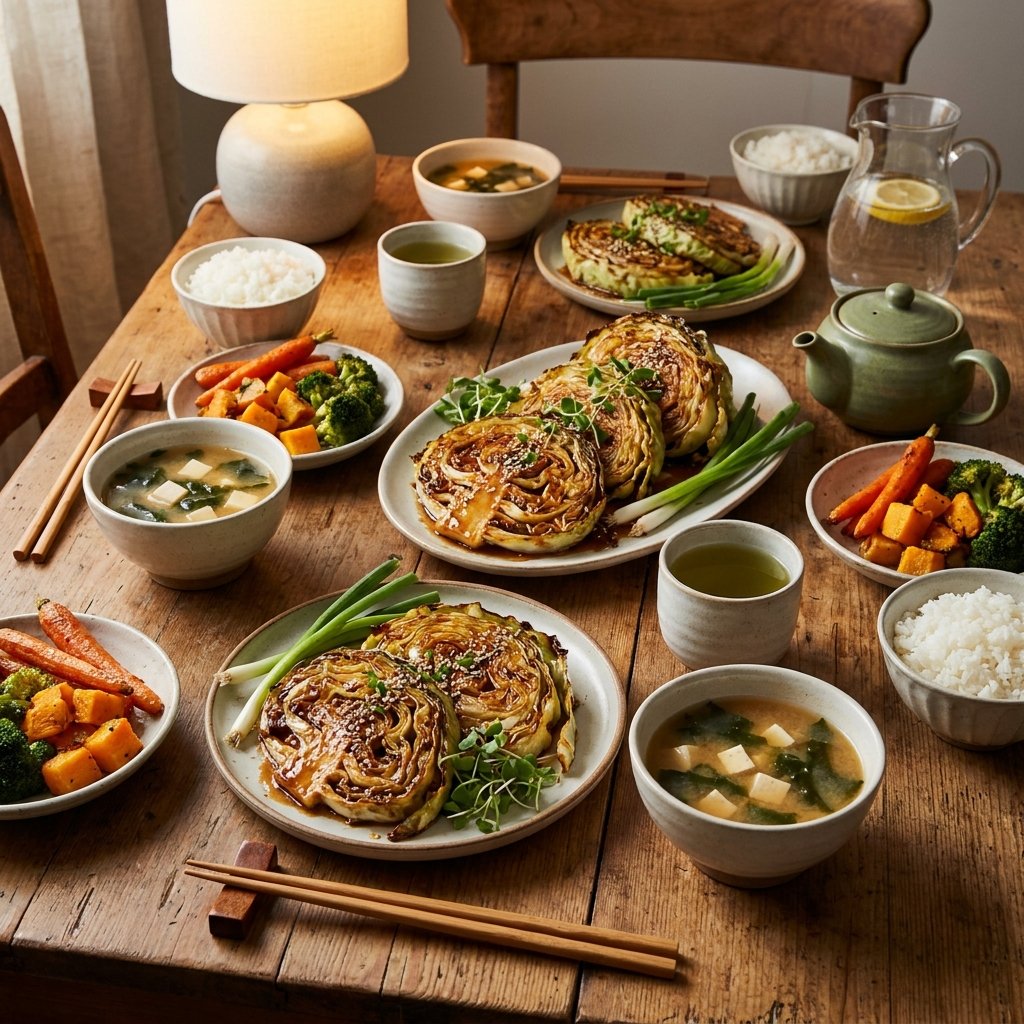
For weeknight family dinners, serve miso cabbage steaks alongside roasted proteins like chicken breasts or pan-seared tofu. The umami from the miso pairs exceptionally well with simple preparations that don’t compete for attention. Add steamed jasmine rice or quinoa to create complete, satisfying meals that feel restaurant-quality despite minimal effort. These miso cabbage steaks work particularly well for families seeking vegetable-forward dinners that everyone actually enjoys eating.
Create Asian-inspired grain bowls by layering fluffy rice with marinated chickpeas, shredded carrots, cucumber slices, and warm miso cabbage steaks. Drizzle with additional miso dressing or sriracha mayo to tie everything together. These miso cabbage steaks bowls make excellent meal-prep options, holding well for several days when stored properly and reheated gently.
Incorporate miso cabbage steaks into holiday and special occasion menus as an elegant vegetable side that impresses without fussy plating. They’re particularly stunning at dinner parties when you want something that tastes sophisticated but requires minimal last-minute work. These miso cabbage steaks convert vegetable skeptics because the caramelized exterior and savory glaze transform cabbage into something entirely unexpected.
For appetizer platters at gatherings, cut miso cabbage steaks into smaller pieces and arrange them on boards with complementary items like roasted nuts, fresh fruit, and aged cheese. Guests often return for multiple pieces, pleasantly surprised by what is essentially humble cabbage. These miso cabbage steaks showcase how proper technique elevates simple ingredients.
Serve miso cabbage steaks alongside grilled vegetables at summer barbecues as a unique alternative to traditional sides. The slightly charred exterior and savory glaze complement grilled proteins beautifully. These miso cabbage steaks prove that vegetable side dishes deserve as much attention as main proteins.
Storage and Reheating for Miso Cabbage Steaks
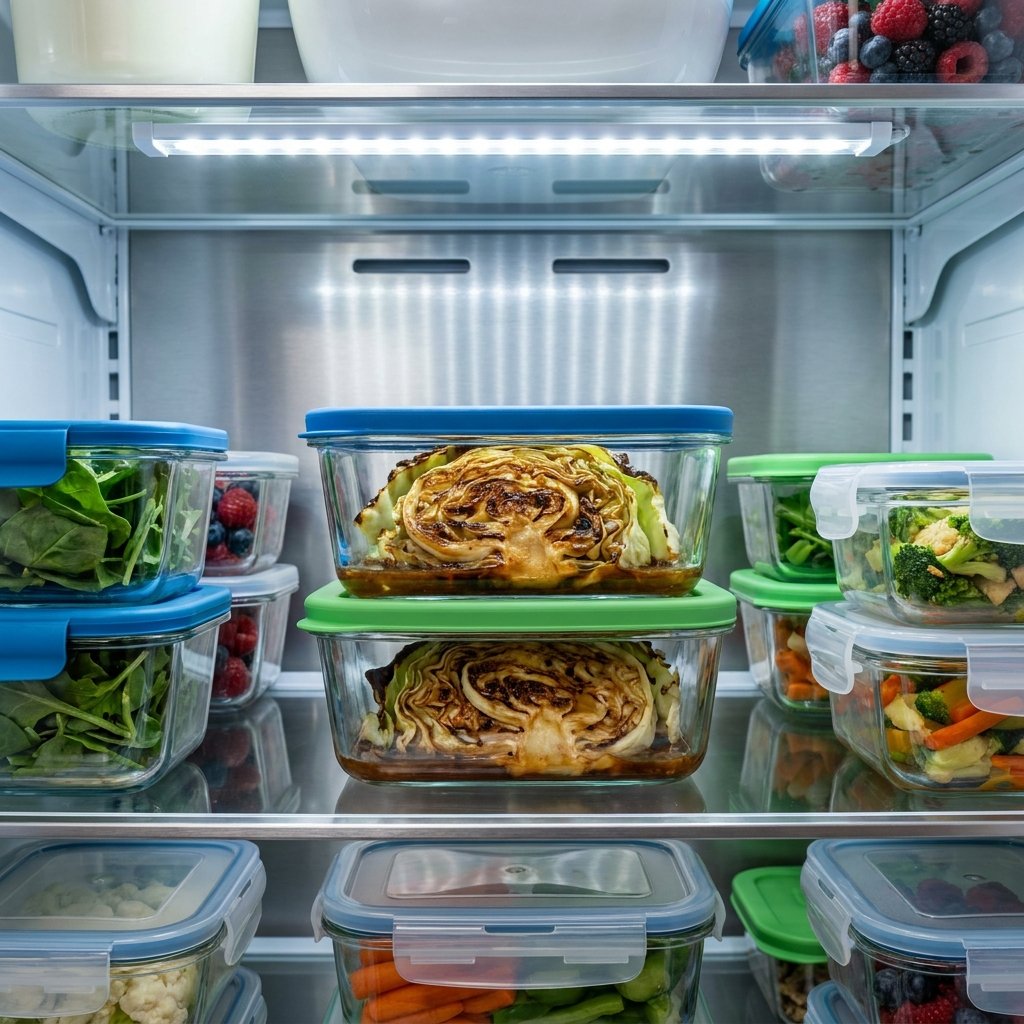
Proper storage techniques help you enjoy miso cabbage steaks multiple times throughout the week while maintaining their texture and flavor. These practical guidelines ensure your preparation work extends across several meals.
| Method | Duration | Instructions |
|---|---|---|
| Refrigerator storage | 3 to 4 days | Cool miso cabbage steaks to room temperature, then transfer to an airtight container. Store with parchment paper between layers to prevent sticking. Keep in the coldest part of your refrigerator. |
| Freezer storage | 2 to 3 months | Cool miso cabbage steaks completely before arranging in a single layer on a baking sheet. Freeze until solid, then transfer to freezer bags for long-term storage. Separate layers with parchment to prevent freezing together. |
| Oven reheating | Fresh or chilled | Place miso cabbage steaks on a baking sheet and warm at 350 degrees Fahrenheit for 8 to 10 minutes until heated through. This method restores the crispier texture compared to microwave reheating. |
| Microwave reheating | Quick option | Place a single miso cabbage steak on a microwave-safe plate and heat for 60 to 90 seconds at 50 percent power. This prevents overcooking while restoring warmth. Texture will be slightly softer than oven method. |
| Stovetop reheating | Best flavor option | Place miso cabbage steaks in a skillet with a bit of water over medium heat, covering until warmed through. This method maintains texture while allowing gentle reheating without drying out the vegetables. |
| Make-ahead preparation | Up to 24 hours | Prepare miso cabbage steaks completely the day before, storing in the refrigerator. Reheat before serving using preferred method. These miso cabbage steaks taste excellent at room temperature as well. |
These miso cabbage steaks store beautifully, making them perfect for meal planning and batch cooking. The flavors actually deepen after sitting, making them even more delicious the next day. Proper storage extends your cooking efforts across multiple meals while maintaining quality.
Nutritional Information for Miso Cabbage Steaks
Understanding the nutritional profile of miso cabbage steaks helps you incorporate them into a balanced diet and appreciate their health benefits. These values represent approximate amounts per serving for this recipe.
| Nutrient | Amount per Serving |
|---|---|
| Calories | 95 |
| Protein | 2.5 grams |
| Fat | 7 grams |
| Carbohydrates | 8 grams |
| Fiber | 2 grams |
| Sugar | 3 grams |
| Sodium | 320 milligrams |
| Vitamin C | 25% of daily value |
| Vitamin K | 85% of daily value |
| Potassium | 170 milligrams |
These miso cabbage steaks provide excellent nutritional value with minimal calories while delivering substantial vitamins and minerals. The fermented miso contributes beneficial probiotics that support digestive health. These values are approximate and may vary based on specific ingredients used.
Frequently Asked Questions About Miso Cabbage Steaks
Can I make miso cabbage steaks ahead of time for meal prep?
Yes, miso cabbage steaks are excellent meal-prep vegetables. Cook them completely and store in an airtight container for up to four days in your refrigerator. Reheat before serving using your preferred method, whether oven, stovetop, or microwave. These miso cabbage steaks maintain good flavor and texture throughout the week when stored properly.
How do I know when miso cabbage steaks are done cooking?
Properly cooked miso cabbage steaks are fork-tender throughout while maintaining structural integrity, with deep golden-brown caramelization on both sides. The exterior should feel slightly crispy when you bite into it, contrasting with the soft interior. The total roasting time is typically twenty-five to thirty minutes at 425 degrees Fahrenheit, though this varies based on cabbage size and oven characteristics.
What should I do if my miso cabbage steaks are burning on the edges?
If edges are darkening too quickly while the interior remains undercooked, your oven temperature may be too high or your miso cabbage steaks are positioned too close to the heating element. Solution: Lower your oven temperature by 25 degrees, move the baking sheet to a middle rack, or tent the miso cabbage steaks loosely with aluminum foil during the second roasting phase to prevent further darkening while the interior finishes cooking.
Can I freeze uncooked miso cabbage steaks before roasting?
Freezing uncooked miso cabbage steaks works, though the texture becomes slightly softer after thawing as ice crystals break down cell walls. You can freeze prepared cabbage steaks in a single layer, then transfer to freezer bags for up to three months. Thaw in the refrigerator before cooking, then roast using the standard method. The results are still delicious despite minor textural changes.
What are the best side dishes to serve with miso cabbage steaks?
Miso cabbage steaks pair beautifully with steamed jasmine rice, quinoa, farro, or noodles that soak up extra glaze and sauce. Add roasted vegetables like sweet potatoes, carrots, or Brussels sprouts for textural contrast and additional nutrition. Miso cabbage steaks also work wonderfully alongside simple proteins like grilled tofu, roasted chicken, or pan-seared fish that won’t compete for attention.
Can I store miso cabbage steaks in the freezer, and how long do they last?
Miso cabbage steaks freeze beautifully for two to three months when stored in airtight containers or freezer bags. Cool them to room temperature first, arrange in a single layer to prevent sticking, then pack for freezer storage. Thaw overnight in the refrigerator and reheat using your preferred method. Frozen miso cabbage steaks taste excellent despite minor texture softening from ice crystal formation.
How can I make miso cabbage steaks with less sodium?
Reduce miso content from three tablespoons to two tablespoons and compensate with additional rice vinegar and sesame oil for flavor depth. You can also rinse your miso paste under cold water before use to remove excess sodium, though this reduces fermented flavor slightly. These adjusted miso cabbage steaks will have milder flavor but maintain the essential character of the dish.
What miso varieties work best for miso cabbage steaks?
White miso paste is the best choice for miso cabbage steaks, offering mild, slightly sweet flavor that balances cabbage perfectly. Red miso paste works if you reduce quantity to two tablespoons and enjoy deeper, more fermented flavors. Avoid lighter-colored chickpea miso or darker varieties like black miso, which create imbalanced results in miso cabbage steaks preparation.
Can miso cabbage steaks serve as a main dish or just a side?
Miso cabbage steaks work as either a substantial side dish or a light main course when paired with grain and additional vegetables or legumes. For a complete vegetarian meal, serve with quinoa or rice plus a protein source like tofu or chickpeas. These miso cabbage steaks provide approximately two grams of protein per serving, so they’re best complemented with other protein-rich components for satisfying main courses.
How should I adjust cooking time if I’m making miso cabbage steaks with different oven sizes?
Cooking times vary based on individual oven characteristics, cabbage thickness, and piece size. Start checking miso cabbage steaks at the twenty-minute mark, looking for golden-brown caramelization on the first side before flipping. Smaller, thinner pieces may finish in twenty to twenty-five minutes total, while larger steaks require thirty to thirty-five minutes. Use doneness visual cues and fork-tenderness rather than strict timing for best results.
Conclusion
Miso cabbage steaks represent the perfect intersection of simplicity and sophistication, transforming humble cabbage into restaurant-quality vegetables through proper technique and strategic flavor building. These miso cabbage steaks deliver impressive results with minimal effort, making them ideal for both weeknight dinners and special occasions when you want vegetables that taste as important as main proteins. The combination of caramelized exterior, tender interior, and savory umami glaze creates an unforgettable eating experience that converts even vegetable skeptics. Whether you serve these miso cabbage steaks as an elegant side dish, incorporate them into grain bowls, or feature them prominently on your plate, you’ll appreciate how fermented miso depth and natural cabbage sweetness create something truly memorable. Start making miso cabbage steaks this week and discover why this simple recipe has become a staple in kitchens worldwide, delivering that perfect balance of salty, sweet, and umami that defines exceptional vegetable cooking.
Related Recipes You’ll Love
Rose tteokbokki recipe
Hot honey cottage cheese sweet potato beef bowl
Addictive cabbage recipe
Chili crisp carrot ribbon salad recipe
baking soda trick recipe for weight loss
Eggplant parmesan soup recipe
Whipped beef tallow recipe
Expert Resources and Food Safety
Learn more about fermented foods and their health benefits from Healthline to understand miso’s nutritional contributions. For proper food storage techniques, consult USDA food safety guidelines.
Print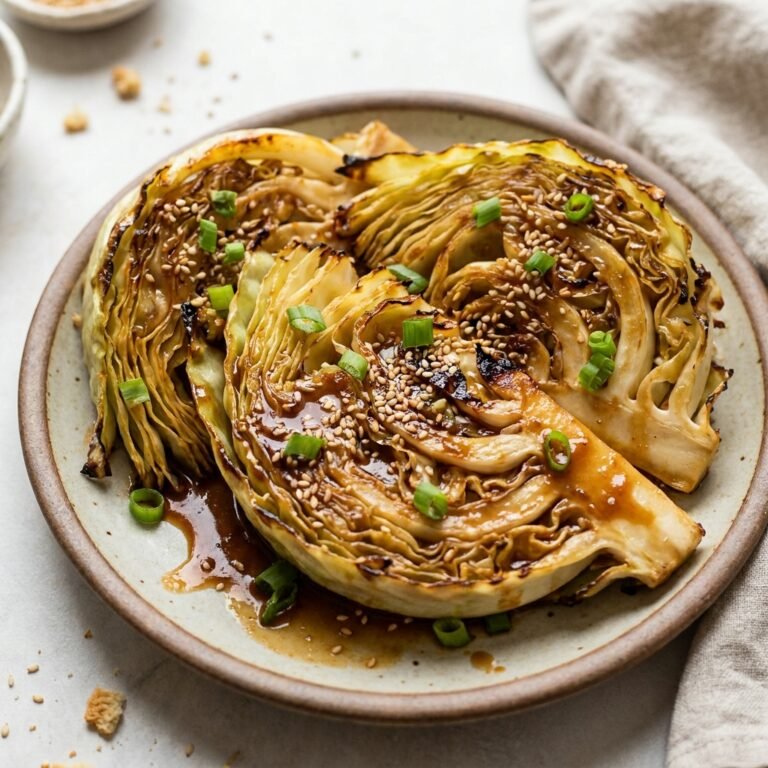
Viral Miso Cabbage Steaks 2026
Miso cabbage steaks are thick roasted cabbage slices brushed with savory miso glaze, creating crispy caramelized edges and a tender buttery center packed with umami flavor.
- Total Time: 40 minutes
- Yield: 4 servings 1x
Ingredients
- 1 large green or Napa cabbage
- 3 tablespoons white miso paste
- 3 tablespoons olive oil
- 1 tablespoon rice vinegar
- 2 teaspoons maple syrup or honey
- 2 tablespoons sesame seeds
- 1 bunch scallions, chopped
- Sea salt to taste
- Black pepper to taste
- 2 tablespoons water
Instructions
- Preheat oven to 425°F.
- Trim the cabbage and remove damaged outer leaves.
- Slice cabbage into thick 1-inch steaks.
- Pat cabbage steaks dry with paper towels.
- Arrange cabbage steaks on a parchment-lined baking sheet.
- Mix miso paste, rice vinegar, maple syrup, and water in a bowl.
- Brush cabbage steaks with olive oil on both sides.
- Season with sea salt and black pepper.
- Roast cut-side down for 15 minutes.
- Flip cabbage steaks carefully with a spatula.
- Brush the top side generously with miso glaze.
- Roast another 10-15 minutes until tender and caramelized.
- Transfer miso cabbage steaks to a serving platter.
- Top with sesame seeds and chopped scallions.
- Serve warm immediately.
Notes
Roast the cabbage steaks at high heat without overcrowding the pan to achieve the best crispy caramelized edges and tender center.
- Prep Time: 10 minutes
- Cook Time: 30 minutes
- Category: Side Dish
- Method: Roasting
- Cuisine: Japanese-Inspired
- Diet: Vegan
Nutrition
- Serving Size: 1 serving
- Calories: 95
- Sugar: 3g
- Sodium: 320mg
- Fat: 7g
- Saturated Fat: 1g
- Unsaturated Fat: 5g
- Trans Fat: 0g
- Carbohydrates: 8g
- Fiber: 2g
- Protein: 2.5g
- Cholesterol: 0mg