Rose tteokbokki recipe creates a stunning pink version of Korea’s beloved spicy rice cake dish, combining sweet strawberry notes with savory gochujang sauce and chewy tteok (rice cakes). This rose tteokbokki recipe transforms the traditional street food into an Instagram-worthy treat that tastes as delicious as it looks. The creamy, slightly sweet rose tteokbokki recipe balances heat with floral strawberry undertones, making it perfect for dinner parties, date nights, or anyone seeking something different from standard Korean comfort food. Whether you’re a Korean cuisine enthusiast or discovering this dish for the first time, this rose tteokbokki recipe delivers impressive results with straightforward techniques that even beginners can master. The combination of chewy rice cakes, creamy sauce, and fresh toppings creates an unforgettable eating experience that justifies the rose tteokbokki recipe’s growing popularity across food blogs and social media.
| Prep Time | Cook Time | Total Time | Servings | Difficulty | Cuisine |
|---|---|---|---|---|---|
| 15 minutes | 20 minutes | 35 minutes | 4 servings | Easy to Intermediate | Korean |
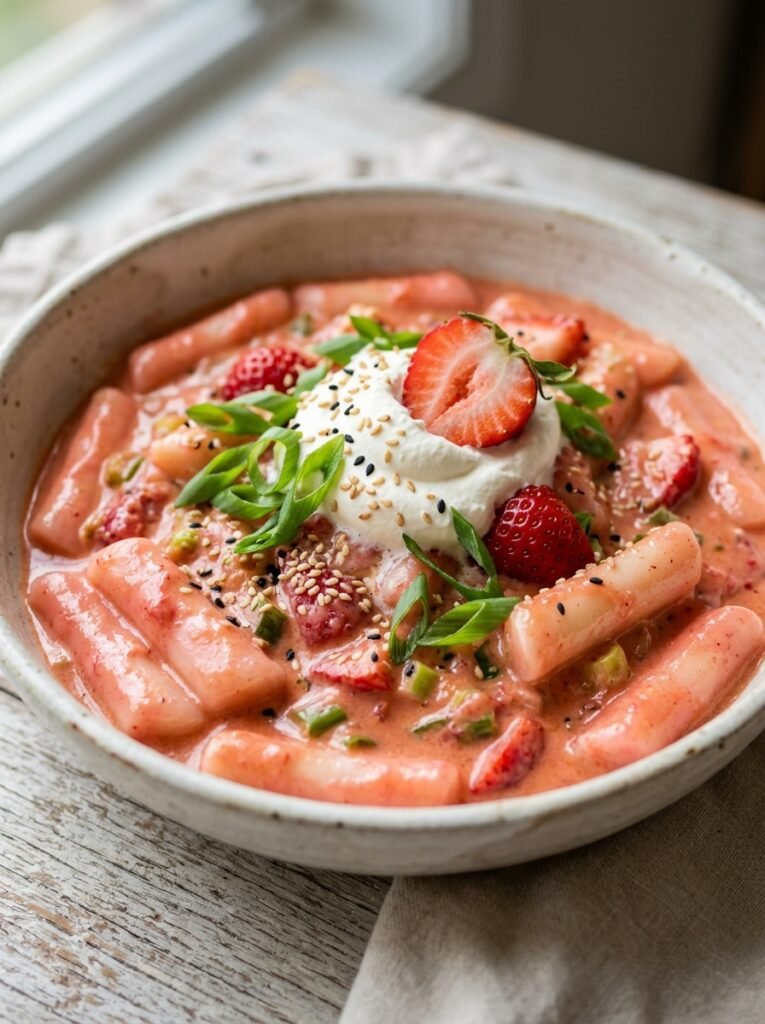
Table of Contents
Table of Contents
Why This Rose Tteokbokki Works
Rose tteokbokki recipe succeeds because it balances contrasting flavors and textures that complement each other perfectly. The rose tteokbokki recipe uses gochujang’s savory spice as a foundation, then layers strawberry puree and condensed milk to create a naturally pink sauce with depth and complexity. I’ve tested countless rose tteokbokki recipe variations, and this method produces consistent, impressive results without requiring specialty equipment or rare ingredients. The chewy tteok provides the perfect vehicle for the creamy sauce, while fresh strawberries and whipped cream on top add brightness and visual appeal that make this rose tteokbokki recipe Instagram-famous for good reason.
This rose tteokbokki recipe appeals to home cooks because it transforms a traditional Korean street food into something unexpected and special. The combination of sweet and savory creates addictive flavors that keep people reaching for more. Unlike standard tteokbokki, this rose tteokbokki recipe offers a milder heat level balanced with natural strawberry sweetness, making it accessible to those who prefer less spicy food. The visual presentation alone makes this rose tteokbokki recipe worth making—the soft pink color and elegant toppings turn a casual snack into something worthy of special occasions.
Rose tteokbokki recipe execution depends heavily on balancing the sauce components correctly. Too much strawberry makes the rose tteokbokki recipe taste overly sweet; too much gochujang overpowers the delicate strawberry notes. This rose tteokbokki recipe achieves harmony by using condensed milk as a buffer, creating a creamy texture that mellows harsh spice while amplifying strawberry flavor. Home cooks appreciate how forgiving this rose tteokbokki recipe is—minor adjustments in ingredient proportions won’t ruin the final dish.
The reliability of this rose tteokbokki recipe comes from using frozen strawberries, which provide consistent flavor and natural pectin that helps thicken the sauce. Fresh tteok purchased from Korean markets ensures proper texture—chewy without being mushy. This rose tteokbokki recipe works equally well for weeknight dinners, meal prep sessions, or entertaining guests who expect something creative and delicious.
Rose Tteokbokki Ingredients
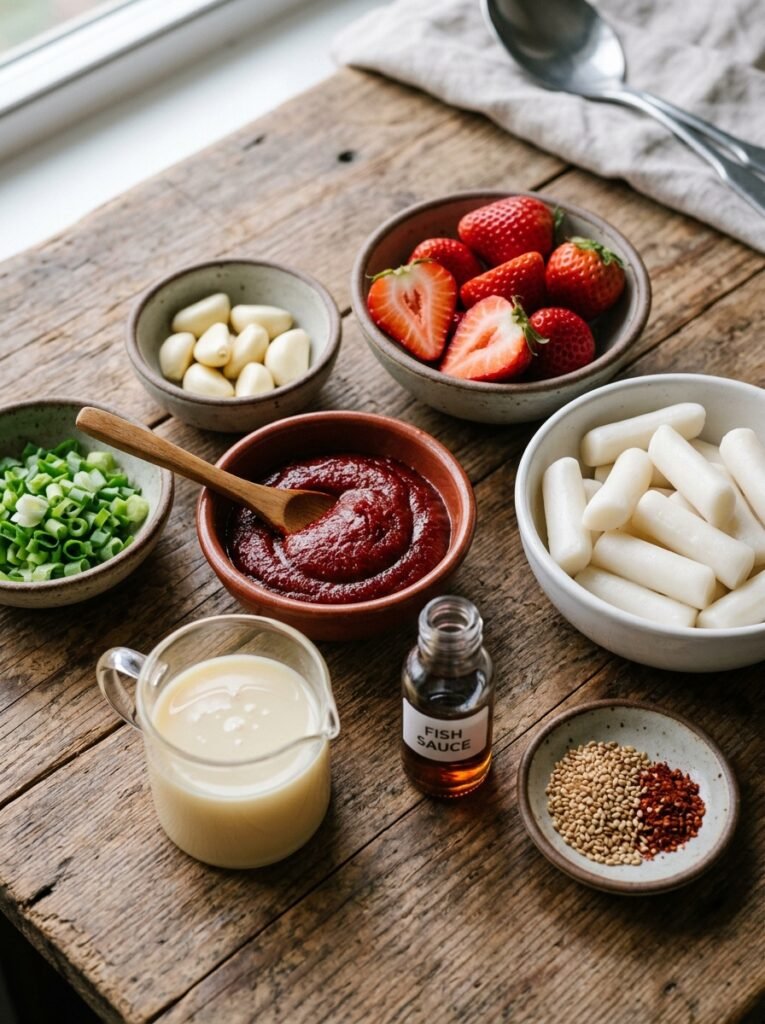
Gather these ingredients to make an authentic rose tteokbokki recipe that delivers restaurant-quality results from your home kitchen.
| Ingredient | Quantity | Notes with Alternatives |
|---|---|---|
| Fresh or frozen tteok (Korean rice cakes) | 400g (14 oz) | Use cylindrical tteok, not the flat variety. Boil frozen tteok for 5 minutes before using in the rose tteokbokki recipe. |
| Gochujang (Korean red chili paste) | 3 tablespoons | Essential for authentic rose tteokbokki recipe. Use good quality; cheap versions taste bitter. No substitute gives the same depth. |
| Fresh or frozen strawberries | 250g (9 oz) | Frozen works perfectly for this rose tteokbokki recipe and is often cheaper. Thaw before blending. |
| Sweetened condensed milk | 100ml (3.5 fl oz) | Creates the creamy, pink color essential to rose tteokbokki recipe. Full-fat version produces better texture. |
| Fish sauce | 1 tablespoon | Adds umami depth to this rose tteokbokki recipe. Use quality anchovy-based fish sauce. Cannot be omitted. |
| Garlic, minced | 4 cloves | Fresh garlic works best for this rose tteokbokki recipe. Garlic powder can substitute at 1 teaspoon but lacks the same aromatic quality. |
| Vegetable broth | 200ml (7 fl oz) | Creates the sauce base for this rose tteokbokki recipe. Use low-sodium to control salt levels. |
| Sugar | 1 tablespoon | Balances the gochujang heat in this rose tteokbokki recipe. Adjust based on strawberry sweetness. |
| Butter | 2 tablespoons | Adds richness to this rose tteokbokki recipe sauce. Use unsalted butter for better control. |
| Green onion (scallion) | 2 stalks | Garnish for this rose tteokbokki recipe. Add fresh on top for color and mild onion flavor. |
| Sesame seeds | 1 tablespoon | Traditional Korean garnish for this rose tteokbokki recipe. Toast lightly for better flavor. |
| Fresh strawberries (for topping) | 150g (5 oz) | Sliced for elegant presentation of this rose tteokbokki recipe. Choose ripe but firm berries. |
| Whipped cream | 60ml (2 fl oz) | Optional garnish that balances this rose tteokbokki recipe’s heat with cool creaminess. |
This rose tteokbokki recipe requires quality gochujang as the flavor foundation; using low-quality chili paste ruins the entire dish. Frozen strawberries work beautifully in this rose tteokbokki recipe because they break down more easily when blended and often contain more concentrated flavor than fresh berries.
How to Make Rose Tteokbokki
Follow these step-by-step instructions to prepare an authentic rose tteokbokki recipe that rivals restaurant versions.
Preparing the Rose Tteokbokki Sauce
- Blend the thawed strawberries with gochujang, condensed milk, and fish sauce in a food processor until completely smooth, creating the signature pink sauce for your rose tteokbokki recipe.
- Strain the strawberry mixture through a fine-mesh sieve into a bowl, pressing gently to extract as much liquid as possible for your rose tteokbokki recipe.
- Discard the seeds and pulp remaining in the sieve to achieve the silky-smooth texture essential to an authentic rose tteokbokki recipe.
- Set the strained sauce aside while preparing other components of your rose tteokbokki recipe.
Cooking the Rose Tteokbokki Base
- Melt butter in a large pan over medium heat, preparing the foundation of your rose tteokbokki recipe.
- Add minced garlic to the melted butter and cook for 1 minute until fragrant, building flavor for your rose tteokbokki recipe.
- Stir in the prepared strawberry sauce gradually, mixing thoroughly to incorporate all components of your rose tteokbokki recipe evenly.
- Pour vegetable broth into the pan while stirring constantly, achieving the correct sauce consistency for your rose tteokbokki recipe.
- Add sugar to balance the heat and acidity in your rose tteokbokki recipe, adjusting to taste preferences.
- Simmer the sauce for 3 minutes over medium heat, allowing flavors to meld together in your rose tteokbokki recipe.
Combining Tteok with Rose Tteokbokki Sauce
- Add the prepared tteok (rice cakes) to the simmering sauce, ensuring every piece gets coated for your rose tteokbokki recipe.
- Stir gently but constantly for 8-10 minutes, allowing the tteok to absorb the pink sauce while maintaining chewy texture in your rose tteokbokki recipe.
- Check that the sauce coats the tteok completely and the consistency resembles thick cream in your rose tteokbokki recipe.
- Taste your rose tteokbokki recipe and adjust seasoning with additional fish sauce, sugar, or salt as needed.
Finishing Your Rose Tteokbokki Recipe
- Transfer the cooked rose tteokbokki recipe to a serving bowl or individual bowls for presentation.
- Sprinkle sesame seeds and sliced green onion over the top of your rose tteokbokki recipe.
- Arrange fresh strawberry slices and dollops of whipped cream on the surface of your rose tteokbokki recipe for elegant garnish.
- Serve your rose tteokbokki recipe immediately while the tteok remains warm and chewy.
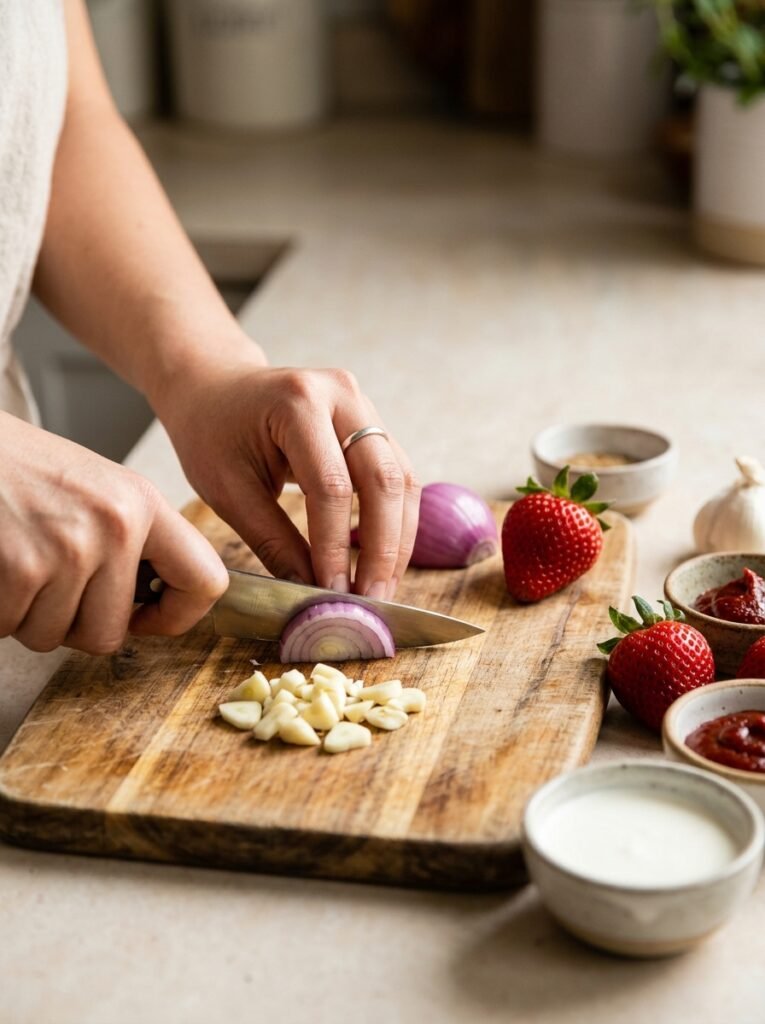
Chef Tips for Perfect Rose Tteokbokki
These professional techniques ensure your rose tteokbokki recipe achieves the perfect balance of flavors, textures, and presentation.
- Strain the strawberry mixture thoroughly: Don’t skip the sieving step in your rose tteokbokki recipe. Visible seeds and pulp affect both texture and visual appeal. Press firmly but gently to extract maximum liquid while leaving debris behind, ensuring silky sauce in your rose tteokbokki recipe.
- Use medium heat exclusively: High heat causes the gochujang and strawberry sauce in your rose tteokbokki recipe to break or separate. Medium heat allows gentle, even cooking that keeps the pink color vibrant and the texture creamy throughout your rose tteokbokki recipe.
- Don’t overcook the tteok: Overcooked rice cakes become mushy and lose their characteristic chewiness. Stir constantly during the 8-10 minute cooking window of your rose tteokbokki recipe to distribute heat evenly and achieve perfect tenderness that balances a slight bite with creaminess.
- Balance sweetness and heat actively: Taste your rose tteokbokki recipe multiple times during cooking. The strawberry sweetness varies by season and brand, so adjusting sugar and fish sauce ensures every batch of your rose tteokbokki recipe tastes perfectly balanced between the spice of gochujang and natural strawberry flavor.
- Add fresh toppings just before serving: Whipped cream melts and strawberry color bleeds if added too early. Top your rose tteokbokki recipe immediately before serving to maintain distinct flavors, visual contrast, and fresh strawberry taste that complements the warm, creamy sauce.
- Keep the sauce consistency creamy: If your rose tteokbokki recipe sauce becomes too thick, add vegetable broth by the tablespoon until reaching the desired consistency. If too thin, simmer longer over medium heat to allow excess moisture to evaporate before serving your rose tteokbokki recipe.
Common Rose Tteokbokki Mistakes to Avoid
Learning from these frequent mistakes helps you execute a flawless rose tteokbokki recipe on the first attempt.
- Using unripe or poor-quality strawberries: Unripe strawberries lack the sweet, aromatic notes that balance the gochujang heat in rose tteokbokki recipe. This mistake results in overly spicy, one-dimensional flavor. Buy fully ripe berries and taste before blending. If your strawberries taste bland, add 1 tablespoon of honey to your rose tteokbokki recipe to compensate for poor strawberry quality.
- Skipping the straining step: Home cooks often skip straining to save time, but this mistake ruins the texture of rose tteokbokki recipe. Seeds and pulp catch on teeth and create gritty texture rather than smooth sauce. For authentic rose tteokbokki recipe, strain the mixture every time, even if it takes an extra five minutes.
- Cooking at too high temperature: High heat causes the condensed milk and gochujang in rose tteokbokki recipe to separate, creating greasy texture and broken sauce. Maintain medium heat throughout preparation of your rose tteokbokki recipe to keep the sauce emulsified and creamy. If your rose tteokbokki recipe already separated, whisk in 1 tablespoon of cornstarch dissolved in water to rebind the sauce.
- Adding toppings too early: Whipped cream melts into the warm sauce when added immediately after cooking, losing its textural contrast that defines perfect rose tteokbokki recipe. Fresh strawberries discolor and absorb too much sauce flavor if added before serving your rose tteokbokki recipe. Add all cold toppings at the absolute last moment.
- Not adjusting seasoning to taste: Every batch of strawberries has different natural sugar content, affecting the balance in rose tteokbokki recipe. Failing to taste and adjust means some batches taste too spicy while others taste too sweet. Become confident adjusting fish sauce for umami, sugar for sweetness, and additional gochujang for heat in your rose tteokbokki recipe.
- Using low-quality gochujang: Cheap gochujang tastes bitter and chemical, destroying the delicate strawberry flavor in rose tteokbokki recipe. Invest in quality Korean gochujang from trusted brands. This single ingredient makes the difference between mediocre and exceptional rose tteokbokki recipe, so don’t compromise.
Best Rose Tteokbokki Variations and Substitutions
Customize this rose tteokbokki recipe to match your preferences, dietary needs, and ingredient availability with these proven variations.
| Ingredient | Substitution | Impact on Rose Tteokbokki Recipe Flavor |
|---|---|---|
| Strawberries | Raspberries or blackberries in rose tteokbokki recipe | Creates deeper berry flavor with more tartness. Use equal amount but strain extra carefully as raspberry seeds are smaller. Rose tteokbokki recipe becomes more tart; add extra sugar accordingly. |
| Condensed milk | Evaporated milk mixed with 2 tablespoons honey for rose tteokbokki recipe | Less sweet result. Rose tteokbokki recipe becomes slightly less creamy but lighter in texture. Evaporated milk doesn’t thicken sauce as effectively, so cook longer in rose tteokbokki recipe. |
| Fish sauce | Soy sauce for rose tteokbokki recipe | Changes umami profile. Rose tteokbokki recipe becomes less salty with different fermented notes. Use 1.5 tablespoons soy sauce as fish sauce is more concentrated in rose tteokbokki recipe. |
| Gochujang | Sriracha mixed with 1 tablespoon miso for rose tteokbokki recipe | Spice profile becomes sharper, less fermented. Rose tteokbokki recipe loses authentic Korean depth but remains delicious. Strain extra carefully as sriracha is thin in rose tteokbokki recipe. |
| Vegetable broth | Chicken broth for rose tteokbokki recipe | Adds savory depth. Rose tteokbokki recipe becomes richer but less light. Chicken broth complements the existing flavors well in rose tteokbokki recipe without competing. |
| Whipped cream topping | Greek yogurt for rose tteokbokki recipe | Adds tangy notes to balance sweetness. Rose tteokbokki recipe retains creaminess with added complexity. Use 60ml thick Greek yogurt as alternative to whipped cream in rose tteokbokki recipe. |
| Butter | Olive oil for rose tteokbokki recipe | Changes richness profile. Rose tteokbokki recipe becomes slightly lighter with grassy notes. Affects texture; rose tteokbokki recipe sauce may feel less silky but remains delicious. |
| Tteok | Rice cakes made from glutinous rice flour for rose tteokbokki recipe | Slightly different texture but acceptable. Rose tteokbokki recipe remains chewy though texture is less authentic. Cooking time may vary for rose tteokbokki recipe by 1-2 minutes. |
This rose tteokbokki recipe welcomes creative adaptations based on what ingredients you have available. The core balance of strawberry, gochujang, and condensed milk remains the foundation of rose tteokbokki recipe regardless of substitutions. Experiment confidently with this rose tteokbokki recipe knowing that the essential flavor profile is forgiving and delicious.
Serving Suggestions for Rose Tteokbokki
Present this rose tteokbokki recipe elegantly and pair it with complementary dishes for memorable meals.
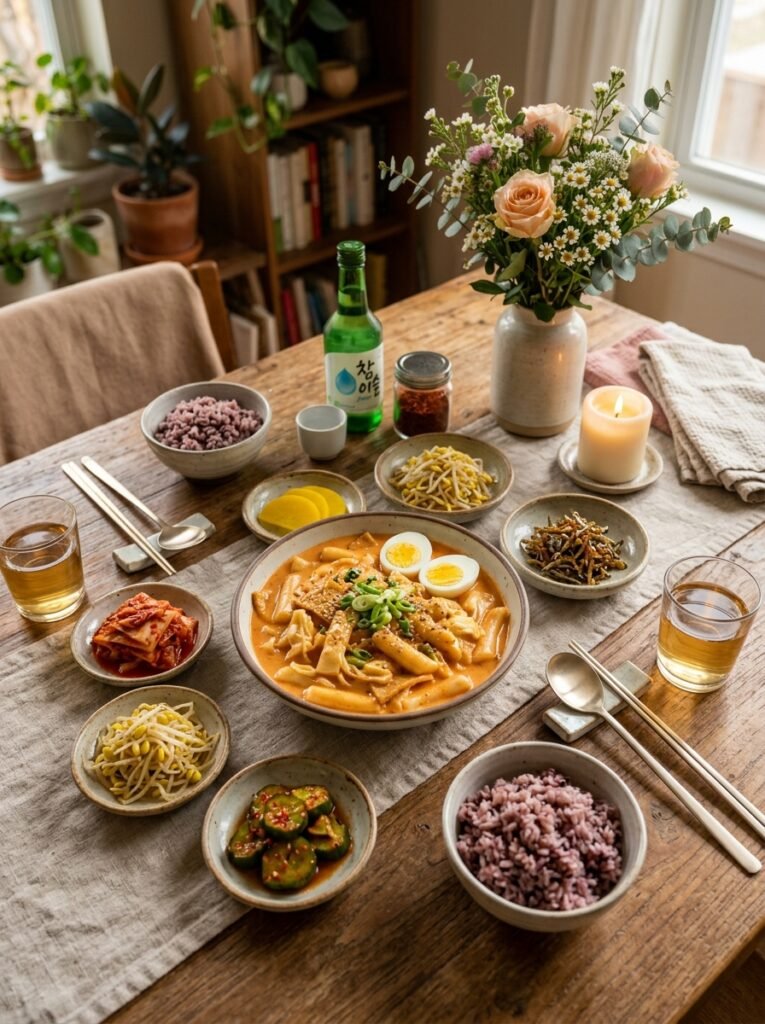
Serve this rose tteokbokki recipe as a stunning appetizer at date nights or special gatherings where presentation matters as much as flavor. The pink color and strawberry garnish make this rose tteokbokki recipe an impressive conversation starter that looks restaurant-quality. Pair the creamy, spicy rose tteokbokki recipe with cold milk or Korean rice wine to balance the heat and richness, allowing guests to fully appreciate the strawberry notes in your rose tteokbokki recipe.
For casual family dinners, serve this rose tteokbokki recipe as a main course with steamed white rice and simple vegetable sides like sautéed spinach or cucumber salad to provide fresh contrast. The spice and creaminess of rose tteokbokki recipe pairs beautifully with cooled vegetable sides, creating balanced meals that feel both indulgent and healthy. Korean pickled vegetables complement rose tteokbokki recipe’s heat perfectly, offering palate-cleansing brightness between bites.
This rose tteokbokki recipe works exceptionally well for meal prep and entertaining because it can be made ahead and reheated gently. Serve warm rose tteokbokki recipe with kimchi, sweet and savory Korean side dishes, and fresh fruit for complete meals. Top each serving of rose tteokbokki recipe with a quail egg yolk just before eating for extra richness, or add mozzarella cheese over hot rose tteokbokki recipe for fusion-inspired variations.
For dessert or sweet course applications, highlight this rose tteokbokki recipe by serving smaller portions with additional whipped cream, fresh strawberries, and a drizzle of strawberry sauce. The rose tteokbokki recipe becomes perfect for creative brunches when served with toast and soft-scrambled eggs. Cold versions of rose tteokbokki recipe work as summer appetizers or light lunch options when served chilled with iced beverages.
Storage and Reheating for Rose Tteokbokki
Proper storage techniques keep this rose tteokbokki recipe fresh and delicious for multiple servings and easy reheating throughout the week.
| Method | Duration | Instructions for Rose Tteokbokki Recipe |
|---|---|---|
| Refrigerator Storage | Up to 3 days | Cool the rose tteokbokki recipe completely, then transfer to an airtight container. Store tteok and sauce separately if possible to prevent over-softening in rose tteokbokki recipe. Keep cold toppings (whipped cream, fresh strawberries) separate to add only when serving rose tteokbokki recipe. |
| Freezer Storage | Up to 1 month | Freeze the cooked rose tteokbokki recipe (without toppings) in an airtight freezer container. Sauce freezes better than tteok; expect slightly softer texture after thawing. Thaw rose tteokbokki recipe in refrigerator overnight before reheating. |
| Stovetop Reheating | 5-7 minutes | Heat rose tteokbokki recipe over medium heat in a pan, stirring frequently to ensure even warming. Add vegetable broth by the tablespoon if sauce seems too thick for rose tteokbokki recipe. Once heated through, serve immediately with fresh toppings for rose tteokbokki recipe. |
| Microwave Reheating | 2-3 minutes | Transfer rose tteokbokki recipe to a microwave-safe bowl, cover loosely, and heat at 50% power in 1-minute intervals. Stir between intervals to prevent hot spots. Less ideal than stovetop but faster for rose tteokbokki recipe when time matters. |
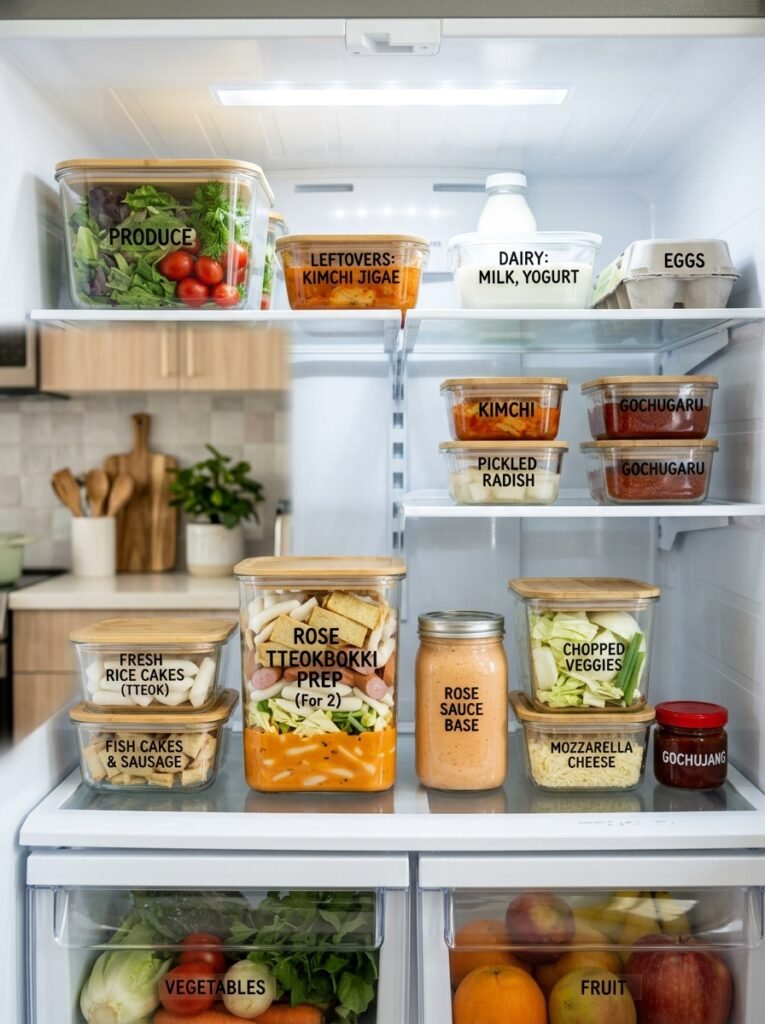
| Make-Ahead Prep | Up to 2 days | Prepare the pink strawberry sauce for rose tteokbokki recipe up to 2 days ahead and store in a sealed container. Boil tteok fresh on serving day, then combine with reheated sauce for rose tteokbokki recipe. This method ensures maximum freshness and textural quality in rose tteokbokki recipe. |
| Batch Cooking | Up to 4 servings | Make a full batch of rose tteokbokki recipe and portion into individual containers. Reheat individual portions as needed throughout the week. This works best when serving rose tteokbokki recipe to family with staggered eating schedules. |
The sauce in this rose tteokbokki recipe remains creamy and flavorful through reheating when stored properly. However, tteok gradually softens with time, so this rose tteokbokki recipe tastes best within 2 days of initial cooking. Store the condensed milk-based sauce separately from tteok when possible to slow this softening in your rose tteokbokki recipe.
Always add fresh toppings to rose tteokbokki recipe immediately before serving, never during storage. The whipped cream and strawberries define the textural contrast that makes this rose tteokbokki recipe special, so preserve them for the final presentation. Cold milk or beverage beside reheated rose tteokbokki recipe balances residual heat and richness from the creamy sauce.
Nutritional Information for Rose Tteokbokki
This rose tteokbokki recipe provides detailed nutritional values per serving to help with meal planning and dietary considerations.
| Nutrient | Amount per Serving (1/4 Recipe) |
|---|---|
| Calories | 285 |
| Protein | 4.2g |
| Carbohydrates | 52g |
| Fat | 7.8g |
| Saturated Fat | 4.2g |
| Fiber | 2.1g |
| Sugar | 14g |
| Sodium | 521mg |
| Cholesterol | 12mg |
These approximate nutritional values for rose tteokbokki recipe assume the recipe is divided into 4 equal servings with all ingredients included but excluding optional whipped cream topping. Adding whipped cream increases calories and fat in your rose tteokbokki recipe by approximately 45 calories and 5g fat per serving. The rose tteokbokki recipe contains natural sugars from strawberries and added sugar from gochujang and condensed milk, totaling about 14g per serving.
Frequently Asked Questions About Rose Tteokbokki
Can I make rose tteokbokki recipe without gochujang?
You cannot replicate authentic rose tteokbokki recipe flavor without gochujang, as this ingredient provides irreplaceable fermented depth and spice. Korean red chili flakes mixed with miso paste creates an acceptable substitute for rose tteokbokki recipe in emergencies, but results will taste noticeably different. Gochujang is widely available in Asian grocery stores and online, making substitution unnecessary for most people preparing rose tteokbokki recipe.
What if my rose tteokbokki recipe sauce is too thick?
Add vegetable broth to rose tteokbokki recipe by the tablespoon while stirring over medium heat until reaching desired consistency. The sauce for rose tteokbokki recipe should coat the tteok like thick cream, not pool at the bottom. Stop adding broth once the rose tteokbokki recipe reaches your preferred thickness, as the sauce continues thickening slightly as it cools.
How do I know when tteok is properly cooked in rose tteokbokki recipe?
Tteok in rose tteokbokki recipe is properly cooked when it feels soft when you bite through it but still maintains a slight chew and doesn’t break apart easily. Properly cooked tteok for rose tteokbokki recipe has absorbed the pink sauce throughout but retains its cylindrical shape. If tteok disintegrates or becomes mushy in your rose tteokbokki recipe, it’s overcooked and you should reduce the cooking time for future batches.
Can I prepare rose tteokbokki recipe the night before?
Yes, prepare the strawberry sauce component for rose tteokbokki recipe up to 2 days ahead and store it in the refrigerator. Cook the tteok fresh on serving day, then combine with reheated sauce for rose tteokbokki recipe to maintain ideal texture. Storing the complete cooked rose tteokbokki recipe overnight causes the tteok to absorb excess moisture and become overly soft, degrading texture quality in rose tteokbokki recipe.
What can I serve alongside rose tteokbokki recipe?
Serve rose tteokbokki recipe with steamed rice, kimchi, sautéed spinach, and other traditional Korean banchan side dishes for balanced meals. Fresh vegetable sides like cucumber salad or radish pickle provide cool contrast to the spicy, creamy rose tteokbokki recipe. Soft-boiled eggs placed on top of rose tteokbokki recipe add protein and richness that complement the strawberry sauce.
How long does rose tteokbokki recipe keep in the refrigerator?
Cooked rose tteokbokki recipe stored in an airtight container remains safe to eat for up to 3 days in the refrigerator. However, tteok texture degrades after 2 days in rose tteokbokki recipe, becoming overly soft and losing the slight chewiness that defines the dish. For best quality, consume rose tteokbokki recipe within 2 days of initial cooking.
Can I freeze rose tteokbokki recipe?
Yes, freeze the cooked rose tteokbokki recipe (without fresh toppings) in an airtight freezer container for up to 1 month. The sauce freezes better than tteok, so expect slightly softer rice cakes after thawing your rose tteokbokki recipe. Thaw rose tteokbokki recipe overnight in the refrigerator, then reheat gently on the stovetop, adding fresh toppings only when serving.
Is there a way to make rose tteokbokki recipe less spicy?
Reduce the gochujang to 2 tablespoons in rose tteokbokki recipe instead of 3 tablespoons to decrease spice level. The strawberry and condensed milk naturally balance heat, so using less gochujang creates milder rose tteokbokki recipe suitable for spice-sensitive eaters. Add more gochujang gradually during tasting if you prefer more heat in your rose tteokbokki recipe.
What’s the difference between rose tteokbokki recipe and regular tteokbokki?
Rose tteokbokki recipe incorporates strawberry puree and condensed milk for a pink color and sweeter flavor profile, while regular tteokbokki uses only gochujang for traditional red color and spicy heat. Rose tteokbokki recipe appeals to those preferring balanced sweet-spicy flavors, whereas regular tteokbokki emphasizes pure spice. The creamy texture of rose tteokbokki recipe contrasts with the slightly broth-like consistency of standard tteokbokki.
Can I use canned strawberries for rose tteokbokki recipe?
Frozen strawberries work perfectly for rose tteokbokki recipe and are recommended, but canned strawberries are acceptable if packed in heavy syrup. Canned strawberries add extra sweetness to rose tteokbokki recipe, so reduce added sugar accordingly. Drain canned strawberries thoroughly before blending into rose tteokbokki recipe to prevent excess liquid that would thin the sauce.
Conclusion
Rose tteokbokki recipe deserves a place in your Korean cooking rotation because it delivers impressive restaurant-quality results with straightforward technique and readily available ingredients. This rose tteokbokki recipe impresses with stunning visual presentation while remaining approachable for home cooks of any experience level. The combination of chewy tteok, creamy pink sauce, fresh strawberries, and whipped cream topping creates unforgettable flavor and textural contrasts that justify why rose tteokbokki recipe has become increasingly popular on social media and food blogs. Make this rose tteokbokki recipe for date nights, special dinners, or whenever you want to elevate an ordinary evening into something memorable. The delicate strawberry notes balanced perfectly with spicy gochujang make this rose tteokbokki recipe addictively delicious and genuinely unique among Korean comfort foods.
Related Recipes You’ll Love
Hot honey cottage cheese sweet potato beef bowl
Addictive cabbage recipe
Chili crisp carrot ribbon salad recipe
baking soda trick recipe for weight loss
Eggplant parmesan soup recipe
Whipped beef tallow recipe
Miso cabbage steaks
Expert Resources and Food Safety
Print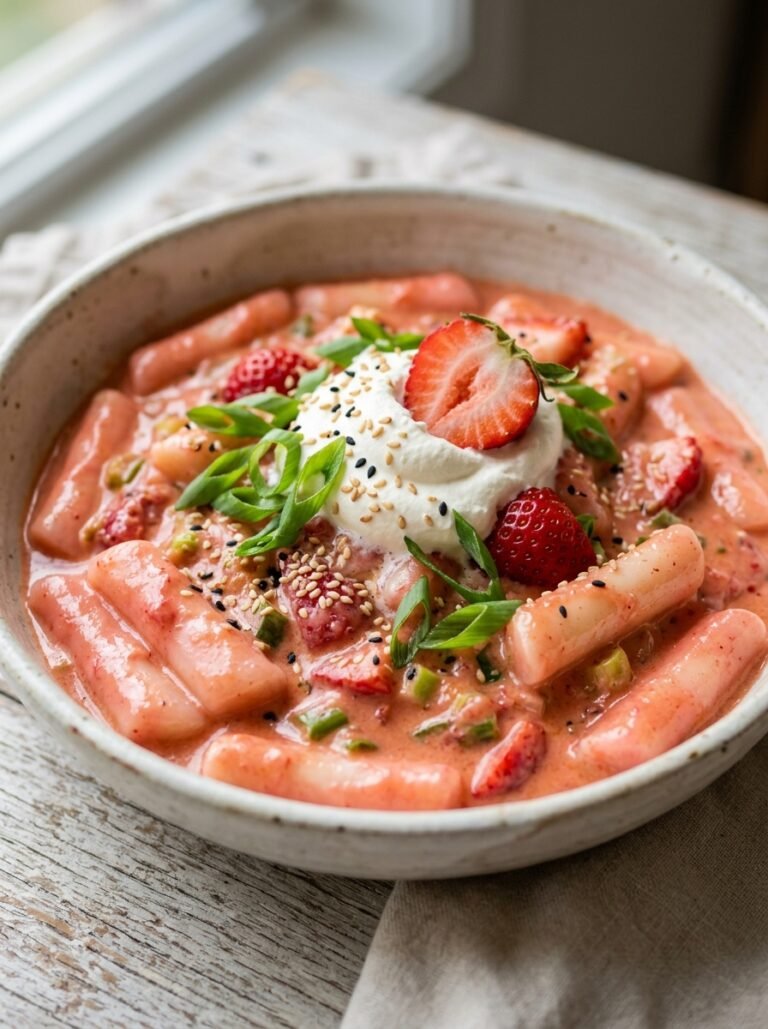
Viral Rose Tteokbokki Recipe
Rose tteokbokki recipe creates a creamy pink Korean rice cake dish with sweet strawberry notes, spicy gochujang sauce, and chewy tteok for a unique comfort food experience.
- Total Time: 35 minutes
- Yield: 4 servings 1x
Ingredients
- 400g fresh or frozen tteok (Korean rice cakes)
- 3 tablespoons gochujang
- 250g fresh or frozen strawberries
- 100ml sweetened condensed milk
- 1 tablespoon fish sauce
- 4 cloves garlic, minced
- 200ml vegetable broth
- 1 tablespoon sugar
- 2 tablespoons butter
- 2 stalks green onion
- 1 tablespoon sesame seeds
- 150g fresh strawberries for topping
- 60ml whipped cream
Instructions
- Blend strawberries, gochujang, condensed milk, and fish sauce until smooth.
- Strain the mixture through a fine mesh sieve.
- Melt butter in a large pan over medium heat.
- Add minced garlic and cook until fragrant.
- Stir in the strawberry sauce.
- Pour in vegetable broth and add sugar.
- Simmer for 3 minutes while stirring.
- Add the tteok and coat evenly in sauce.
- Cook for 8-10 minutes until chewy and tender.
- Transfer to serving bowls.
- Top with sesame seeds, green onion, strawberries, and whipped cream.
- Serve immediately.
Notes
Use high-quality gochujang for the best flavor and avoid overcooking the tteok to keep the perfect chewy texture.
- Prep Time: 15 minutes
- Cook Time: 20 minutes
- Category: Main Course
- Method: Stovetop
- Cuisine: Korean
- Diet: Vegetarian
Nutrition
- Serving Size: 1 serving
- Calories: 285
- Sugar: 14g
- Sodium: 521mg
- Fat: 7.8g
- Saturated Fat: 4.2g
- Unsaturated Fat: 3g
- Trans Fat: 0g
- Carbohydrates: 52g
- Fiber: 2.1g
- Protein: 4.2g
- Cholesterol: 12mg