Sticky pineapple ribs are tender, fall-off-the-bone ribs coated in a caramelized tropical glaze that balances sweet pineapple juice with savory spices and tangy vinegar. This sticky pineapple ribs recipe transforms simple beef or lamb ribs into an impressive main dish with minimal effort and maximum flavor. The combination of fresh pineapple, brown sugar, and warm spices creates a glossy, sticky coating that cooks into the meat during low-temperature roasting. Whether you are preparing dinner for your family or hosting a backyard gathering, sticky pineapple ribs deliver restaurant-quality results without the complicated techniques. The natural sweetness of pineapple caramelizes beautifully during cooking, creating a complex glaze that guests will request again and again.
| Prep Time | Cook Time | Total Time | Servings | Difficulty | Cuisine |
|---|---|---|---|---|---|
| 15 minutes | 2.5 hours | 2 hours 45 minutes | 4-6 servings | Easy | Asian-Inspired |
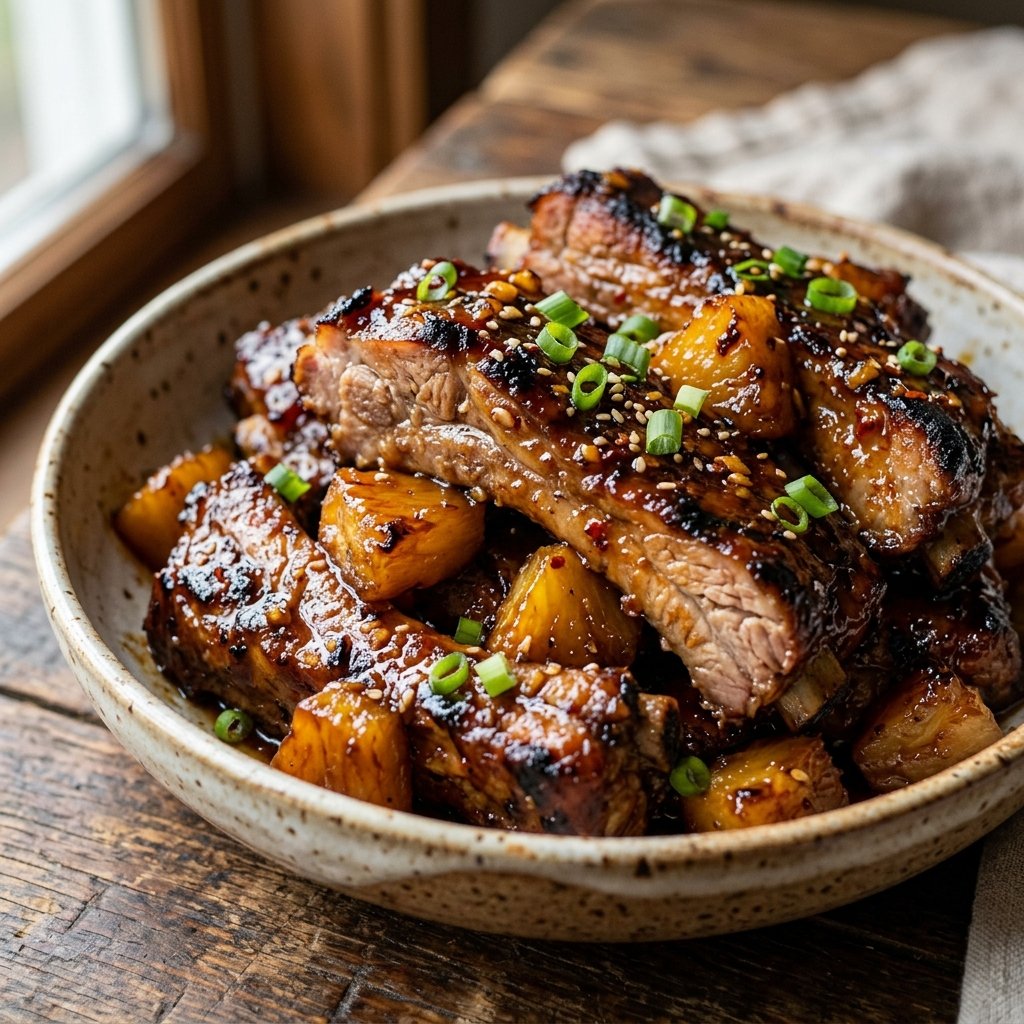
Table of Contents
Table of Contents
Why This Sticky Pineapple Ribs Recipe Works
The sticky pineapple ribs recipe succeeds because it combines the natural enzymes in pineapple with dry heat cooking to create incredibly tender meat and a caramelized crust. I have made this dish for countless family dinners, and the results are consistently impressive every single time. The pineapple juice breaks down the connective tissues in the ribs while the brown sugar creates a beautiful, sticky glaze that clings to every surface. Most home cooks appreciate recipes that deliver professional-quality results without requiring special skills, and sticky pineapple ribs checks that box perfectly.
What makes sticky pineapple ribs stand out from standard barbecue recipes is the tropical flavor profile that feels both familiar and exciting. The sweetness of the pineapple does not overwhelm the dish because vinegar, soy sauce, and ginger provide essential savory and tangy balance. When you prepare sticky pineapple ribs using this recipe, you will notice the meat becomes so tender that it literally falls away from the bone with minimal effort. The sticky coating caramelizes during the final cooking stages, creating a glossy exterior that looks professional and tastes absolutely delicious.
This sticky pineapple ribs recipe is also remarkably forgiving for beginners because the low-temperature oven method prevents burning or drying out the meat. I recommend sticky pineapple ribs to anyone who feels intimidated by grilling or smoking meat because the oven approach eliminates most variables. The exact timing and straightforward technique ensure that whether you have cooked ribs once or a hundred times, sticky pineapple ribs will turn out beautifully. The combination of sweetness, savory depth, and tender texture makes this dish memorable enough for special occasions yet simple enough for ordinary weeknights.
The versatility of sticky pineapple ribs also contributes to their popularity among home cooks who want flexible meal options. You can prepare sticky pineapple ribs with beef short ribs, lamb ribs, or even beef back ribs depending on your preference and availability. The pineapple glaze pairs equally well with different protein options, making this recipe adaptable to various dietary choices and budget considerations. Once you master the sticky pineapple ribs technique, you will find yourself preparing this dish regularly for family gatherings and casual dinners.
Sticky Pineapple Ribs Recipe Ingredients
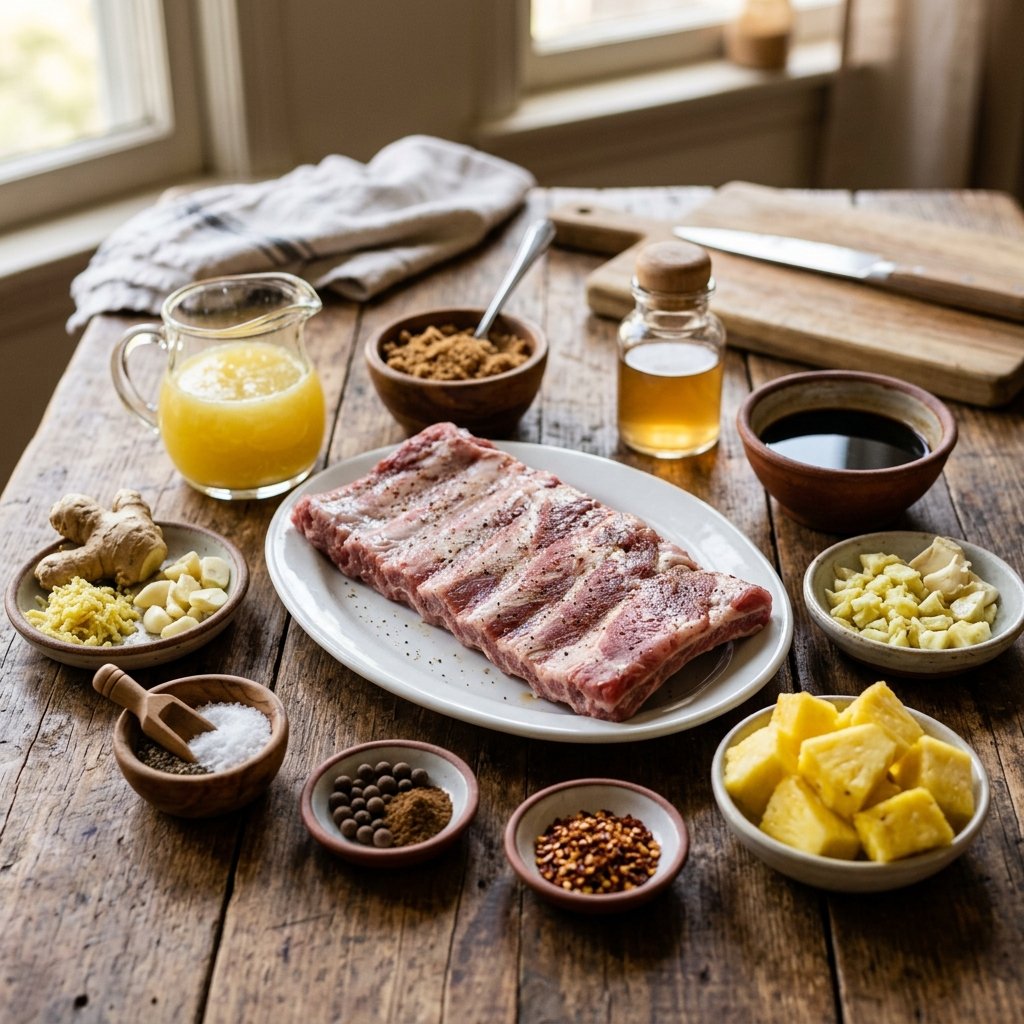
This sticky pineapple ribs recipe requires fresh pineapple juice, brown sugar, and warm spices combined with tender ribs and basic pantry staples to create an unforgettable tropical glaze. The ingredient list for sticky pineapple ribs is straightforward and likely includes items already in your kitchen.
| Ingredient | Quantity | Notes with Alternatives |
|---|---|---|
| Beef short ribs or lamb ribs | 3-4 pounds | Look for ribs with good marbling; beef back ribs work well too. Choose bone-in ribs for maximum flavor. |
| Fresh pineapple juice | 1.5 cups | Use unsweetened juice from fresh pineapple or high-quality bottled juice. Avoid juice with added sugar. |
| Brown sugar | 3/4 cup | Packed brown sugar creates the best caramel. Light brown or dark brown both work; dark adds deeper molasses flavor. |
| Apple cider vinegar | 1/4 cup | Provides tang that balances sweetness. Red wine vinegar or white vinegar are acceptable substitutes. |
| Low-sodium soy sauce | 3 tablespoons | Adds umami depth and saltiness. Coconut aminos work for soy-free option. |
| Fresh ginger | 2 tablespoons, minced | Fresh ginger provides warmth and spice. Ground ginger uses 1.5 teaspoons if fresh unavailable. |
| Garlic cloves | 4 cloves, minced | Use fresh garlic for best flavor. Garlic powder uses 1 teaspoon as substitute. |
| Kosher salt | 1 teaspoon | Season ribs generously before cooking. Adjust based on soy sauce salt content. |
| Black pepper | 1/2 teaspoon | Freshly ground pepper enhances spice notes. Use more or less to taste preference. |
| Ground allspice | 1/2 teaspoon | Adds warm spice complexity to sticky pineapple ribs. Ground cinnamon works as alternative. |
| Red pepper flakes | 1/4 teaspoon | Adds subtle heat; increase for spicier glaze. Omit if sensitive to spice. |
| Fresh pineapple chunks | 1 cup | For garnish and serving; adds tropical presentation. Canned pineapple in juice works for convenience. |
When shopping for ingredients, prioritize finding quality, fresh pineapple juice because it forms the flavor foundation for this sticky pineapple ribs recipe. Select ribs with consistent marbling and a good ratio of meat to bone, which ensures tender, flavorful results in the finished sticky pineapple ribs.
How to Make Sticky Pineapple Ribs Recipe
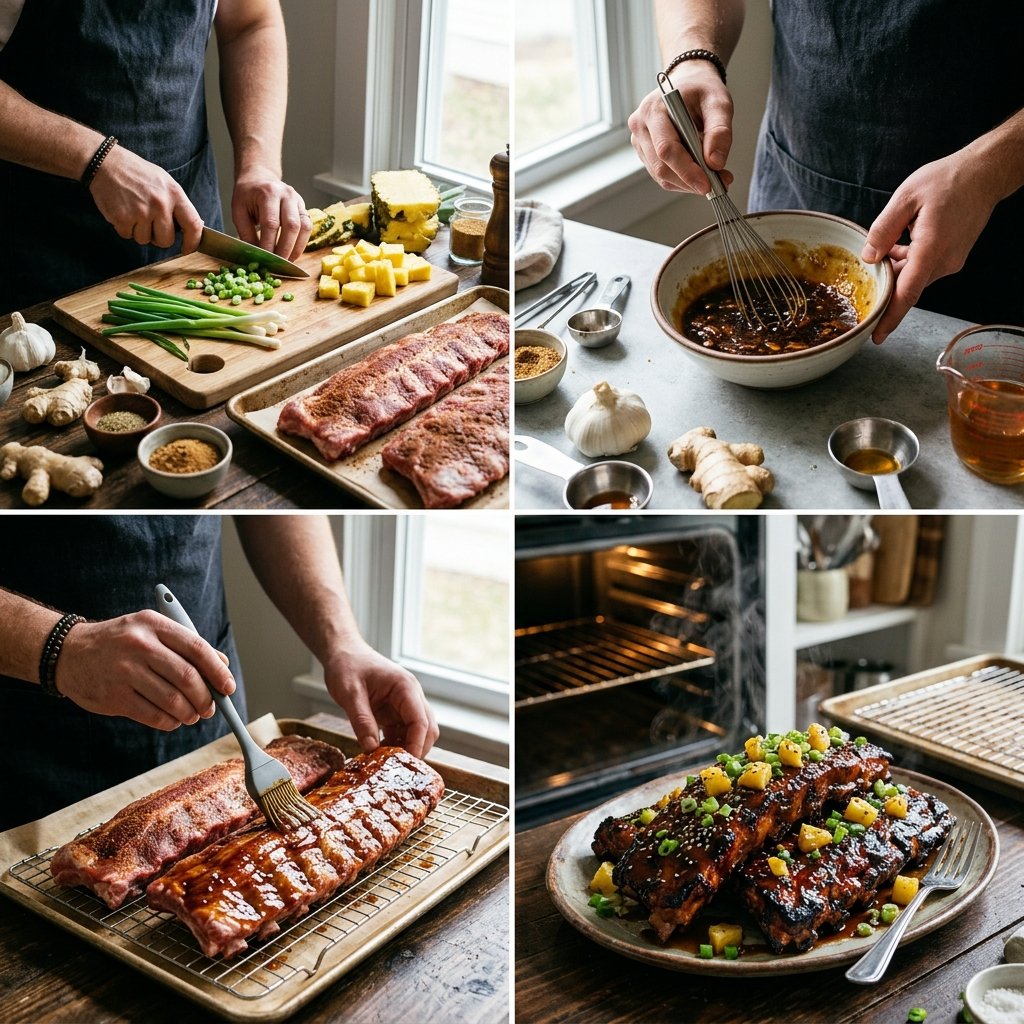
This sticky pineapple ribs recipe uses a simple three-stage cooking method that transforms raw ribs into caramelized, fall-apart-tender ribs through low-temperature roasting and high-heat glazing. The step-by-step process ensures consistent results whether you prepare sticky pineapple ribs for the first time or the hundredth time.
Stage One: Prepare and Season the Ribs
- Remove the ribs from the refrigerator and place them on a large cutting board, allowing them to reach room temperature for approximately fifteen minutes before cooking.
- Pat the ribs dry using paper towels, rubbing both sides thoroughly to remove excess moisture from the surface of the meat.
- Flip the ribs bone-side up and locate the thin membrane covering the back of the ribs, then slide a sharp knife under this membrane to loosen and peel away the entire layer.
- Season both sides of the ribs generously with kosher salt, black pepper, and ground allspice, rubbing the seasonings into the meat so they adhere properly.
- Arrange the seasoned ribs on a large roasting pan, positioning them bone-side down and leaving space between ribs for heat circulation during cooking.
Stage Two: Make the Sticky Pineapple Glaze
- Combine fresh pineapple juice, brown sugar, apple cider vinegar, low-sodium soy sauce, minced fresh ginger, and minced garlic in a medium saucepan over medium heat.
- Stir the mixture constantly until the brown sugar completely dissolves into the liquid and the sticky pineapple glaze appears smooth and uniform.
- Simmer the glaze for approximately eight to ten minutes, stirring occasionally, until the mixture reduces by about one-third and becomes slightly thickened.
- Remove the saucepan from heat and allow the sticky pineapple glaze to cool for five minutes before applying it to the ribs in the roasting pan.
- Reserve approximately one-half cup of the sticky pineapple glaze in a separate bowl for additional basting and finishing during the cooking process.
Stage Three: Roast and Glaze the Ribs
- Preheat your oven to three hundred twenty-five degrees Fahrenheit, allowing the cooking chamber to reach the correct temperature before placing the ribs inside.
- Pour half of the prepared sticky pineapple glaze over the ribs in the roasting pan, brushing the glaze across all surfaces so the meat is evenly coated.
- Cover the roasting pan with aluminum foil, creating a tight seal that traps steam and helps the sticky pineapple ribs cook through evenly without drying out.
- Roast the covered ribs for one hour and thirty minutes at three hundred twenty-five degrees, resisting the urge to open the oven door during this stage.
- After one hour and thirty minutes, carefully remove the foil from the roasting pan, then brush the sticky pineapple glaze over the ribs again, ensuring complete coverage.
- Return the uncovered sticky pineapple ribs to the oven and continue roasting for an additional forty-five to sixty minutes, basting every fifteen minutes with reserved glaze.
- The sticky pineapple ribs are finished cooking when the meat pulls cleanly away from the bone and the glaze appears glossy and caramelized on the surface.
- Remove the sticky pineapple ribs from the oven and allow them to rest for five minutes before plating, which allows the juices to redistribute throughout the meat.
Chef Tips for Perfect Sticky Pineapple Ribs Recipe
These professional techniques elevate your sticky pineapple ribs from good to extraordinary by addressing common cooking challenges and enhancing the natural flavors of the dish. Experienced cooks know that small adjustments make significant differences in the final quality of sticky pineapple ribs.
- Remove the silverskin membrane carefully: This thin, translucent layer underneath the ribs prevents the sticky pineapple glaze from penetrating the meat. Use a sharp paring knife to slide under one corner, then grip the membrane with a paper towel and peel it away completely for better glaze absorption in your sticky pineapple ribs.
- Let ribs reach room temperature before cooking: Removing sticky pineapple ribs from the refrigerator fifteen to twenty minutes before cooking allows the meat to cook more evenly throughout. Cold ribs require significantly longer cooking times, which can result in uneven doneness or dried outer meat.
- Reduce the glaze before applying: Simmering the sticky pineapple glaze mixture for eight to ten minutes concentrates the flavors and creates a thicker consistency that clings better to the ribs. Unreduced glaze tends to slide off during cooking and may not caramelize properly on the surface of your sticky pineapple ribs.
- Baste frequently during the final stages: Once you remove the foil from your sticky pineapple ribs, brush the glaze every fifteen minutes to build multiple layers of caramelization. This technique creates the characteristic sticky coating that makes sticky pineapple ribs so appealing.
- Test for doneness accurately: Insert a knife between the bones of sticky pineapple ribs; the meat should slide apart easily without force. If the meat clings stubbornly to the bone, return the sticky pineapple ribs to the oven for an additional ten to fifteen minutes.
- Allow proper resting time: Letting sticky pineapple ribs rest for five minutes after removal from the oven redistributes internal juices throughout the meat. This resting period ensures that the sticky pineapple ribs remain moist and tender when sliced and served.
Common Sticky Pineapple Ribs Recipe Mistakes to Avoid
Learning from common pitfalls helps you prepare sticky pineapple ribs perfectly on your first attempt and every attempt thereafter. Understanding why these mistakes happen empowers you to recognize and correct problems during cooking of your sticky pineapple ribs.
- Mistake: Cooking ribs at too high a temperature. Why it happens: Home cooks often assume that higher heat speeds up cooking and creates crispier exteriors on their sticky pineapple ribs. How to fix it: Use three hundred twenty-five degrees Fahrenheit for tender results; higher temperatures actually dry out the meat and burn the glaze on sticky pineapple ribs before the meat finishes cooking.
- Mistake: Skipping the foil-covered stage. Why it happens: Some cooks prefer exposed ribs because they believe it creates better browning or saves time during preparation of sticky pineapple ribs. How to fix it: The foil traps steam that slowly breaks down connective tissue, resulting in incredibly tender sticky pineapple ribs that would be tough and dry if roasted uncovered from start to finish.
- Mistake: Not removing the silverskin membrane. Why it happens: Many home cooks either do not know the membrane exists or believe it adds texture to their sticky pineapple ribs. How to fix it: This membrane blocks glaze penetration and prevents the seasonings from reaching the meat on sticky pineapple ribs, so removing it ensures maximum flavor absorption.
- Mistake: Over-reducing the glaze before applying to ribs. Why it happens: Cooks sometimes simmer the glaze too long, creating a mixture that is too thick or too concentrated in sticky pineapple ribs preparation. How to fix it: Simmer only until the glaze reduces by about one-third; it should coat the back of a spoon but still drip slowly, creating the perfect consistency for sticky pineapple ribs.
- Mistake: Using commercial barbecue sauce as a substitute for fresh glaze. Why it happens: Commercial sauces seem convenient and many cooks assume they provide similar results to fresh glaze for sticky pineapple ribs. How to fix it: Pre-made sauces contain preservatives and excessive sodium that mask the subtle pineapple flavors that make sticky pineapple ribs special, so fresh glaze delivers superior taste.
Best Sticky Pineapple Ribs Recipe Variations and Substitutions
Creative variations of sticky pineapple ribs allow you to customize this recipe based on dietary preferences, ingredient availability, and flavor preferences while maintaining the essential tropical character. Each sticky pineapple ribs variation offers unique taste and texture benefits without requiring completely new ingredients.
| Ingredient | Substitution | Impact on Flavor |
|---|---|---|
| Brown sugar | Honey or maple syrup (use 2/3 cup) | Adds floral or woodsy depth while reducing processed sugar; sticky pineapple ribs become more complex with added depth. |
| Apple cider vinegar | Lime juice or rice vinegar (use 3 tablespoons) | Creates brighter, more citrusy tang in sticky pineapple ribs; works especially well with tropical theme. |
| Fresh ginger | Ground turmeric (use 1 teaspoon) or fresh lemongrass | Adds earthy or citrusy warmth instead of sharp bite; sticky pineapple ribs develop different but equally appealing spice profile. |
| Beef short ribs | Lamb ribs, pork ribs alternative, or chicken legs | Different proteins require adjusted cooking times; sticky pineapple ribs work across multiple protein options with this versatile glaze. |
| Low-sodium soy sauce | Coconut aminos or tamari (use 3 tablespoons) | Creates gluten-free version of sticky pineapple ribs; slightly sweeter than soy but maintains umami depth. |
| Ground allspice | Ground cinnamon or Chinese five-spice (use 1/4 teaspoon) | Adjusts warm spice direction; sticky pineapple ribs become more cinnamon-forward or more complex with five-spice variation. |
| Fresh pineapple juice | Mango juice, passion fruit juice, or coconut water (use 1.5 cups) | Creates different tropical profiles for sticky pineapple ribs variations; each juice brings unique sweetness and acidity balance. |
Experimenting with different combinations of these sticky pineapple ribs variations helps you discover flavor profiles that match your personal taste preferences and available ingredients. The fundamental cooking method for sticky pineapple ribs remains constant regardless of which substitutions you choose, ensuring consistent results every time.
Serving Suggestions for Sticky Pineapple Ribs Recipe
Pairing sticky pineapple ribs with complementary side dishes and beverages creates a complete meal that feels special enough for entertaining yet simple enough for weeknight family dinners. The tropical sweetness of sticky pineapple ribs works beautifully with specific sides that either contrast or complement the glaze flavors.
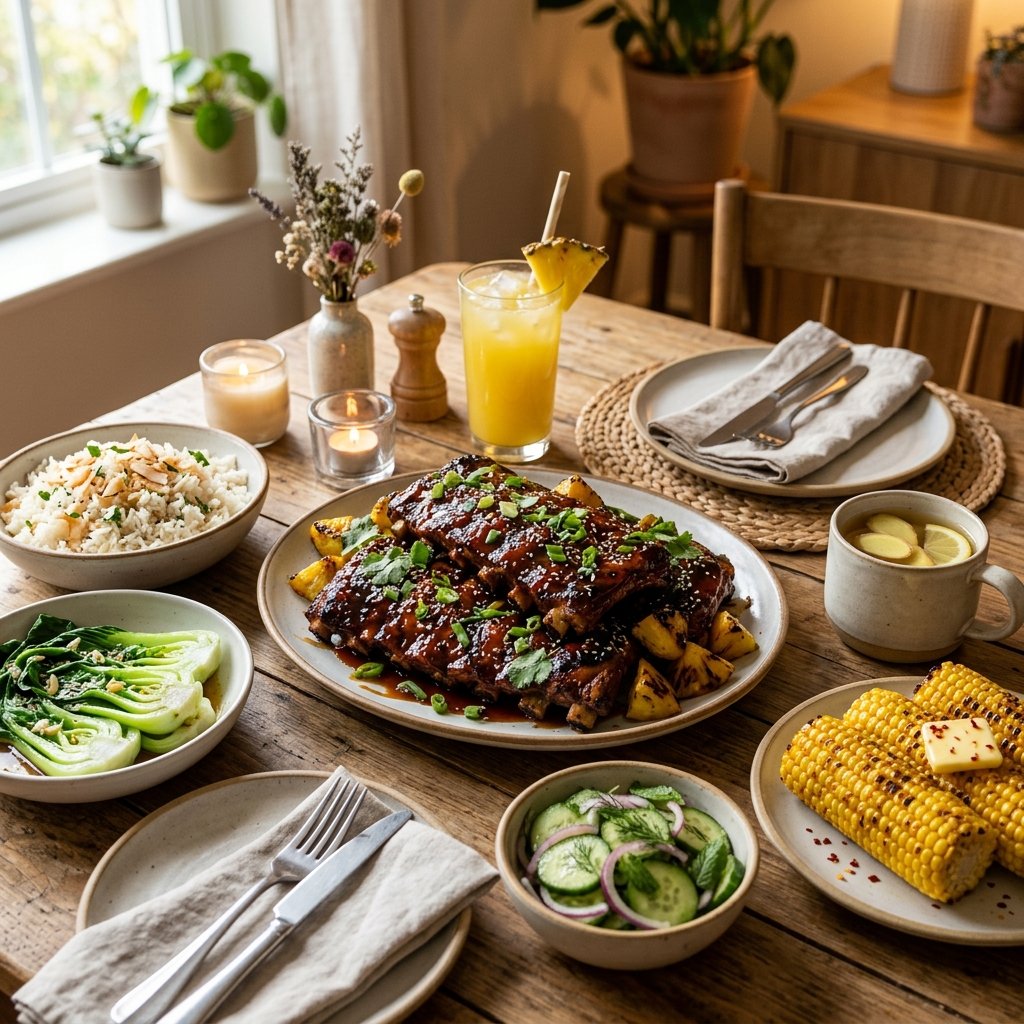
Serve sticky pineapple ribs with fresh coconut rice to echo the tropical theme and create textural balance against the tender meat. Steamed or grilled bok choy and Asian broccoli provide vegetable nutrition while their slight bitterness contrasts perfectly with the sweet, sticky pineapple glaze. Crispy roasted vegetables like carrots and snap peas add crunch and color to plates featuring sticky pineapple ribs. For a lighter side, cucumber and mint salad with lime vinaigrette cleanses the palate between bites of sticky pineapple ribs while maintaining the tropical atmosphere.
Consider serving sticky pineapple ribs alongside jasmine rice pilaf mixed with pineapple chunks and toasted cashews for an elegant presentation. Creamy coleslaw dressed with a light vinaigrette provides cooling contrast to the warm, sticky pineapple glaze coating the ribs. Grilled corn on the cob brushed with herb butter pairs wonderfully with sticky pineapple ribs for casual outdoor gatherings. Sticky pineapple ribs also pair exceptionally well with garlic naan bread or steamed basmati rice for mopping up the incredible glaze left on the plate.
Beverage pairing options enhance the dining experience with sticky pineapple ribs by offering flavors that either mirror or contrast the tropical glaze. Serve sticky pineapple ribs with iced ginger tea, coconut water, or sparkling lemonade with fresh mint for non-alcoholic options that complement the flavors beautifully. Fresh pineapple juice over ice creates a cohesive tropical experience when serving sticky pineapple ribs at casual gatherings. Sticky pineapple ribs work wonderfully for family dinners, holiday celebrations, weekend entertaining, and special occasions when you want impressive food without complicated preparation.
Storage and Reheating for Sticky Pineapple Ribs Recipe
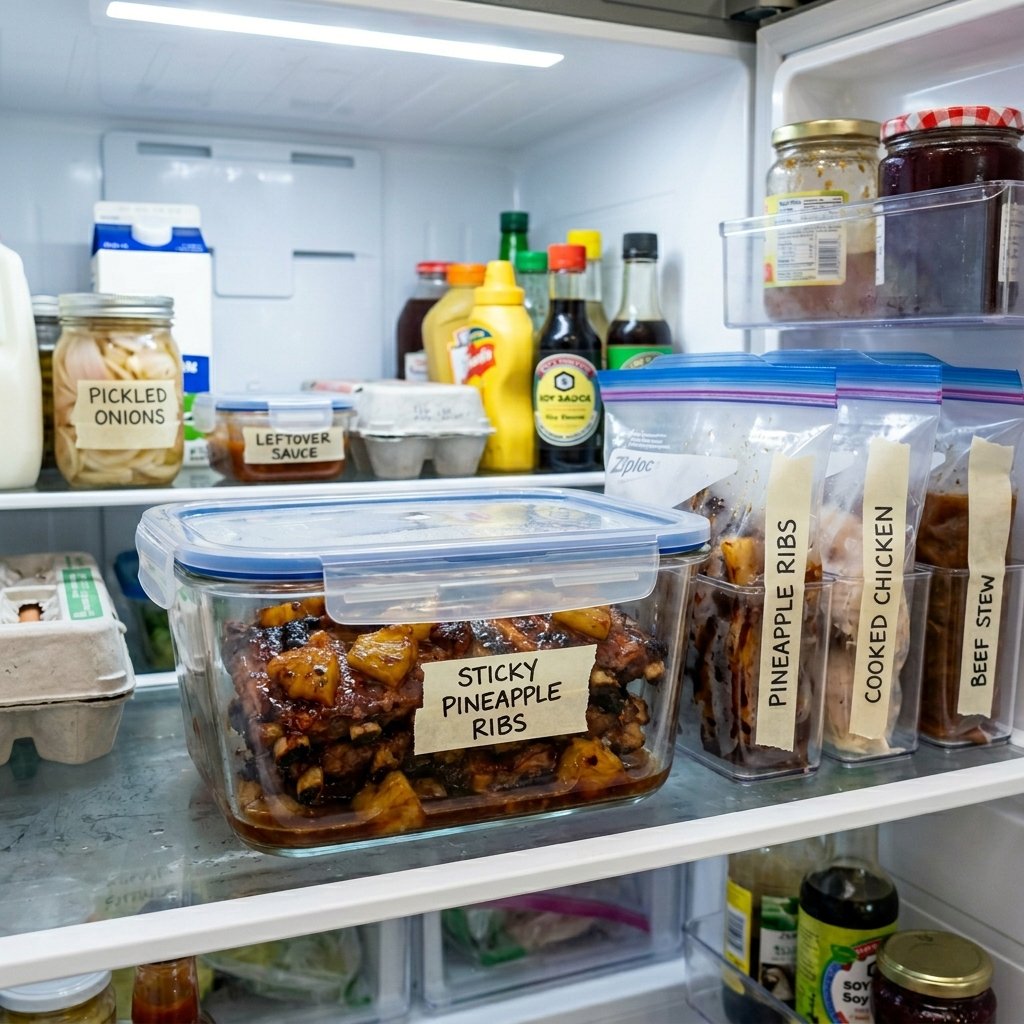
Proper storage techniques preserve the quality and food safety of your sticky pineapple ribs, allowing you to enjoy leftovers throughout the week or prepare sticky pineapple ribs in advance for busy days. Understanding the best storage methods ensures that sticky pineapple ribs maintain their tender texture and delicious glaze even after refrigeration or freezing.
| Method | Duration | Instructions |
|---|---|---|
| Refrigerator | 3-4 days | Cool sticky pineapple ribs to room temperature, then transfer to an airtight container with the glaze. Keep refrigerated at 40°F or below. Do not store in the roasting pan as the pan can harbor bacteria if left in the refrigerator. |
| Freezer | 2-3 months | Wrap individual sticky pineapple ribs in plastic wrap, then place in freezer bags with as much air removed as possible. Label with the date. Frozen sticky pineapple ribs maintain best quality when kept at 0°F or below. |
| Reheating in Oven | 15-20 minutes | Preheat oven to 300°F. Place sticky pineapple ribs in a covered baking dish with a splash of pineapple juice. Heat until warmed through. This method prevents the meat from drying out and preserves the glaze texture on sticky pineapple ribs. |
| Reheating on Stovetop | 10-12 minutes | Place sticky pineapple ribs in a skillet over medium-low heat with a little pineapple juice. Cover and heat gently, stirring occasionally, until warmed through. Watch carefully to prevent burning the glaze on sticky pineapple ribs. |
| Make-Ahead Preparation | Up to 24 hours ahead | Prepare the sticky pineapple glaze completely the day before and store in a container. Season the ribs and arrange in the baking pan up to 8 hours ahead. Cover and refrigerate until ready to roast. This advance preparation of sticky pineapple ribs saves significant time on serving day. |
| Thawing Frozen Ribs | Overnight | Transfer frozen sticky pineapple ribs from the freezer to the refrigerator and allow them to thaw completely over 12-24 hours. Never thaw sticky pineapple ribs at room temperature as this encourages bacterial growth. Once thawed, reheat as directed above. |
Food safety guidelines recommend consuming refrigerated sticky pineapple ribs within three to four days of cooking to ensure optimal quality and prevent foodborne illness. Frozen sticky pineapple ribs maintain quality for two to three months when stored properly in freezer bags with air removed. When reheating sticky pineapple ribs, add a small splash of pineapple juice to prevent the meat from drying out during the warming process.
Nutritional Information for Sticky Pineapple Ribs Recipe
Understanding the nutritional content of sticky pineapple ribs helps you make informed dietary choices and plan balanced meals around this protein-rich dish. The sticky pineapple ribs recipe provides substantial protein, B vitamins, and minerals from the meat while the pineapple glaze adds natural sweetness and bromelain enzyme.
| Nutrient | Amount per Serving |
|---|---|
| Calories | 480-520 |
| Protein | 38-42 grams |
| Total Fat | 28-32 grams |
| Saturated Fat | 12-15 grams |
| Carbohydrates | 18-22 grams |
| Dietary Fiber | 0-1 gram |
| Sugar | 14-18 grams |
| Sodium | 620-680 milligrams |
| Iron | 2.8-3.2 milligrams |
| Zinc | 5.2-6.1 milligrams |
These nutritional values are approximate and based on a serving size of one-quarter of the prepared sticky pineapple ribs recipe, assuming the recipe yields four servings. The nutritional profile of sticky pineapple ribs reflects the meat’s natural vitamins and minerals plus the natural sugars from pineapple and brown sugar in the glaze. For updated nutritional information, consult Nutritionix nutrition database or use a nutrition calculator with your specific ingredient quantities.
Frequently Asked Questions About Sticky Pineapple Ribs Recipe
Can I make sticky pineapple ribs without fresh pineapple juice?
Yes, you can substitute high-quality bottled pineapple juice without added sugar for fresh juice when making sticky pineapple ribs. The glaze will taste nearly identical to sticky pineapple ribs made with fresh juice if you use unsweetened varieties. Avoid juices with artificial flavors or added sugars, as these negatively impact the sticky pineapple ribs glaze quality. Fresh juice produces slightly brighter flavor in sticky pineapple ribs, but bottled juice delivers completely acceptable results.
How do I know when sticky pineapple ribs are done cooking?
Sticky pineapple ribs are finished cooking when a knife blade slides easily between the bones and the meat pulls cleanly away from the bone with minimal pressure. The meat should be so tender that it nearly falls off when you lift a rib, indicating perfectly cooked sticky pineapple ribs. Another test involves pulling a toothpick or skewer through the meat; if it meets no resistance, your sticky pineapple ribs are done. The glaze should appear glossy and caramelized with slight char marks visible on the surface of sticky pineapple ribs.
What if my sticky pineapple ribs glaze burns during cooking?
If the sticky pineapple ribs glaze starts burning during the final uncovered roasting stage, reduce the oven temperature to 300 degrees Fahrenheit and cover the ribs loosely with foil to prevent further browning. This adjustment saves your sticky pineapple ribs while allowing the meat to finish cooking gently. If significant burning occurs on your sticky pineapple ribs, remove the burned glaze with a damp cloth and apply fresh glaze during the final few minutes of cooking. Prevention of burned sticky pineapple ribs involves basting every fifteen minutes during the uncovered cooking phase.
Can I prepare sticky pineapple ribs in advance?
Yes, preparing sticky pineapple ribs in advance is an excellent strategy for busy schedules and entertaining. Season and arrange the ribs in the roasting pan up to eight hours ahead, cover with plastic wrap, and refrigerate until ready to cook. Make the sticky pineapple glaze completely up to one full day in advance and store it in a sealed container in the refrigerator. When ready to cook, bring the glaze to room temperature, apply to the ribs, and proceed with the roasting method. Advance preparation of sticky pineapple ribs significantly reduces last-minute cooking stress.
How should I serve leftover sticky pineapple ribs?
Shred leftover sticky pineapple ribs and use the meat in sandwiches, grain bowls, or mixed with rice for easy weeknight meals. Layer sticky pineapple ribs in soft tortillas with coleslaw and fresh cilantro for delicious wraps. Chop sticky pineapple ribs finely and mix with sticky pineapple glaze to create a topping for baked potatoes or rice dishes. Sticky pineapple ribs are equally delicious served cold as a protein topping for summer salads, adding tropical flavor and satisfying protein. Plan your sticky pineapple ribs portions with leftovers in mind for maximum meal efficiency.
Can I freeze sticky pineapple ribs after cooking?
Yes, freezing sticky pineapple ribs preserves them for two to three months when stored properly at 0 degrees Fahrenheit or below. Wrap individual sticky pineapple ribs tightly in plastic wrap, then place them in freezer bags with air removed to prevent freezer burn. Label bags with the cooking date so you remember when you prepared the sticky pineapple ribs. Thaw frozen sticky pineapple ribs in the refrigerator overnight, then reheat in a covered baking dish at 300 degrees Fahrenheit until warmed through. Properly frozen sticky pineapple ribs maintain quality and taste nearly identical to freshly prepared ribs.
What variations work best for sticky pineapple ribs?
Mango juice creates an excellent variation of sticky pineapple ribs with slightly different tropical sweetness and less pronounced acidity than traditional pineapple glaze. Adding fresh lime zest and cilantro to the glaze transforms sticky pineapple ribs with bright, herbaceous notes that enhance the tropical profile. Increasing the ginger and adding ground turmeric creates a spiced version of sticky pineapple ribs with warm, earthy undertones. Substituting coconut sugar for brown sugar produces sticky pineapple ribs with deeper caramel complexity. Experiment with sticky pineapple ribs variations once you master the basic recipe.
Which cuts of ribs work best for this sticky pineapple ribs recipe?
Beef short ribs deliver the most impressive results for sticky pineapple ribs due to their substantial meat-to-bone ratio and rich flavor. Lamb ribs create delicious sticky pineapple ribs with slightly gamey depth that complements the tropical glaze beautifully. Beef back ribs work well for sticky pineapple ribs and cook slightly faster than short ribs due to their thinner meat layer. Spare ribs present another option for sticky pineapple ribs, though they contain more fat and require slightly longer cooking. Choose whichever cut is available and suits your flavor preferences for your sticky pineapple ribs.
How can I make spicier sticky pineapple ribs?
Increase the red pepper flakes to one-half teaspoon or add fresh sliced Thai chilies to the glaze for significantly spicier sticky pineapple ribs. Adding sriracha or hot sauce to the sticky pineapple glaze in small increments allows you to control the heat level in sticky pineapple ribs. Ground cayenne pepper provides another option for building heat into your sticky pineapple ribs without changing other flavor components. Taste the glaze before applying it to ribs and adjust spice levels to your preference for personalized sticky pineapple ribs that match your heat tolerance.
Can I make sticky pineapple ribs on a grill instead of in the oven?
Yes, preparing sticky pineapple ribs on a grill requires using indirect heat by setting up your grill with charcoal on one side and placing ribs on the other side for gentle, even cooking. This method requires more attention and skill to prevent burning the sticky pineapple glaze compared to oven roasting. Grill sticky pineapple ribs at approximately 325 degrees Fahrenheit for two to three hours, maintaining consistent temperature with the grill’s vents. Baste sticky pineapple ribs every twenty minutes with the glaze, and watch carefully during the final thirty minutes to prevent excessive charring. While possible, oven roasting remains the more reliable method for achieving perfectly cooked sticky pineapple ribs.
Conclusion
The sticky pineapple ribs recipe delivers impressive, restaurant-quality results through a straightforward method that any home cook can master. The combination of tender, fall-apart-bone ribs with a tropical pineapple glaze creates memorable meals for family dinners, celebrations, and entertaining. Whether you prepare sticky pineapple ribs using the classic recipe or experiment with flavor variations, this dish consistently earns compliments from guests and leaves diners wanting seconds. The natural sweetness of pineapple juice, warm spices, and savory soy sauce create a balanced glaze that caramelizes beautifully during roasting. Make sticky pineapple ribs your signature dish and watch as this tropical-inspired recipe becomes a beloved favorite at your table.
Related Recipes You’ll Love
Lemon Lovers Pasta Primavera Recipe
What Is The Baking Soda Recipe For Weight Loss
Yerba Mate Recipe
Miyokos Butter Recipe
Harissa Chickpeas With Turmeric Rice recipe
Basic Cooked Plantains recipe
Bowen Yang’s Mapo Tofu recipe
Expert Resources and Food Safety
Learn more about food safety and proper meat handling at FDA Food Safety Guidelines and explore nutrition information at USDA FoodData Central.
Print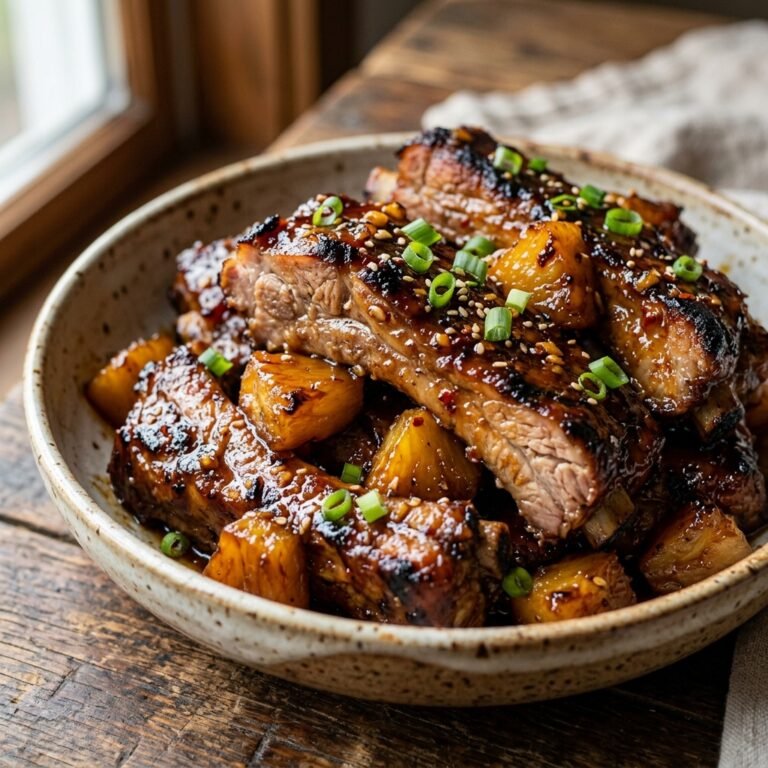
Sticky Pineapple Ribs Recipe 2026
Sticky pineapple ribs are tender, fall-off-the-bone ribs coated in a caramelized tropical glaze that balances sweet pineapple juice with savory spices and tangy vinegar. This recipe delivers restaurant-quality results with minimal effort and maximum flavor.
- Total Time: 2 hours 45 minutes
- Yield: 4–6 servings 1x
Ingredients
- 3–4 pounds Beef short ribs or lamb ribs
- 1.5 cups Fresh pineapple juice
- 3/4 cup Brown sugar
- 1/4 cup Apple cider vinegar
- 3 tablespoons Low-sodium soy sauce
- 2 tablespoons Fresh ginger, minced
- 4 cloves Garlic cloves, minced
- 1 teaspoon Kosher salt
- 1/2 teaspoon Black pepper
- 1/2 teaspoon Ground allspice
- 1/4 teaspoon Red pepper flakes
- 1 cup Fresh pineapple chunks
Instructions
- Remove the ribs from the refrigerator and place them on a large cutting board, allowing them to reach room temperature for approximately fifteen minutes before cooking.
- Pat the ribs dry using paper towels, rubbing both sides thoroughly to remove excess moisture from the surface of the meat.
- Flip the ribs bone-side up and locate the thin membrane covering the back of the ribs, then slide a sharp knife under this membrane to loosen and peel away the entire layer.
- Season both sides of the ribs generously with kosher salt, black pepper, and ground allspice, rubbing the seasonings into the meat so they adhere properly.
- Arrange the seasoned ribs on a large roasting pan, positioning them bone-side down and leaving space between ribs for heat circulation during cooking.
- Combine fresh pineapple juice, brown sugar, apple cider vinegar, low-sodium soy sauce, minced fresh ginger, and minced garlic in a medium saucepan over medium heat.
- Stir the mixture constantly until the brown sugar completely dissolves into the liquid and the sticky pineapple glaze appears smooth and uniform.
- Simmer the glaze for approximately eight to ten minutes, stirring occasionally, until the mixture reduces by about one-third and becomes slightly thickened.
- Remove the saucepan from heat and allow the sticky pineapple glaze to cool for five minutes before applying it to the ribs in the roasting pan.
- Reserve approximately one-half cup of the sticky pineapple glaze in a separate bowl for additional basting and finishing during the cooking process.
- Preheat your oven to three hundred twenty-five degrees Fahrenheit, allowing the cooking chamber to reach the correct temperature before placing the ribs inside.
- Pour half of the prepared sticky pineapple glaze over the ribs in the roasting pan, brushing the glaze across all surfaces so the meat is evenly coated.
- Cover the roasting pan with aluminum foil, creating a tight seal that traps steam and helps the sticky pineapple ribs cook through evenly without drying out.
- Roast the covered ribs for one hour and thirty minutes at three hundred twenty-five degrees, resisting the urge to open the oven door during this stage.
- After one hour and thirty minutes, carefully remove the foil from the roasting pan, then brush the sticky pineapple glaze over the ribs again, ensuring complete coverage.
- Return the uncovered sticky pineapple ribs to the oven and continue roasting for an additional forty-five to sixty minutes, basting every fifteen minutes with reserved glaze.
- Remove the sticky pineapple ribs from the oven and allow them to rest for five minutes before plating, which allows the juices to redistribute throughout the meat.
Notes
Remove the silverskin membrane carefully to allow the glaze to penetrate the meat. Let ribs reach room temperature before cooking for even doneness. Reduce the glaze by one-third before applying so it clings better to the ribs. Baste frequently during the final stages to build multiple layers of rich caramelization. Allow proper resting time of five minutes to ensure that the sticky pineapple ribs remain moist and tender.
- Prep Time: 15 minutes
- Cook Time: 2.5 hours
- Category: Main Course
- Method: Roasting
- Cuisine: Asian-Inspired
Nutrition
- Serving Size: 1 serving
- Calories: 500
- Sugar: 16 grams
- Sodium: 650 milligrams
- Fat: 30 grams
- Saturated Fat: 13 grams
- Unsaturated Fat: 17 grams
- Trans Fat: 0 grams
- Carbohydrates: 20 grams
- Fiber: 0.5 grams
- Protein: 40 grams
- Cholesterol: 95 milligrams